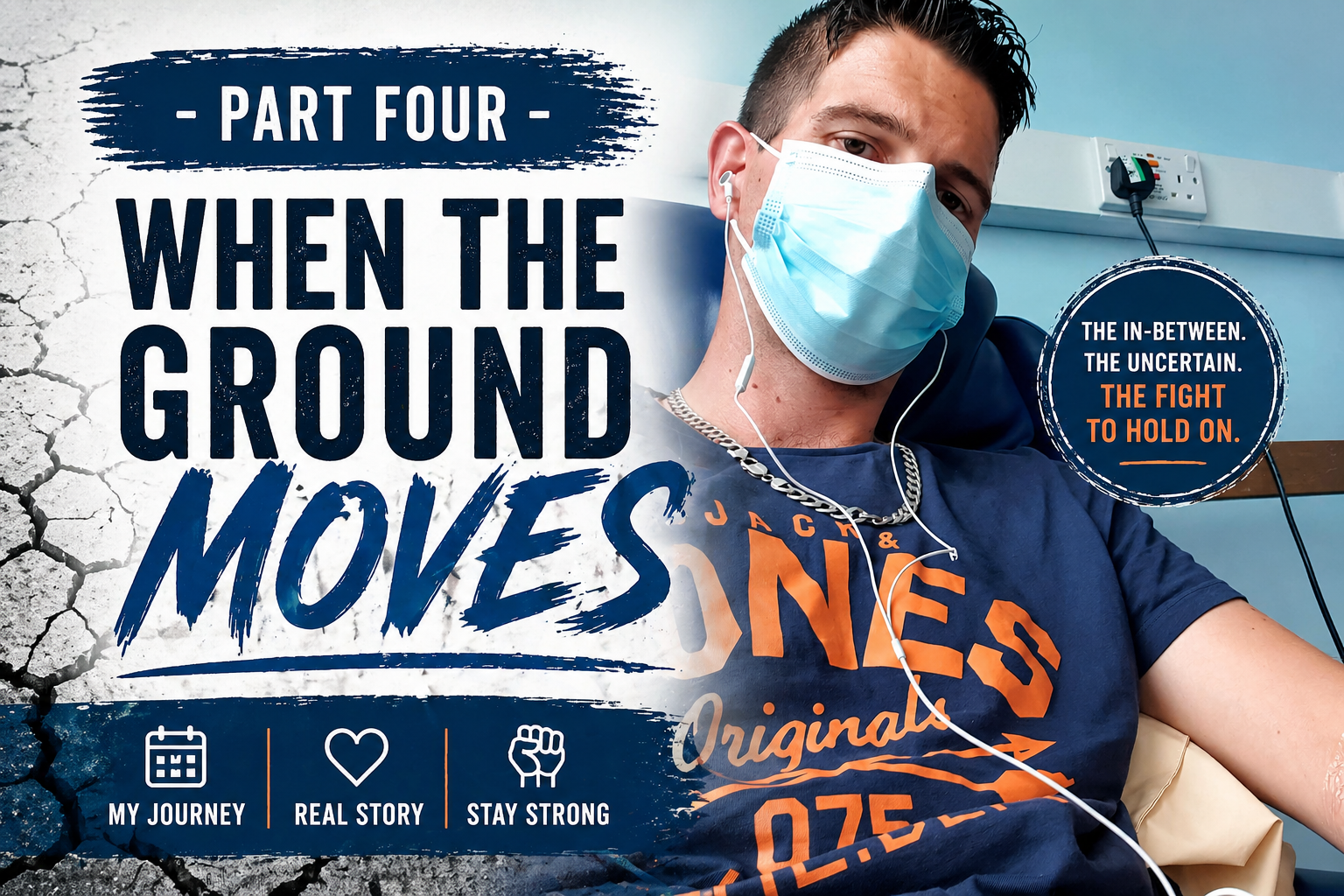
After four years of remission, I thought I had finally built a life that was bigger than ulcerative colitis. I was working, studying, retraining as an accountant, and planning a future that did not revolve around hospital appointments. Then the symptoms slowly started to return. Urgency, blood, fatigue, anxiety, rising inflammation, Covid, job loss, protective underwear, hospital treatment and failed medication all became part of the story. For anyone living with ulcerative colitis, a flare after remission can feel like having the ground pulled from underneath you. One minute you are rebuilding your life, and the next you are back to watching symptoms, planning toilets, questioning medication and wondering how bad things are going to get. This is the part where remission ended — and ulcerative colitis started changing my life again.
This follows on from Part Three, where I shared what life was like living with ulcerative colitis after diagnosis — the flares, medication changes, side effects, treatment escalation, Vedolizumab, and the remission that finally gave me some breathing space.
PART FOUR – WHEN THE GROUND MOVES
Life After Ulcerative Colitis Remission
Chapter 19: Building Something New
For four years, Vedolizumab gave me something I hadn’t had properly since all of this started: breathing space.
Not just breathing space from the physical symptoms, but from the mental load that comes with living around ulcerative colitis. When your body is behaving, you don’t realise how much room that gives your mind. Suddenly, life isn’t only hospital appointments, medication, toilet checks, side effects, blood tests, and waiting for the next thing to go wrong. You can actually start thinking beyond the illness.
During those years, I was still working at Waitrose, mainly as part of the night team. Nights suited me in a strange way. I found it easier to stay awake through the night, sleep in the morning, and fit life around that routine. It worked for where I was at the time, and after everything I had been through, having a routine that worked felt like a win.
But the healthier I became, the more I started to feel like I wanted something else.
It wasn’t that I was ungrateful. Waitrose had been a massive part of my life. It had given me stability when my health hadn’t. But once I started feeling well again, I also started feeling like I was wasting my life in a job that didn’t really have a future for me. I had finally got my health back to a point where I could look beyond just surviving, and once that happened, I couldn’t ignore the feeling that I needed to build something.
So, like most life-changing decisions in the modern world, I turned to the internet.
I searched for careers where you could start at the bottom and work your way up through qualifications. I wanted something structured, something with a clear path, and something where effort could actually lead somewhere. After years of my body being unpredictable, that structure really appealed to me.
Accountancy came up, and for some reason, it clicked.
It felt practical. It felt achievable. There were levels, qualifications, progression, and a clear route forward. I could start at the bottom, study, pass exams, and build a career step by step. That mattered to me because, for so long, ulcerative colitis had made life feel like something I was reacting to rather than choosing.
The only problem was money.
The course wasn’t cheap, and I wasn’t exactly swimming in spare cash, so I contacted Retail Trust. They helped people who had worked in retail for a number of years with grants to better themselves. I applied, hoped for the best, and thankfully they awarded me the grant. That was the start of my AAT Foundation Certificate in Accounting, Level 2.
From that point on, life became a bit ridiculous, but in the best way. I was working nights, studying during the day, and still juggling family life around it all. It was tiring, but it was a different kind of tired to illness tired. This was tired with purpose behind it. I wasn’t exhausted because my body was falling apart. I was exhausted because I was building something.
And somehow, it worked.
I started knocking out distinctions in my exams, and each one gave me a bit more belief that I was on the right path. I wasn’t just the bloke with bowel disease. I wasn’t just someone trying to get through each day. I was building a career.
For the first time in a long time, life felt like it was properly moving forward.
Then Waitrose announced they were selling the shop to Lidl, and the whole store was being made redundant.
Just like that, the ground shifted again.
I had two exams left, bills to pay, a family to support, and this new dream that I was only just starting to believe in. I had to think quickly. I needed a job, but I also needed to keep studying. I didn’t want to stop now, not when I had finally found something that felt right.
That was when I decided an apprenticeship might be the best route. It would give me a steady income and allow me to continue with the qualifications without having to fund everything myself. I went to my first proper interview in years at a manufacturing firm in Exeter, and I was honest about the situation. I needed to continue my redundancy notice, keep studying, and start the new job around all of that.
To my surprise, they accepted it.
I got the job, and that felt massive. I had taken my first step into office work, and Level 3 was on the horizon. For a little while, life felt good. I was studying, working, progressing, and starting to believe that maybe I was finally building the future I wanted.
When Ulcerative Colitis Symptoms Started Returning
Chapter 20: Cracks in the Shield
I don’t know whether it was because the exam was harder than the year before, whether life was getting more stressful, or whether my time with Vedolizumab was simply running out, but around October 2019, things started to change. The old symptoms came back: blood, mucus, and that familiar sinking feeling when you look in the toilet and instantly know something isn’t right.
After four lush symptomless years, I had almost forgotten what it felt like to live with that constant uncertainty. Not completely, because I don’t think you ever truly forget, but enough that I had started trusting my body again. I had built routines. I had started a new career path. I was studying. I was planning. I had begun living as if my body was on my side again.
Then suddenly, the disease reminded me it was still there.
Looking back, this was the point where my wider ulcerative colitis to stoma journey started moving towards surgery, even though I did not fully realise it yet.
My treatment was increased from every eight weeks to every four weeks to see if Vedolizumab could get things back under control. I think everyone wanted it to work. It had already given me so much life back, and I desperately wanted to squeeze more time out of it.
But it wasn’t meant to be.
That was hard to accept. When a drug has changed your life, you almost feel loyal to it. Vedo had pulled me out of one of the darkest places I had ever been. It had given me four years where I could work, study, parent, function, and live without everything revolving around toilets. So when it started failing, it didn’t just feel like a medical change. It felt personal.
Somehow, I kept progressing with my exams through that year, but I wasn’t the same student I had been during Level 2. The distinctions disappeared. A couple of passes only just scraped over the line, with the odd merit here and there.
Before, I had wanted the highest marks I could get. I wanted to prove to myself that I was good at this. But once the symptoms came back, my ambition changed. I didn’t care about being the best anymore. I just wanted to pass. That was it. Pass the exams, get through Level 3, keep moving towards Level 4, and keep the dream alive, even if everything else felt like it was starting to fall apart.
Eventually, Vedolizumab was stopped, and I was put under a new consultant. More scopes followed to see how bad things had become, and the answer was not exactly comforting. The inflammation was getting worse.
And then, just to make everything more complicated, the pandemic began.
Covid, Immunosuppression and a Severe UC Flare
Chapter 21: Covid and Collapse
Covid changed everything for everyone, but when you are already unwell and your immune system is being played around with by medication, it adds another layer of fear and uncertainty.
Luckily, I live in a part of the country where cases were fairly low at the start, but that didn’t stop the worry. Guidance was changing constantly. Nobody seemed to fully know what was safe, what wasn’t, or what people like me were supposed to do. At the same time, my colitis was getting worse, and the timing could not have been worse if it tried.
Because of Covid, the use of stronger steroids was more restricted, so I was put on Budesonide first. It was a less strong steroid, and for me, it did absolutely nothing. They had to be sure, so another scope was booked. By that point, I knew my own body well enough to know I needed the proper steroids. I remember thinking that I wasn’t leaving without them because I knew they were the thing that would at least calm things down.
Eventually, I got Prednisolone again.
Alongside that, I was started on a new treatment called Tofacitinib. This one was different because it came in tablet form rather than an infusion. The plan was to start on a high dose for eight weeks and then reduce it by half. The tricky part was that I was still taking Prednisolone during those first eight weeks, so it was hard to know what was actually working. Was the Tofacitinib helping, or were the steroids just masking everything like they had done before?
I was told to come off the Prednisolone before the Tofacitinib dose reduced, and that was when the truth showed itself. The drug had not worked.
As the steroids came away, the symptoms came charging back.
Then, just to top everything off, I lost my job. The accounts department had budget cuts, presumably due to Covid, and I was let go. There was no big dramatic scene, no shouting, no massive argument. Just another part of my life being pulled out from underneath me at the exact moment I needed stability the most.
So there I was: sick, jobless, trying to finish accountancy exams, trying to manage a disease that was getting worse, and trying not to let the whole thing swallow me up.
Because of Covid, our wedding had to be postponed until 2021 as well, and that was another emotional hit. It wasn’t just one thing going wrong. It was everything stacking up. The symptoms, the job loss, the uncertainty, the wedding being delayed, and the pressure of still trying to become qualified while my body was working against me.
I was sinking, and I don’t think there is a softer way to say it. I was going deeper into depression, and for once it wasn’t only the illness itself. It was everything around it. Every time I tried to build something, colitis seemed to find a way to shake the foundations.
Bowel Urgency, Accidents and Protective Underwear
Chapter 22: Losing Control
This was when control really started disappearing.
I began having accidents left, right, and centre. Driving was one of the worst situations, especially sitting in traffic. When you have bowel urgency, traffic becomes more than annoying. It becomes terrifying. You can’t just pull over anywhere, and you can’t explain to a line of cars that your body is about to betray you. You just sit there gripping the wheel, trying to breathe through the panic, hoping you can hold on long enough.
This was when I discovered protective underwear, and I have worn it ever since.
The first time you have to make that decision, it hits hard. It isn’t about the product itself. Protective underwear is practical. It helps. It gives you a safety net. But emotionally, it felt like crossing a line I never imagined I would reach. It made the illness feel visible to me, even if no one else could see it.
I contacted a counselling service for people with ongoing medical conditions because mentally, I knew I wasn’t in a good place. The problem was that my symptoms were so bad they were overriding even the anxiety. I couldn’t sit and unpack everything emotionally because my body was still screaming the loudest.
My life became route planning. I was constantly thinking about toilets, bushes, quiet places, and anywhere I could secretly go if I had no other choice. That sounds extreme unless you have lived it, but when your bowel gives you seconds rather than minutes, you stop thinking like someone going out for the day and start thinking like someone preparing for an emergency.
I carried what I called a rescue pack. It had protective underwear, spare underwear, wet wipes, dog poo bags, and anything else that might help me clean up, change, and not leave a mess behind if the worst happened. It wasn’t glamorous, but it was necessary, and I wasn’t prepared to be unsanitary or leave anything for someone else to deal with.
That was my reality.
I wasn’t just living with ulcerative colitis at that point. I was planning every movement around it. Every journey had to be thought through. Every outing came with a backup plan. Every traffic queue felt like a threat. Every stomach pain made my heart drop.
My world started getting smaller again, but this time it felt even crueler because I knew what freedom had felt like. I had four years of it. I had built a life during remission. Now I was watching it close in around me.
This was one of the hardest parts of living with ulcerative colitis because it affected every journey, every plan and every bit of confidence I had left.
Starting a New Job While Flaring With Ulcerative Colitis
Chapter 23: The Job I Nearly Didn’t Apply For
Even with everything going on, I still needed to finish my exams. I had two left for Level 3, and somehow, despite the symptoms and everything else happening in the background, I sat one of them and did really well. That gave me a bit of hope, but I still had the final exam hanging over me.
At the same time, I was applying for jobs.
Interviews were happening over Teams because the world had changed, and everything felt more competitive than ever. I kept trying, but I wasn’t getting anywhere. Every rejection chipped away at me a little bit more.
I reached a point where I had almost given up on the dream of becoming an accountant.
That is painful to admit, because accountancy had become more than just a career idea. It was proof that I could build something outside of illness. It was something I had chosen for myself. But when you are sick, unemployed, and constantly being knocked back, even the things you want most can start to feel out of reach.
Then my car had to go in for its MOT, and out of nowhere, my mechanic said, “Why don’t you contact the accountants in town? They’re really nice people.”
I had never even thought about just dropping a CV into a local accountancy practice. The idea scared me a bit, if I’m honest. Working in an actual practice felt like a big leap. I had some experience in manufacturing, but an accountancy practice was different. It felt more serious, more real, and more like the thing I actually wanted, which somehow made it more intimidating.
But at that point, what did I have to lose?
So I sent my CV and a cover letter, and as it turned out, they were looking for someone. They gave me the job.
I was over the moon. After everything, I had landed the kind of role I had been working towards. A proper accountancy job. A chance to keep moving. A chance to prove myself. But, of course, my condition was still there, looming over everything.
I told them about my constant toilet habits because there was no hiding it. At that stage, it would have been impossible to pretend everything was fine. I needed them to know because I needed to know whether they would be understanding.
And they were amazing about it.
That mattered more than I can probably put into words. Starting a new job while flaring is frightening. You don’t want to be seen as unreliable. You don’t want people to think you are making excuses. You don’t want to be the person constantly disappearing to the toilet. But I also couldn’t control what my body was doing.
So I started the dream job with two feelings living side by side: excitement and fear.
I had finally got a foot in the door. I just didn’t know if my body was going to let me stay there.
Back in Hospital With a Severe Ulcerative Colitis Flare
Chapter 24: Back in Hospital
Not long after starting the job, I had to go for another scope. The results showed I had 30cm of inflammation from the bottom up, and another course of Prednisolone was issued. By that point, though, things were becoming unbearable. The pain when passing stool and wind had reached a level I hadn’t experienced before with this disease. It wasn’t just urgency and blood anymore. It was pain that stopped me in my tracks.
For the first time since being diagnosed with ulcerative colitis, I was admitted to hospital.
That felt huge.
Hospitals had always been part of the story, but mostly as appointments, scans, scopes, infusions, and consultations. Being admitted was different. It meant things had crossed another line.
I had been there since the Wednesday, having hydrocortisone steroids pumped into my veins every four hours. Observations were taken every six hours. Nurses came in and out at all times of the day. There were three meals a day, hospital routines, noises in the corridor, and that strange feeling where time seems to move differently once you are on a ward.
I was also given an injection in my leg to avoid blood clots. I didn’t even know the name of the drug, but I definitely knew how it felt. It was painfully stabbed into my leg, and I remember thinking that illness comes with all these little extras nobody warns you about.
It wasn’t just the colitis anymore. It was the treatment, the monitoring, the injections, the waiting, the loss of privacy, and the realisation that I was no longer managing this at home.
I was still trying to be hopeful, but by that stage, hope was getting harder to hold onto. The drugs had kept buying time, but each one seemed to give less than the last. My body was tired, my mind was tired, and my family was tired.
Deep down, I think I knew the conversation was about to change.
When Ulcerative Colitis Surgery Became the Only Way Forward
Chapter 25: When Hope Runs Out
My consultant came to see me in hospital, and by then I think we both knew where things were heading.
There was still another drug that could technically be tried: Infliximab. But the conversation didn’t feel like the old conversations anymore. It didn’t feel like, “Let’s try this and see if we can get you back on track.” It felt like we were talking about whether one more medication would actually change the outcome or just delay the inevitable.
We agreed that trying Infliximab would likely only buy time, and the best way forward was to remove my colon and replace it with a stoma.
There it was.
The thing that had once sounded terrifying. The thing that had once felt like the very last resort. The thing I had once begged for when Methotrexate had stripped me down completely. Now it was no longer an idea in the distance. It was the plan.
The next day, surgical teams and stoma nurses came to see me, and everything started to become very real. These were no longer vague conversations about what might happen one day. This was my actual body, my actual operation, and my actual future.
In ten days, surgery was booked.
That was when preparing for stoma surgery with ulcerative colitis stopped being a future possibility and became something I had to face in real life.
I was told I could go home to spend the Christmas period with my family, unless I ended up in pain and had to be rushed in for emergency surgery. That is a strange thing to be told. Go home, enjoy Christmas, and spend time with your family, but also come straight back if things go wrong because your bowel is now that bad.
The reality was simple and brutal. The condition had reached a point where no drug could reverse what my own immune system had done to my body.
I don’t remember feeling shocked in the way people might expect. I think I had been heading towards that moment for a long time. There was sadness, of course, and fear too, but there was also a strange calmness.
I was exhausted from fighting. Exhausted from hoping the next medication would be the one. Exhausted from planning toilets, carrying rescue packs, wearing protective underwear, losing jobs, forcing myself through exams, and pretending I could keep everything together while my body was falling apart.
Surgery wasn’t what I had wanted at the start. But by then, it had become the way out.
And once that decision was made, everything changed quietly, completely, and forever.
Contact your GP or medical team
This is my personal experience of living through a severe ulcerative colitis flare after remission. It is not medical advice.
If you notice blood or mucus in your stool, unexplained weight loss, ongoing diarrhoea, bowel urgency, worsening fatigue, signs of dehydration, or symptoms that do not feel normal for you, please speak to your GP, IBD nurse, consultant, or medical team.
You can also read Crohn’s & Colitis UK guidance on getting a diagnosis.
You can also read NHS guidance on inflammatory bowel disease symptoms.
Continue the story:
After the flare, hospital treatment and failed medication came the waiting — surgery was no longer just a distant possibility. Read Part Five – The Wait: when ulcerative colitis surgery became real
Some of the links below are affiliate links. This means I may earn a small commission if you buy through them, at no extra cost to you. I only include things that genuinely connect to my own experience.
Things That Helped Me During a Severe UC Flare
By this stage, I wasn’t dealing with early symptoms anymore. I was dealing with a severe flare, urgency, accidents, hospital appointments, exhaustion and the reality that treatment options were running out.
These are a few practical things that helped me feel slightly more prepared during one of the hardest stages of my UC journey.
🧻 Bamboo Toilet Tissue
Nobody really talks about this, but when you’re using the toilet constantly, softer toilet tissue makes a massive difference.
Why it helped:
✔ Gentler during frequent toilet trips
✔ Reduced irritation
✔ One of those small comforts that matters

👉 See Bamboo Toilet Tissue Options
🩲 Protective Underwear for Men
This was one of the hardest things for me to accept during severe flares. But when accidents became a real possibility, protective underwear gave me a small sense of security during one of the lowest periods of my illness.
✔ Reduced anxiety when leaving the house
✔ Helped during long journeys and hospital visits
✔ Gave me confidence during severe urgency
✔ Helped me maintain some independence
✔ A practical backup during unpredictable flares

👉 View Protective Underwear Options
⚡ Electrolyte rehydration sachets
I didn’t realise how dehydrated I constantly was until I started replacing electrolytes properly — not just drinking water.
Why it helped:
✔ Helped with fatigue and dizziness
✔ Better hydration during flares
✔ Easy to carry when out the house
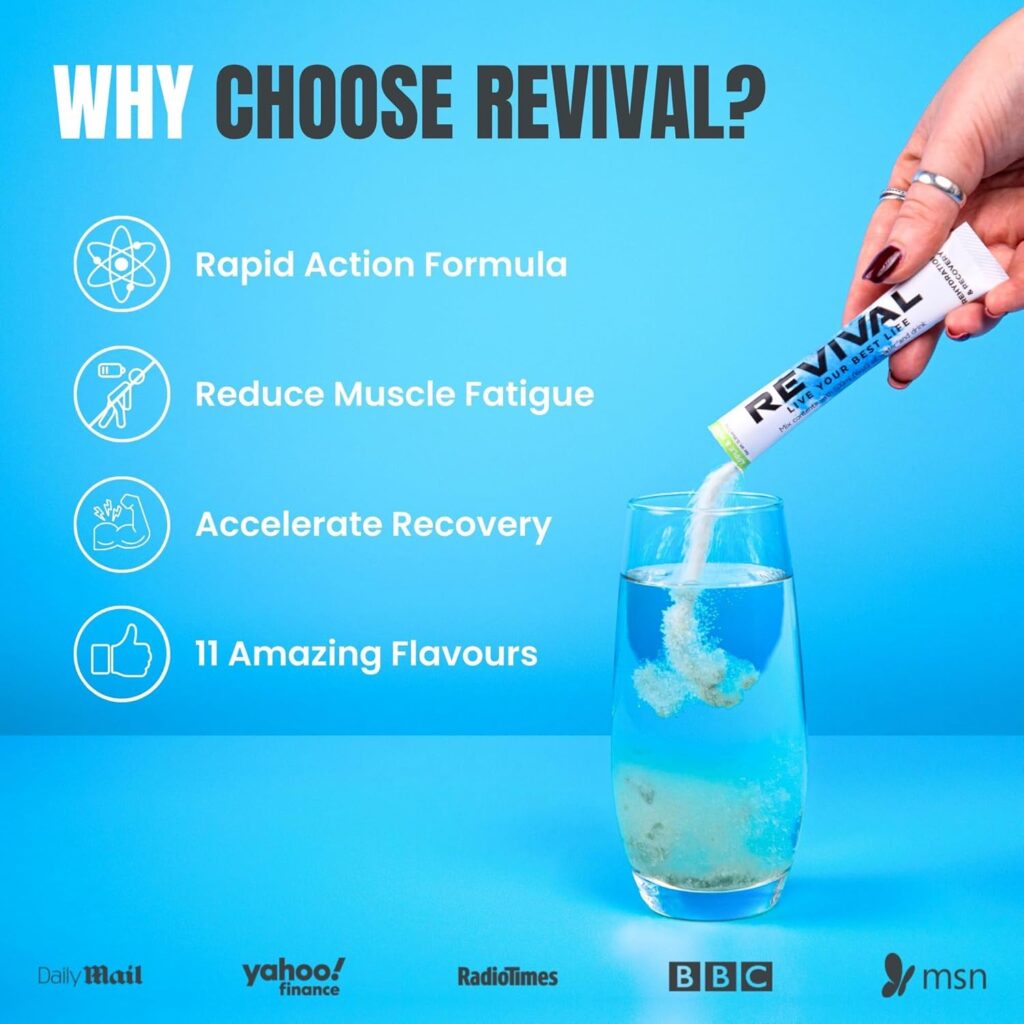
👉 Browse Electrolyte rehydration sachets