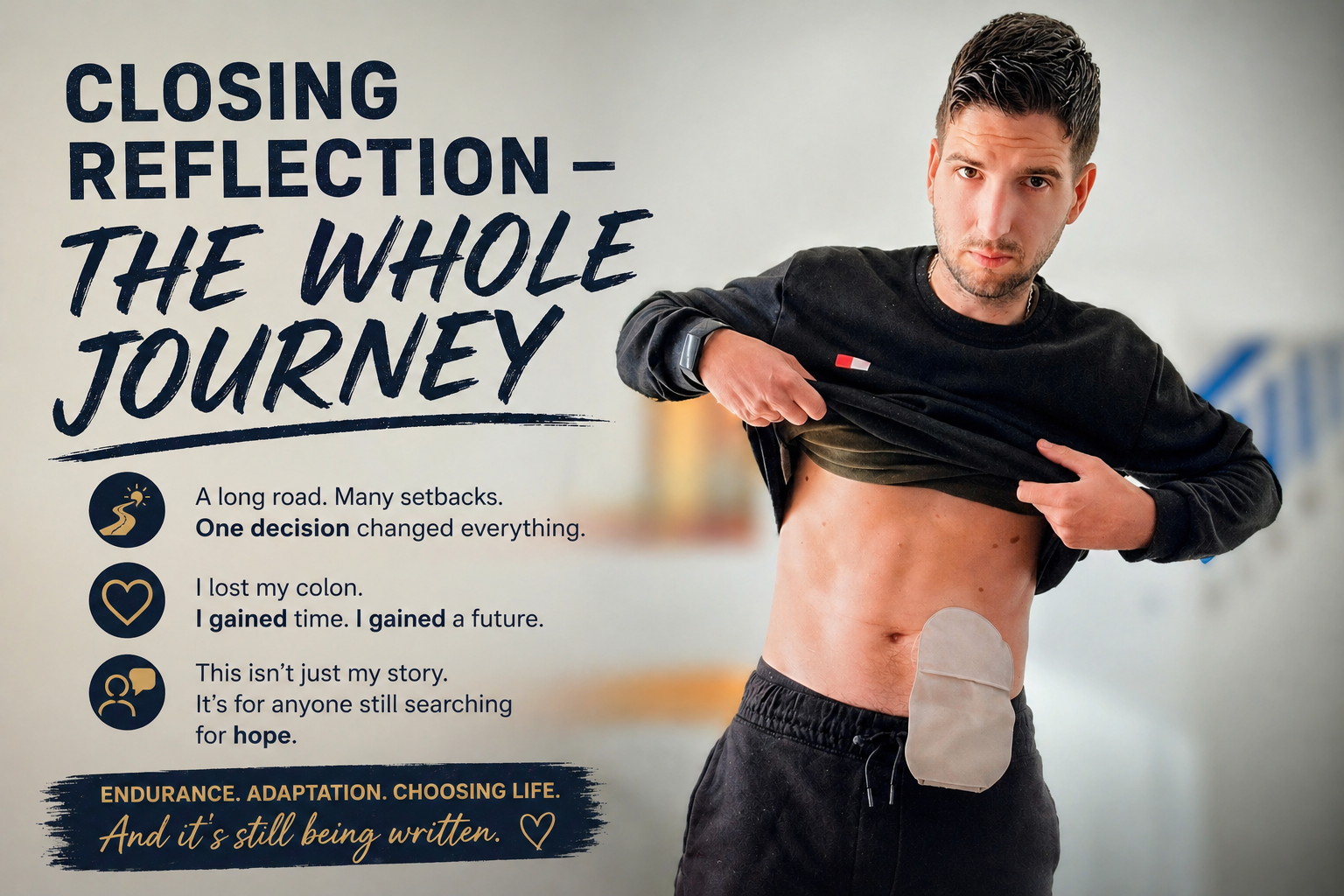
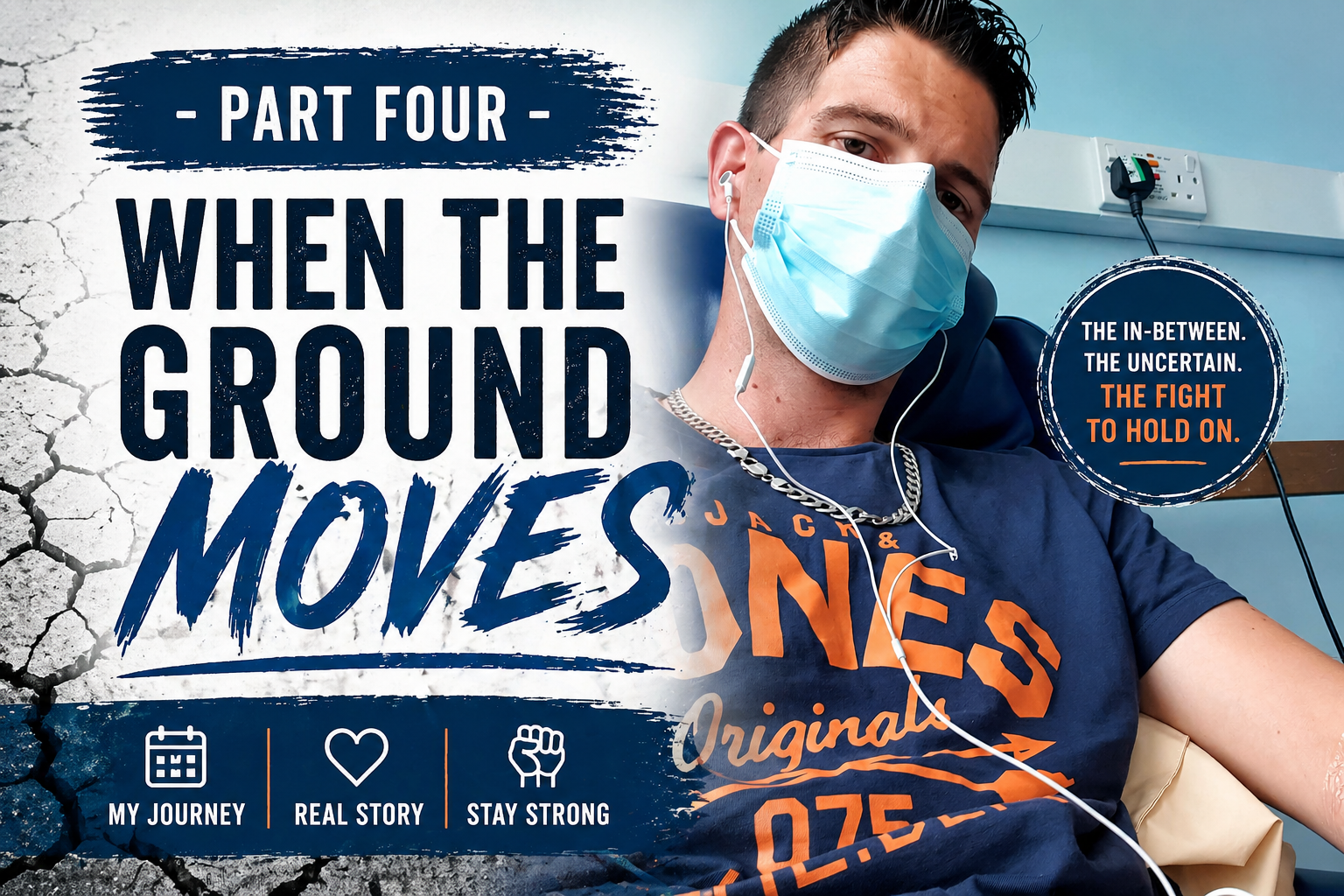
Chapter 19: Building Something New
Feeling well for the first time in years gave me confidence — not just physically, but mentally.
I decided to retrain as an accountant.
It wasn’t a small decision. I was working nights at Waitrose, studying during the day, and trying to build a future that didn’t revolve around illness. For the first time, my plans extended further than my next hospital appointment.
Vedolizumab continued quietly in the background, every eight weeks, almost forgotten — which, ironically, was the biggest gift it gave me.
I progressed. I learned. I passed exams.
Life felt like it was finally moving forward.
Chapter 20: Cracks in the Shield
The return of symptoms was subtle at first.
A bit more urgency.
Occasional blood.
A familiar heaviness in my gut.
I didn’t panic straight away. Four years of remission had taught me not to overreact to every bad day.
But bad days turned into bad weeks.
Blood tests showed rising inflammation. Stool samples confirmed what I already suspected.
Vedolizumab was starting to fail.
The dose was increased. The infusions were brought closer together. We tried to squeeze more life out of the drug that had already given me so much.
For a while, it held.
Then Covid hit.
Chapter 21: Covid and Collapse
Catching Covid while immunosuppressed was terrifying.
The guidance was unclear. The fear was constant. Every cough felt like a warning sign.
At the same time, my colitis flared hard.
Working in retail during a pandemic while dealing with bowel urgency felt impossible. I was exhausted, anxious, and barely holding things together.
Eventually, I lost my job.
It wasn’t dramatic. No shouting. No arguments.
Just a quiet, devastating end to something that had been my safety net for years.
Losing work stripped away more than income — it took routine, purpose, and confidence with it.
Chapter 22: Losing Control
The flare escalated rapidly.
I was going to the toilet constantly. Accidents became a real possibility — then a reality.
The first time I wore protective underwear, I cried.
Not because of the product itself — but because of what it represented. A loss of dignity. A loss of control. A line crossed that I never imagined I’d reach.
I stopped going out unless absolutely necessary. I mapped toilets. I planned routes. I declined invitations.
My world shrank again.
Mentally, I was struggling more than I wanted to admit.
Chapter 23: Back Where It Started
Eventually, there was no avoiding hospital.
Blood tests were bad. Weight dropped again. Energy disappeared.
I found myself sitting in familiar waiting rooms, hearing familiar phrases, answering the same questions.
“How many times a day?”
“Any blood?”
“Any pain?”
Yes.
Yes.
Yes.
Vedolizumab was officially stopped.
The drug that had given me four years of life was no longer an option.
Chapter 24: The Big Guns
With options running out, the conversation turned serious again.
Biologics. Stronger ones. Higher risk.
Infliximab was next.
I was admitted to hospital for loading doses. Cannulas. Drips. Monitoring. Hope balanced precariously with fear.
At first, it seemed promising.
Symptoms eased slightly. Numbers improved just enough to keep optimism alive.
But my body had other plans.
Chapter 25: When Hope Runs Out
The response didn’t last.
Blood returned. Urgency followed. Fatigue became crushing.
More tests. More discussions. More quiet looks exchanged between doctors.
I knew what was coming before anyone said it.
One afternoon, my consultant sat down and didn’t open his laptop.
That’s how I knew this was different.
“We’re running out of medical options,” he said gently.
“I think it’s time we talk seriously about surgery.”
This time, the word didn’t scare me.
It felt… inevitable.