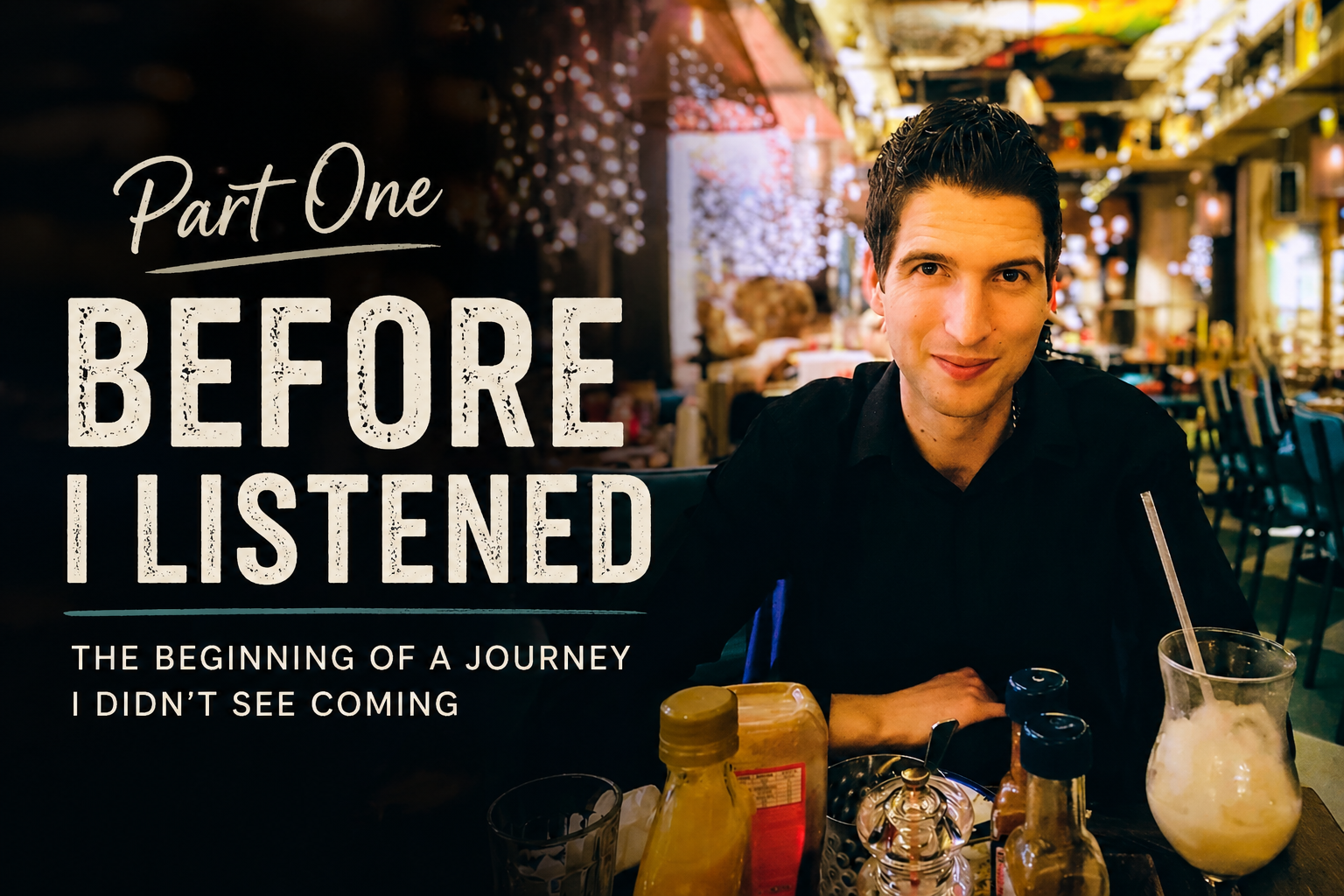
Before I was diagnosed with ulcerative colitis, I ignored symptoms I should have taken seriously. Mucus, blood, weight loss, toilet changes, fatigue and fear slowly became part of everyday life. At first, I convinced myself it was probably piles, stress, food, or something that would go away on its own. This is the beginning of my UC diagnosis story — and the part where I wish I had listened to my body sooner.
This was only the start of my wider ulcerative colitis journey, before the hospital appointments, tests, medication and everything that came after.
PART ONE – BEFORE I LISTENED
Early Ulcerative Colitis Symptoms I Ignored
Chapter 1: It Wasn’t Haemorrhoids
My story didn’t start with a dramatic collapse, a blue-light ambulance, or some big obvious medical emergency where everyone around me suddenly knew something was wrong. It started with something much more ordinary, much more awkward, and probably the exact reason I ignored it for longer than I should have.
It started with going to the toilet.
I don’t know why talking about poo is still so taboo, but it is. We all do it. Every single one of us. It is one of the most normal things in the world, yet the second something changes, people would rather pretend it isn’t happening than talk about it properly. I was exactly the same. Instead of seeing it as my body trying to warn me, I saw it as something embarrassing that I didn’t really want to deal with.
In 2013, I was 26 years old and started noticing strange symptoms when I went to the toilet. At first, it was constipation. Then I noticed white streaks on the stool afterwards. I didn’t know what that was at the time, but I now know it was mucus.
Mucus is one of those things you don’t really think about until you see it somewhere you don’t expect to see it. Your colon naturally produces mucus, and it helps protect the lining of the bowel, but when you start seeing it regularly on your stool, it can be a sign that something is irritated or inflamed.
Of course, I didn’t know any of that then.
I was a 26-year-old bloke in 2013, and my expert medical approach was basically to ignore it and hope it went away. That was my first major schoolboy error.
Looking back now, I wish I had taken it seriously sooner. I wish I had gone to the doctor straight away. I wish I had understood that your body doesn’t usually send warning signs just for the fun of it. But at the time, it was easier to bury my head in the sand and carry on.
I wasn’t thinking about bowel disease. I wasn’t thinking about ulcerative colitis. I wasn’t even really thinking about being ill. I just thought something strange had happened and, if I ignored it long enough, normal would eventually come back.
So that is exactly what I did.
Life carried on around it. I had a beautiful girlfriend, and between us we were raising four children full-time. We had also just had a daughter together, which brought us to five children in total. Life was busy. Properly busy. There were school runs, work, family routines, food shops, bills, noise, chaos, and everything else that comes with a big family.
I had also started working at Waitrose, which had replaced the big Co-op in town. On the surface, things were going okay. I was working, helping raise a family, and trying to build a life like anyone else.
But quietly, in the background, my body was starting to tell a very different story.
At that point, I didn’t listen. I just carried on, hoping the problem would disappear on its own.
When Blood and Mucus Became Impossible to Ignore
Chapter 2: Hoping It Would Go Away
The problem with ignoring symptoms is that they don’t always politely disappear just because you are embarrassed by them. Mine didn’t go away. They got worse.
The mucus was no longer just appearing on the stool. It started coming out with blood as well. That should have been the moment I stopped messing about and got help properly, but even then, I tried to explain it away.
I blamed food. More specifically, I blamed a spicy meat feast pizza.
I had eaten one the night before and had diarrhoea afterwards, so in my mind that became the easiest answer. It was much easier to blame a pizza than admit that something serious might be happening inside my body. A dodgy takeaway or spicy meal felt like something temporary, something normal, something I didn’t have to be frightened of.
Deep down, though, I knew.
You know when something just doesn’t feel right. Even if you don’t say it out loud. Even if you keep joking it off or telling yourself it is probably nothing. There is a part of you that knows your body has crossed a line.
My girlfriend could see it too. She knew it wasn’t normal, and eventually she convinced me to go to the doctor. I didn’t want to go, not because I didn’t want help, but because I knew what I was going to have to talk about.
There is nothing enjoyable about sitting in front of a doctor and explaining that blood and mucus are coming out of your bum. Even writing that now feels blunt, but that is the reality of it. At the time, I was mortified. It felt embarrassing, awkward, and far too personal to say out loud to someone I barely knew.
But I went anyway.
The appointment was fairly quick, and after explaining what was happening, I was told it sounded like piles. Haemorrhoids.
Part of me was relieved because piles sounded normal. Embarrassing, yes, but normal. They were something people joked about. Something you could buy cream for. Something that didn’t sound life-changing or frightening.
So I accepted it.
Off I went to the supermarket and bought Anusol. Then came the joy of starting a course of squirting ointment up there and hoping that would be the end of it. It wasn’t exactly one of life’s finer moments, but if it fixed the problem, I was willing to get on with it.
A week passed and nothing improved.
If anything, I started questioning whether I was doing it wrong. Was I using enough? Was it strong enough? Was I being impatient? I wanted the answer to still be simple, because simple felt safe. I wanted it to be piles because piles could be treated, laughed off, and forgotten about.
But the symptoms were still there. The blood was still there. The mucus was still there. The worry was still there.
By then, the doubt had started creeping in properly.
Maybe it wasn’t piles. Maybe it never had been.
Looking back, this was one of the first moments I realised how easily ulcerative colitis symptoms can be mistaken for something less serious.
Waiting for a Gastroenterology Referral
Chapter 3: When Something Felt Wrong
After the Anusol did absolutely nothing, I went back to the doctors. This time, I wanted more than a quick answer. I needed someone to tell me what was actually going on, because by then I knew this wasn’t just an embarrassing little problem that could be sorted with a tube of cream.
I was referred to the gastro team at the hospital, but that meant waiting. And while I waited, things continued to get worse.
I reached the point where I couldn’t even pass wind without mucus being released as well. That is a strange and horrible thing to experience, because something your body has done automatically your whole life suddenly becomes risky. You start second-guessing everything. Even the smallest sensation makes you tense up because you don’t know what is going to happen.
I was also losing weight rapidly.
This wasn’t healthy weight loss. It wasn’t the sort of weight loss people congratulate you for. This was the kind where you look in the mirror and don’t quite recognise yourself. My clothes didn’t sit right. My face looked different. My body was shrinking, and I had no control over it.
That is when my mind went to the place I had been trying to avoid.
The big C.
Cancer.
Once that thought enters your head, it is very hard to get it back out again. Every symptom suddenly feels more sinister. Every toilet trip becomes evidence. Every day waiting for an appointment feels longer than it should. You try to distract yourself, but the thought sits in the background, waiting for a quiet moment to come back again.
I was naïve about a lot of things back then, but I knew enough to be scared.
The worst part was trying to carry on as if everything was normal. I still had work. I still had family life. I still had responsibilities. The world doesn’t pause just because your head is spinning with worst-case scenarios.
So I kept going.
I went to work. I tried to act normal. I tried to be present at home. But underneath it all, I was frightened. I was frightened that I had ignored it for too long. I was frightened that the first diagnosis had been wrong. I was frightened that by the time someone looked properly, it would be too late.
Looking back, this was the point where the embarrassment started to disappear and fear took its place. Suddenly, talking about poo didn’t feel like the worst thing in the world. Not knowing what was happening felt much worse.
Being Checked for Cancer and IBD
Chapter 4: Level 8
Eventually, the hospital appointment came through.
Me and my girlfriend went to the hospital and made our way all the way up to Level 8. I say made our way up, but we took the stairs because she hates lifts. At the time, that was just one of those little details. Nothing important. Just something that happened. Funny how certain details stick with you when everything else feels like a blur.
We signed in and sat waiting.
I remember feeling nervous, but also desperate for answers. By that point, I had gone past the stage of hoping it would magically disappear. I needed someone to look properly and tell me what was going on.
Eventually, we were called into a small room by a nurse, and I explained my symptoms. This time, I didn’t try to make it sound better than it was. I told her about the blood, the mucus, the weight loss, and the fact I couldn’t even pass wind normally anymore. There was no point being vague. My dignity had already taken enough of a battering by then.
Then she said the sentence I wasn’t prepared for.
She told me they had to make sure it wasn’t cancer, because they couldn’t rule that out yet.
My stomach dropped.
I looked at my girlfriend, and I think my face probably said everything I couldn’t. I had been scared of that word for weeks, but hearing someone medical say it out loud made it real in a completely different way. Until then, cancer had been a fear in my own head. Now it had entered the room.
But that still wasn’t the most uncomfortable part of the appointment.
The nurse then said she needed to examine me.
Now, when someone says they need to examine you in that context, you already know your day is about to get significantly worse. She asked me to go behind the curtain, and all I could think was, “So I’ve got to get my bum out for this lady now?”
I was mortified.
Then she pulled out this long metal instrument that looked like some sort of transformer device from a nightmare, and it suddenly became very clear how this examination was going to happen.
There was no graceful way through it. I took a deep breath and got on with it.
That was the first time anything had gone upwards instead of following the natural downward flow it was designed for, and I can safely say it was not an experience I was keen to repeat.
The examination only lasted a few minutes, but it felt much longer. It was uncomfortable, embarrassing, and one of those moments where you realise that when you need answers badly enough, dignity becomes a luxury.
When it was over, she told me she couldn’t see any haemorrhoids. No piles. So the original diagnosis had been wrong.
Then she told me she knew what she thought it was.
Ulcerative colitis.
A form of bowel disease.
I finally had a name for what was happening, but I had no idea what that name actually meant.
Hearing the Words Ulcerative Colitis
Chapter 5: A Name, Not a Solution
When the nurse said ulcerative colitis, my head started spinning.
Part of me was relieved that there was an explanation. Another part of me was still stuck on the fact they needed to send me for a scan to rule out cancer. So even though I had been given a likely diagnosis, it didn’t feel like an answer that let me breathe properly.
It felt like being handed one piece of a much bigger, scarier puzzle.
I asked what bowel disease actually meant. She explained that there are different types of inflammatory bowel disease, including Crohn’s disease and ulcerative colitis. Crohn’s was a name I had heard before, mainly because I remembered watching Dynamo the magician and finding out he had it. But ulcerative colitis was new to me.
I didn’t know how I had got it. I didn’t know if it could be cured. I didn’t know what it meant for my future. I didn’t know whether my life was about to change a little or a lot.
That uncertainty carried on after diagnosis, and learning what ulcerative colitis actually meant became a whole new part of the story.
And hanging over all of that was still the question I couldn’t get away from.
What if it was cancer?
At least one thing was clear. I didn’t need to keep using the Anusol. There were no haemorrhoids to treat because haemorrhoids had never been the problem.
Instead, I was given Pentasa Mesalazine suppositories to use every night to help soothe the inflammation and calm the symptoms. Again, there is no glamorous way to describe that. A suppository is exactly what you think it is, and when you are still getting used to the idea that your bowels are now a medical subject, it feels like a lot.
But I tried to make sense of it in my own way.
In my head, I imagined it a bit like a reverse Gaviscon. Instead of the little firefighter going down to put out stomach acid, this medication was going in the opposite direction to calm everything down in my colon. It might sound ridiculous, but sometimes humour is the only way to process something that feels too big.
And to be fair, it did help.
The mucus settled down. The bleeding eased. For the first time in a while, something seemed to be working. That gave me a little bit of hope, even if I still didn’t fully understand what I was dealing with.
But I still wasn’t putting weight back on. I still didn’t look right. I still didn’t feel like myself. And I still had the scan hanging over me.
So yes, I had a name.
Ulcerative colitis.
But at that stage, it didn’t feel like a solution. It felt like the beginning of a very long lesson I never asked to learn.
That lesson eventually became much bigger than diagnosis alone, and it is why I now share the full journey from ulcerative colitis symptoms to life with a stoma.
Contact your GP or medical team
This is my personal experience of ulcerative colitis and delayed diagnosis. It is not medical advice.
If you notice blood or mucus in your stool, unexplained weight loss, ongoing diarrhoea, bowel changes, or symptoms that do not feel normal for you, please speak to your GP or medical team.
You can also read Crohn’s & Colitis UK guidance on getting a diagnosis.
You can also read NHS guidance on inflammatory bowel disease symptoms.
Continue the story:
After the first symptoms came the waiting, the tests, the fear, and learning what ulcerative colitis actually meant. Read what happened after my ulcerative colitis diagnosis.
Some of the links below are affiliate links. This means I may earn a small commission if you buy through them, at no extra cost to you. I only include things that genuinely connect to my own experience.
Things That Helped Me During The Early Symptoms
When everything first started, I felt completely unprepared.
I didn’t understand what was happening to my body, and most days became a mix of exhaustion, anxiety, hospital appointments, and endless toilet trips.
These are a few small things that genuinely made life easier during that period.
These are not cures or medical recommendations — just small things that helped me feel slightly more prepared during the early symptom stage.
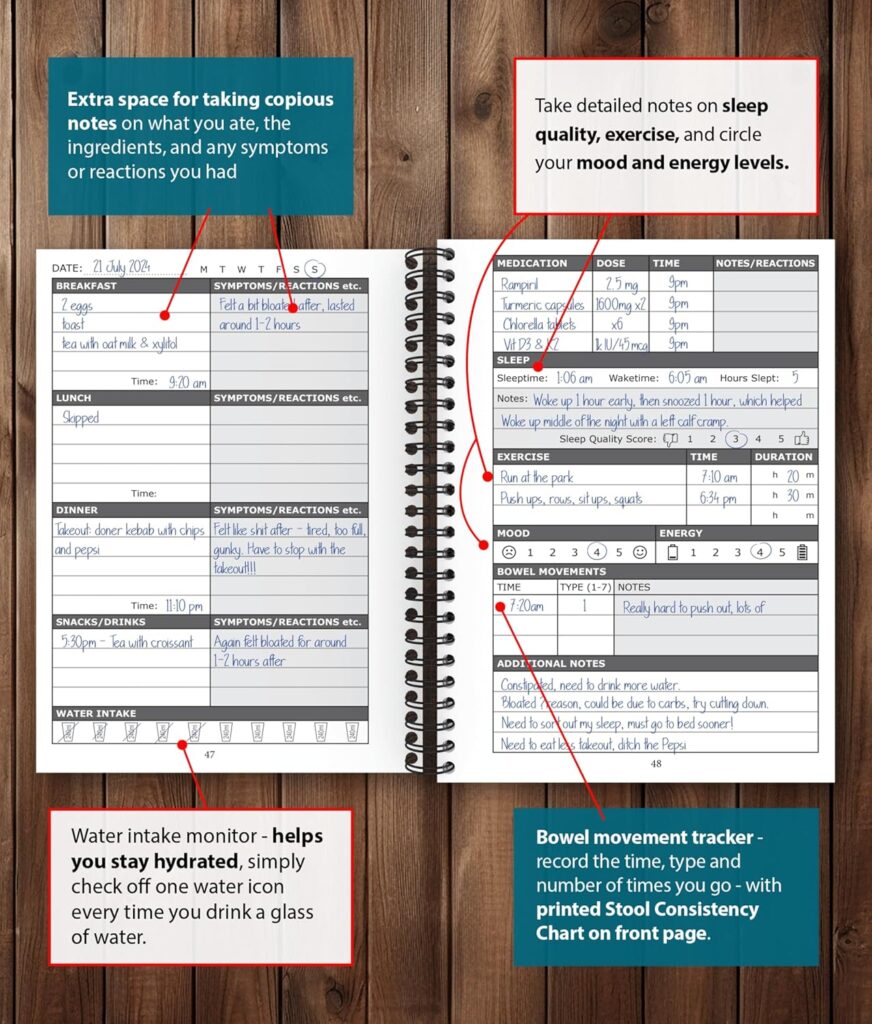
📝 Symptom Journal
Keeping track of symptoms, food triggers, medications, toilet frequency, and flare patterns helped me explain things properly during appointments — and spot patterns I would’ve otherwise missed.
Why it helped:
✔ Easier GP & hospital conversations
✔ Helped identify trigger foods
✔ Reduced the feeling of losing control
👉Check Symptom Journals on Amazon
🔥 Hot Water Bottle (Premium)
During flare days, the cramping and abdominal pain could be relentless. Heat was one of the few things that brought genuine comfort.
Why it helped:
✔ Helped ease stomach cramps
✔ Comfort during sleepless nights
✔ Became part of my daily flare routine

👉View Recommended Premium Hot Water Bottle on Amazon
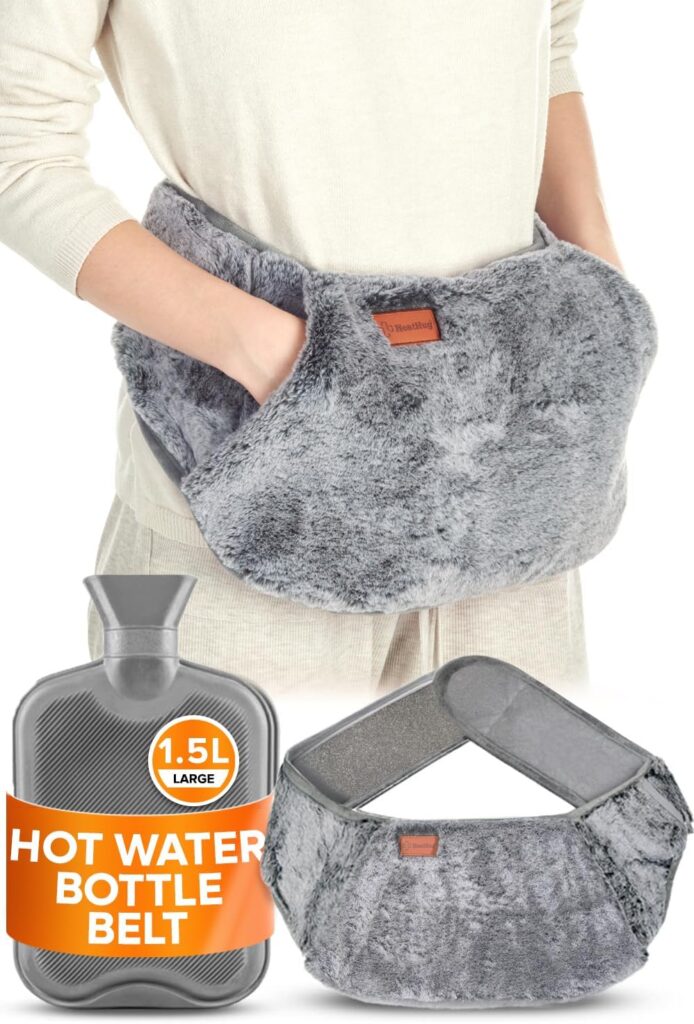
🔥 Premium Hot Water Bottle Belt
For me, a wearable hot water bottle belt was a complete upgrade from a normal hot water bottle. Instead of constantly holding it in place or readjusting it every five minutes, the belt wraps around your stomach or lower back so the heat stays exactly where you need it.
Why it helped:
✔ Hands-free comfort during flare days
✔ Stayed in place while resting or walking around
✔ Better support for stomach cramps and lower back pain
✔ Felt more practical during long nights and hospital recovery days
👉View Premium Hot Water Belt on Amazon
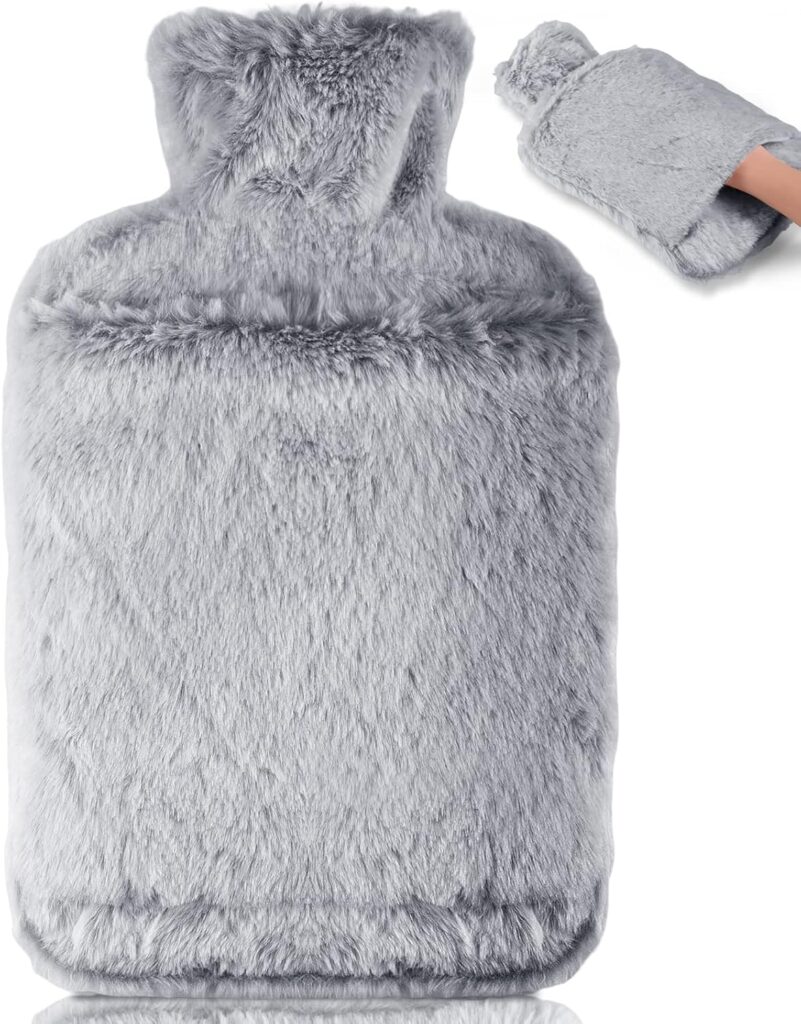
💷 Budget Hot Water Bottle
Sometimes the simplest things help the most. A standard hot water bottle was one of the few things that consistently brought comfort during cramps, flare pain, and sleepless nights.
Why it helped:
✔ Simple and affordable
✔ Easy relief during stomach cramps
✔ Perfect backup for flare days
✔ One of those small comforts that genuinely mattered
👉 See Budget Hot Water Bottle on Amazon
⚡ Electrolyte rehydration sachets
I didn’t realise how dehydrated I constantly was until I started replacing electrolytes properly — not just drinking water.
Why it helped:
✔ Helped with fatigue and dizziness
✔ Better hydration during flares
✔ Easy to carry when out the house
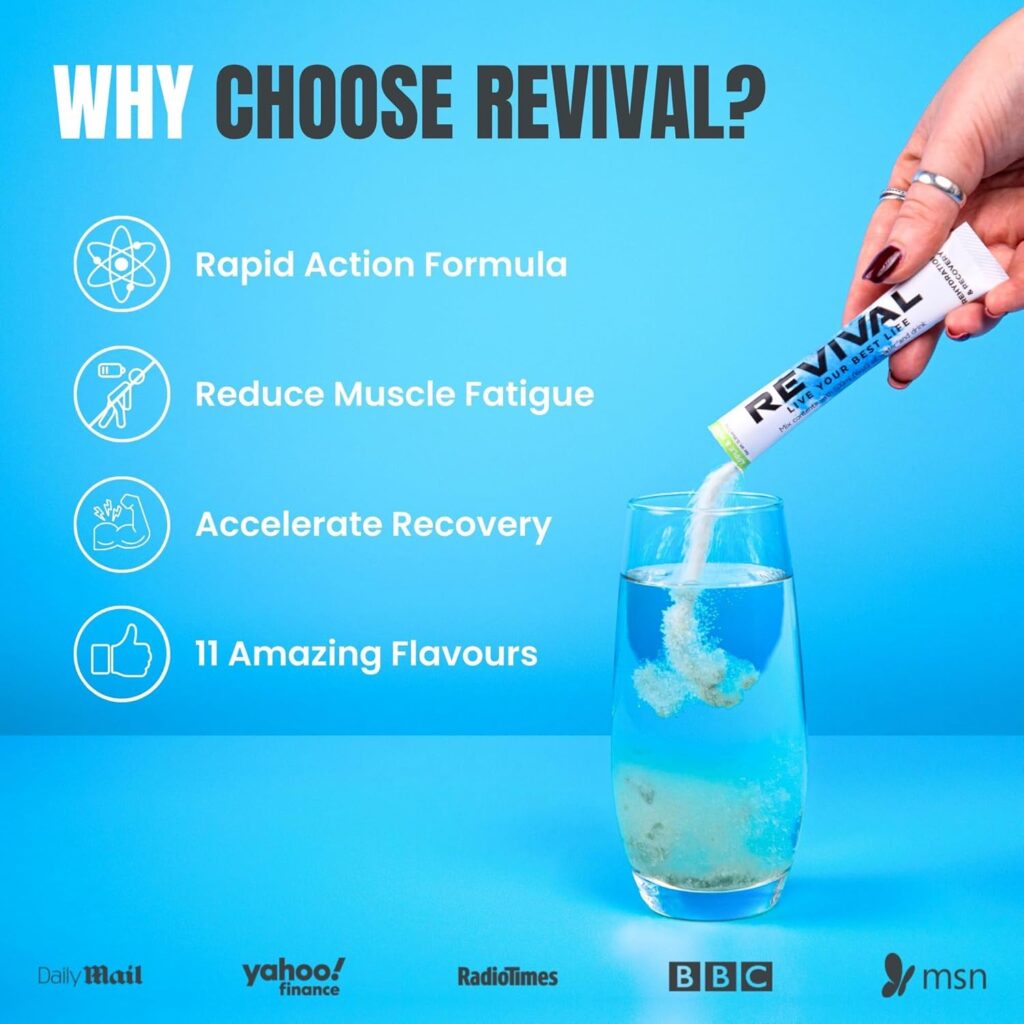
👉 Browse Electrolyte rehydration sachets
🧻 Bamboo Toilet Tissue
Nobody really talks about this, but when you’re using the toilet constantly, softer toilet tissue makes a massive difference.
Why it helped:
✔ Gentler during frequent toilet trips
✔ Reduced irritation
✔ One of those small comforts that matters

👉 See Bamboo Toilet Tissue Options
🔋 Portable Charger
Hospital waiting rooms, emergency toilet trips, and long appointments meant my phone battery was always dying at the worst times.
Why it helped:
✔ Kept my phone charged during long appointments and hospital waits
✔ Helped me stay connected when I was anxious or away from home
✔ Useful when toilet trips, fatigue and appointments made days unpredictable
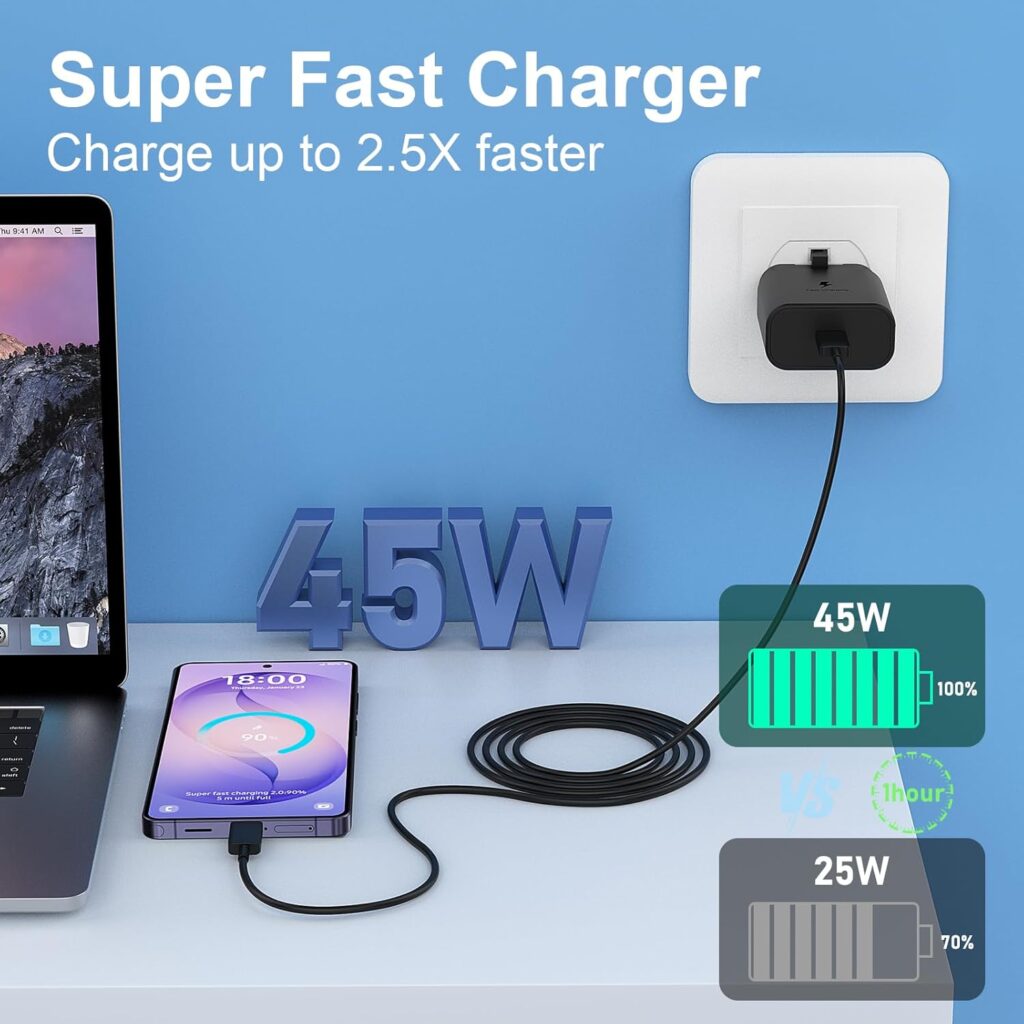
👉 Find Portable Chargers on Amazon
💊 Pill Organiser
Once medications became part of daily life, keeping track of everything became surprisingly stressful — especially with fatigue and brain fog.
Why it helped:
✔ Helped me stay consistent with medication
✔ Reduced stress and missed doses
✔ Simple but genuinely useful
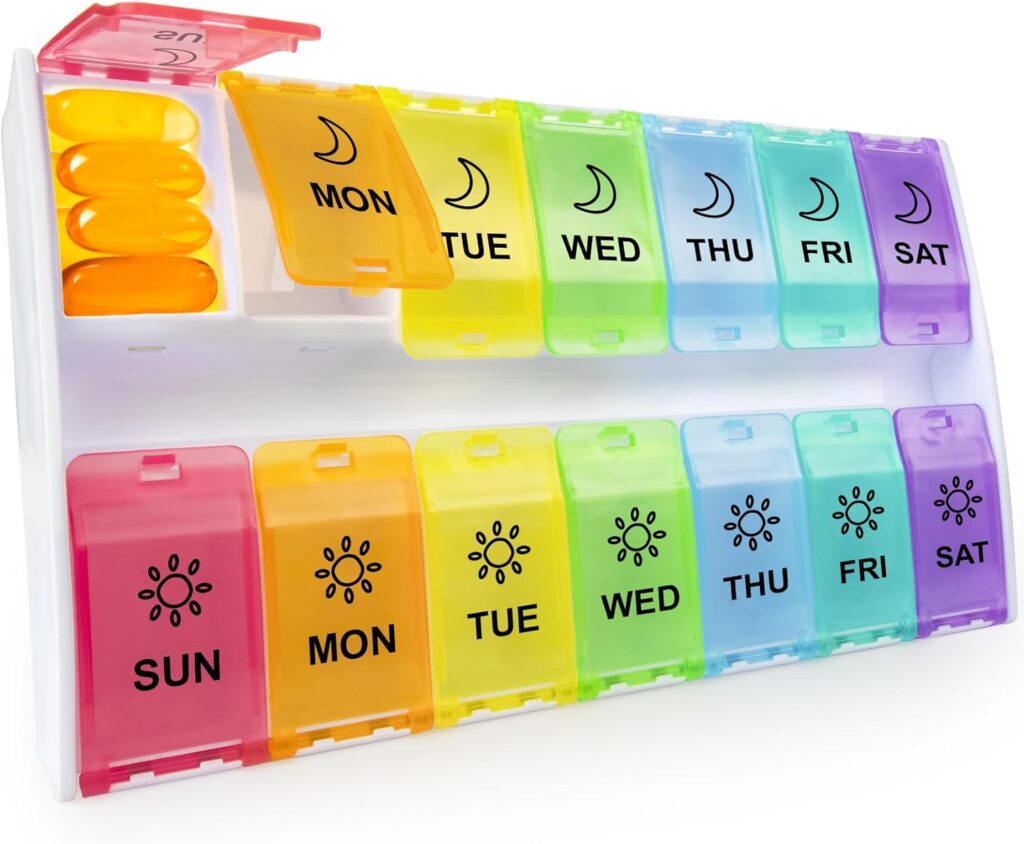
👉 Shop Pill Organisers on Amazon