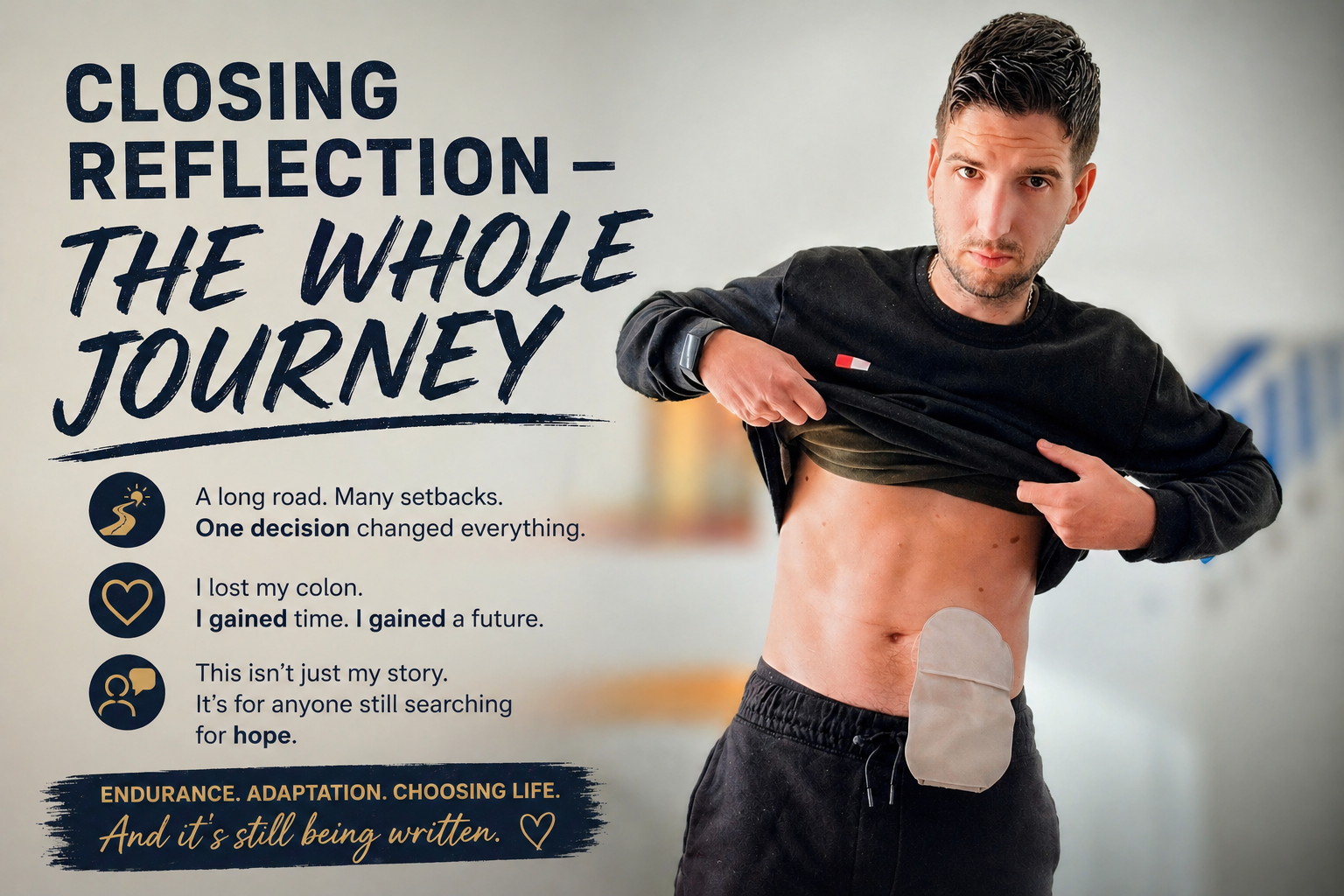
This is the closing reflection on my ulcerative colitis to stoma journey — from the early symptoms I ignored, to diagnosis, medication, remission, relapse, hospital admissions, stoma surgery, recovery, and learning to live again. It is not a neat or simple story, but it is the full journey of how ulcerative colitis changed my body, my confidence, my future, and eventually gave me a voice through The Stoma Accountant.
This page brings the whole journey together in one place, including the symptoms I ignored, what happened after diagnosis, the long years of living with ulcerative colitis, the flare that changed everything, preparing for surgery, waking up with a stoma and learning who I am now.
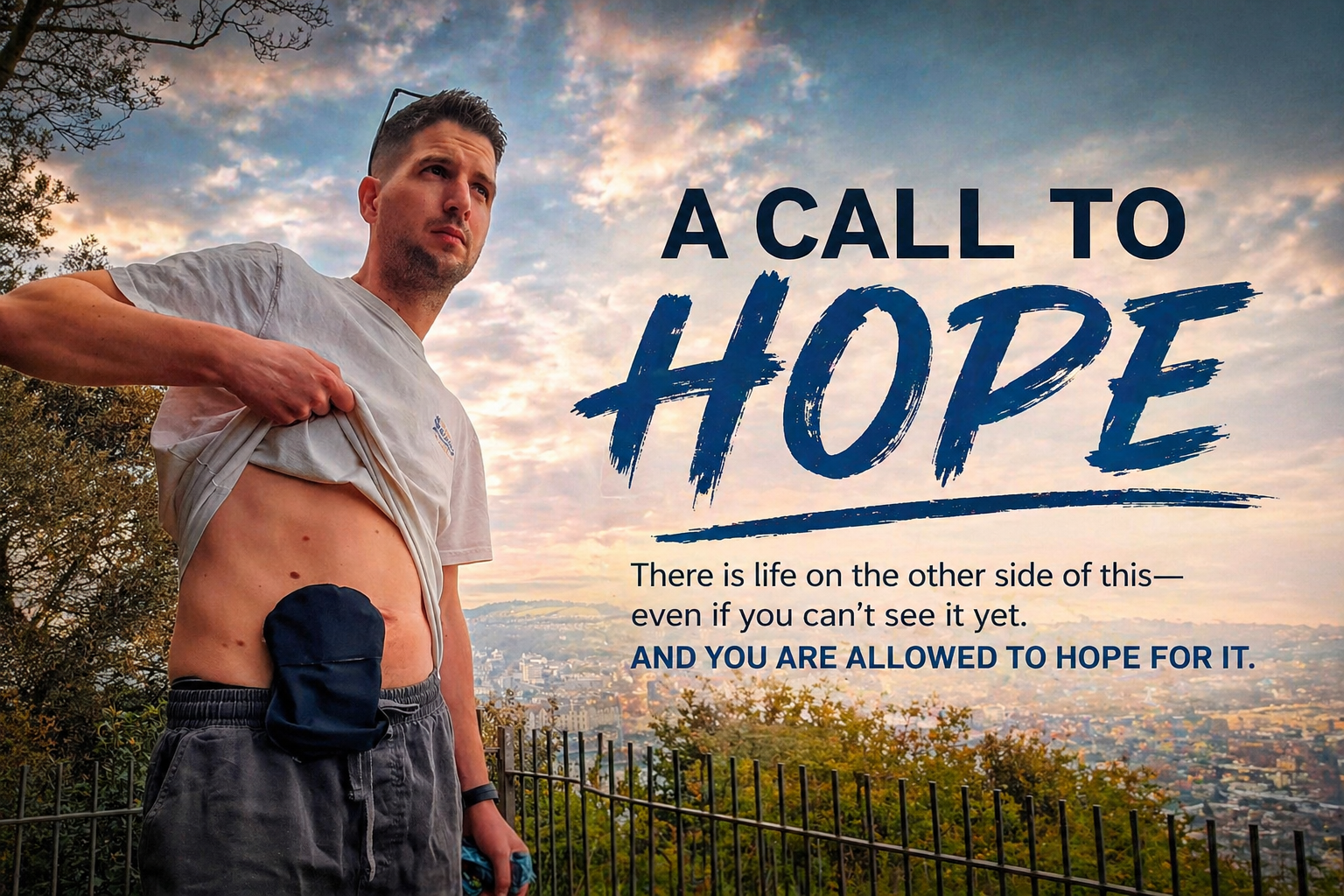
This follows on from A Call to Hope, where I shared a message for anyone living with ulcerative colitis, facing stoma surgery, recovering with a stoma, or wondering whether life can feel normal again.
My journey with ulcerative colitis didn’t follow a straight line.
The Early Ulcerative Colitis Symptoms I Ignored
It didn’t begin with some dramatic collapse or obvious medical emergency. It began quietly, with symptoms that were easy to dismiss because they were awkward, embarrassing, and not the sort of thing people naturally want to talk about. At the start, I wanted to believe it was something simple. Something that would go away. Something I could ignore until life carried on as normal.
What started as mucus, blood, weight loss and fear slowly turned into years of appointments, medications, scans, scopes, hospital rooms, false hope, side effects, and setbacks. Before the medication journey truly began, I had to understand what happened after my ulcerative colitis diagnosis and what those first hospital appointments meant.
There were moments where treatment worked and I thought I had finally found solid ground. There were also moments where drugs failed spectacularly and pulled that ground away again.
That is one of the hardest parts of living with a condition like ulcerative colitis. It doesn’t just affect your body. It affects your ability to trust life.
You learn not to get too comfortable. You learn that a good few weeks doesn’t always mean the storm has passed. You learn that a medication working today doesn’t guarantee it will work forever. You learn to live with hope, but also with caution, because you have been disappointed before.
Vedolizumab gave me four years of life back, and I will always be grateful for that. Those years were part of learning what living with ulcerative colitis after diagnosis really meant. Those years mattered. They gave me room to breathe, room to work, room to study, room to start building a career, and room to remember that I was more than a disease. For a while, I wasn’t just surviving. I was moving forward.
When Ulcerative Colitis Took Control Again
Then Covid arrived, my treatment stopped holding things together, and the stability I had built began to fall apart again.
I lost control in ways I never imagined I would. I planned routes around toilets and bushes. I carried a rescue pack. I wore protective underwear. I sat in traffic terrified of what my body might do. I lost work, delayed plans, fought through exams, and kept trying to build a future while my body was pulling me backwards.
Eventually, my body made the decision that medicine no longer could.
When Stoma Surgery Became Hope
Surgery wasn’t a dramatic rescue. It wasn’t the easy option, and it definitely wasn’t a failure.
It was the necessary step after everything else had been tried. It was the moment where keeping my colon was costing me more than losing it.
That is a hard thing to explain unless you have lived it.
From the outside, surgery can sound like the worst-case scenario. From the inside, when your quality of life has been stripped down to pain, urgency, accidents, fear and exhaustion, surgery can start to look like hope. Not simple hope. Not easy hope. But hope all the same.
I had to learn my body all over again. I had to face a stoma, a bag, scars, weakness, and a version of myself I didn’t fully recognise at first. I had to learn how to empty the bag, change it, trust it, dress with it, sleep with it, and live with it. I had to rebuild physically and mentally, one small milestone at a time.
But slowly, something shifted.
I realised I wasn’t planning toilet routes anymore. I wasn’t bleeding. I wasn’t living in constant fear of accidents. I wasn’t carrying the same panic into every car journey, every dog walk, every day out, or every normal family moment. My body was different, yes, but my life was wider again.
I lost the version of my body I had always known, but I gained a future that felt possible again.
What Ulcerative Colitis Took From Me
That doesn’t mean I am grateful for everything that happened. I don’t think we always need to wrap trauma up in a neat bow and pretend every painful thing was secretly a gift. Ulcerative colitis took a lot from me. It took confidence, energy, dignity, jobs, plans, time with my family, and years where I should have been living rather than surviving.
But I can say this: it didn’t take everything.
It didn’t take my humour. It didn’t take my determination. It didn’t take my ability to rebuild. And, eventually, it gave me a reason to speak openly about things I once felt too embarrassed to say out loud.
Living with a stoma isn’t the story people always expect to hear, but it is the story that gave me my life back. More than that, it gave me a voice.
Why I Started The Stoma Accountant
That voice became The Stoma Accountant.
At first, I created this blog as a way to document what was happening and cope with something that felt bigger than me. I wanted somewhere to put the fear, the practical details, the emotional bits, and the reality of what it was like to go from ulcerative colitis to surgery and life with a stoma. I didn’t know whether anyone would read it. I didn’t know whether it would matter to anyone else.
But if sharing this helps even one person feel less alone, less afraid, or more informed about their choices, then every difficult part of this journey has meaning beyond me.
Because this was never just a story about illness.
It is a story about ignoring symptoms until you can’t anymore. It is a story about embarrassment turning into fear, fear turning into answers, and answers turning into a long road you never expected to walk. It is a story about medication working, medication failing, and learning that hope can come in different forms.
It is a story about family, work, studying, setbacks, surgery, recovery, humour, dignity, and finding yourself again after your body changes.
Most of all, it is a story about endurance and adaptation.
I am not the same person I was before ulcerative colitis. I am not the same person I was before surgery either. But maybe that is the point. Maybe the goal was never to get back to who I was before all of this happened. Maybe the goal was to become someone who survived it, learned from it, and found a way to use it.
My Story Did Not End With Surgery
My story didn’t end with surgery.
It finally had room to continue.
And it is still being written.
Contact your GP or medical team
This is my personal experience of ulcerative colitis, stoma surgery, recovery and learning to live with a stoma. It is not medical advice.
If you are experiencing symptoms, facing surgery, recovering with a stoma, struggling with your mental health after diagnosis or treatment, or unsure about your own care, please speak to your GP, consultant, IBD team, surgeon or stoma nurse.
Life after stoma surgery with ulcerative colitis can be hard to imagine when you are still unwell, scared, exhausted, or waiting for answers. When you are planning every journey around toilets, dealing with medication that may not be working, or facing the possibility of surgery, hope can feel distant. This is a message for anyone living with UC, facing stoma surgery, recovering with a stoma, or wondering whether life can ever feel normal again.
For me, life after stoma surgery with ulcerative colitis was not about everything becoming perfect. It was about getting space to breathe again, learning that surgery was not failure, and slowly realising that a changed life could still be a full life.
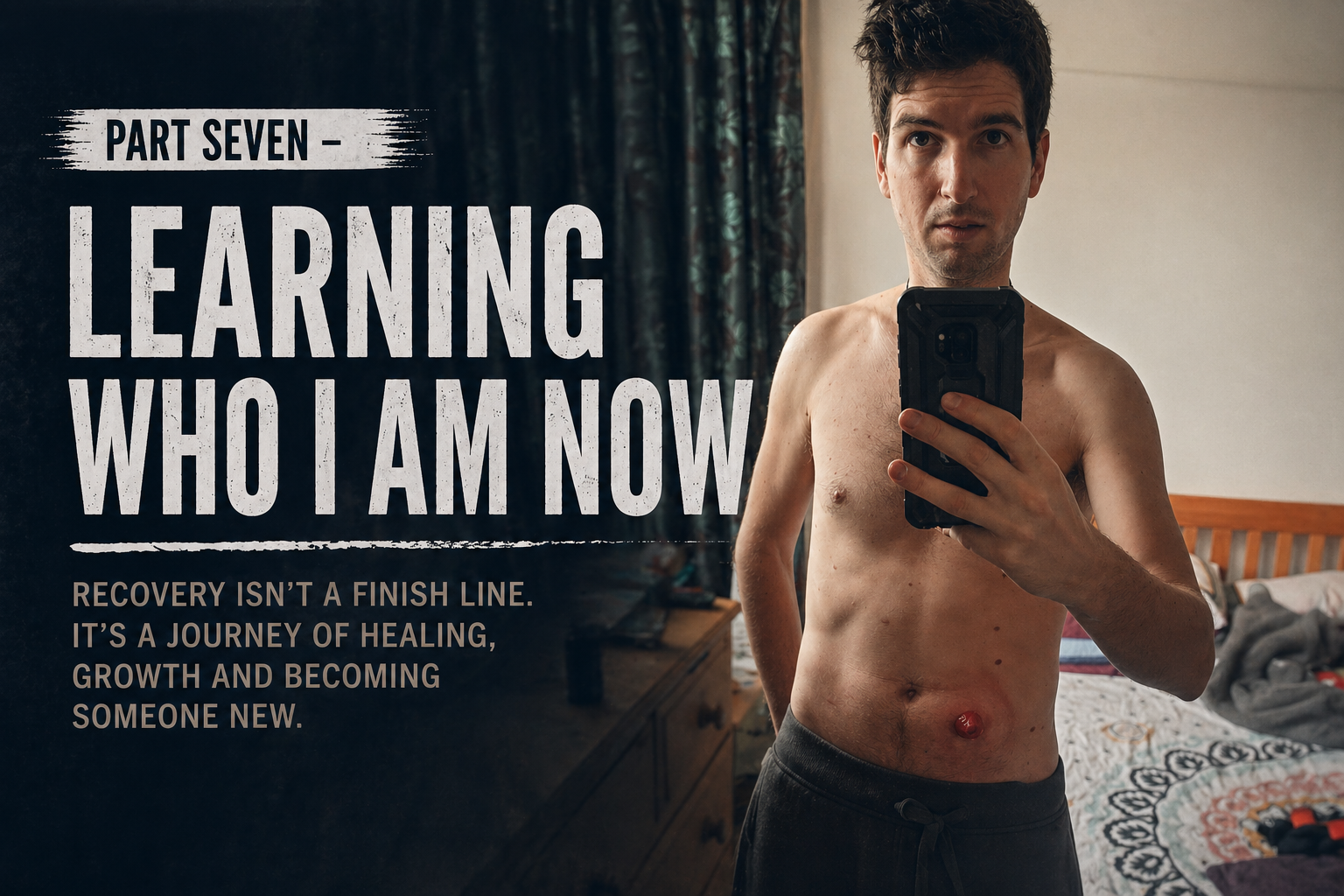
This follows on from Part Seven, where I shared what it was like adjusting to life with a stoma after surgery — coming home, learning bag changes, dealing with body confidence, leaks, mental health, humour, and slowly realising the stoma was not the end of my story.
If you are reading this while you are still unwell, still waiting for answers, still counting toilets, still planning every journey around whether there is somewhere safe to go, I want you to know something important.
You are not weak for struggling.
I know how easy it is to feel like you should be coping better. You look around and everyone else seems to be getting on with normal life, while your whole day can be controlled by your stomach, your symptoms, your medication, or the fear of what might happen if you leave the house. It can feel embarrassing, frustrating, lonely, and at times completely unfair.
Living With Ulcerative Colitis Can Take More Than Your Health
Ulcerative colitis has a way of taking things quietly. It doesn’t always happen all at once. It chips away at your confidence, your independence, your energy, your spontaneity, and your ability to trust your own body. One day you realise you are no longer just going out; you are planning. You are checking toilet locations. You are thinking about traffic. You are wondering if you can hold it. You are carrying spare clothes, wipes, bags, medication, or whatever else you need just to feel safe enough to leave the house.
That is not dramatic. That is what living with this disease can become.
When Medication Does Not Work for Ulcerative Colitis
If you are fighting through medication after medication, wondering why your body won’t respond the way it is supposed to, that is not a failure on your part. I know it can feel personal when a drug doesn’t work. You put your hope into it, you deal with the side effects, you wait for the improvement, and then sometimes your body just says no. That can be crushing, especially when you have already built yourself up to believe this might finally be the thing that gives you your life back.
But that is the nature of this disease. It can be stubborn, unpredictable, and cruel. Some treatments work for some people and not for others. Some work for a while and then stop. Some give you hope and then take it away again. None of that means you didn’t try hard enough. None of it means you failed.
Facing the Fear of Stoma Surgery
And if surgery has been mentioned, or is sitting in the back of your mind like a threat, I understand that fear.
I lived with it for years.
There is something terrifying about the idea of losing part of your body. It is not just a medical decision; it is emotional. It is personal. It affects how you see yourself, how you imagine your future, and how you think other people might see you. Before surgery, I had so many questions in my head. What would life be like with a stoma? Would I still feel like me? Would people notice? Would I cope? Would I regret it? Would I ever feel normal again?
Those questions are real, and you are allowed to have them.
Surgery Is Not Giving Up
But I want to say this clearly: surgery is not giving up.
For some of us, surgery is the point where we stop sacrificing our whole life just to keep a diseased organ. It is not the easy option. It is not the lazy option. It is not failure. It is sometimes the option that gives you a future when everything else has been tried and your body simply cannot keep going the way it is.
I won’t pretend it is easy. I won’t pretend it is painless. I won’t pretend you wake up after surgery and suddenly everything feels perfect. Recovery is hard. Learning a stoma is strange at first. Your body looks different. Your routines change. Those early changes were part of adjusting to life with a stoma after surgery, one small routine at a time. Your confidence has to rebuild slowly, and your mind sometimes takes longer to catch up than your body does.
But I can tell you this honestly.
Life After Stoma Surgery Is Still Yours
There is life on the other side of it.
Not a perfect life. Not a life without awkward moments, learning curves, or difficult days. But a life where you can start making plans again. A life where leaving the house doesn’t have to revolve around toilet routes. A life where your body is not constantly dragging you back to fear, urgency, pain, blood, and exhaustion.
For me, the stoma was not the end of my story. It was the reason my story got to continue.
That is why I now share my full ulcerative colitis to stoma journey, because I know how hard it is to believe there can be life on the other side when you are still in the middle of it.
That might be hard to believe if you are in the middle of it right now. I know that when you are still unwell, hope can feel almost annoying. People tell you things will get better, and part of you wants to believe them, but another part of you is too tired to hold onto it. When you have been let down by your own body again and again, hope can feel risky.
Hope After Ulcerative Colitis and Stoma Surgery
But you are allowed to hope anyway.
You are allowed to hope for answers. You are allowed to hope for treatment that works. You are allowed to hope for surgery if that is the route you need. You are allowed to hope for a life that feels bigger than hospital appointments, medication schedules, toilet anxiety, and pretending you are fine.
You are also allowed to have bad days. Being positive and determined all the time is not realistic. I have had wobbles too. I still do. That does not mean you are going backwards. It means you are human.
If my story reaches you at a point where you feel scared, embarrassed, exhausted, or alone, then I want you to know that I get it. I know what it feels like to be the person scanning for toilets. I know what it feels like to sit in hospital waiting rooms hoping someone finally has an answer. I know what it feels like to feel betrayed by your own body. I know what it feels like to wonder whether life will ever feel normal again.
And I also know what it feels like to come out the other side and realise that life is still there waiting for you.
Changed, yes.
Different, definitely.
But still yours.
You Are Not Alone With UC or Stoma Life
If you are on the reading end of this blog and you are going through something similar, please know that you are not alone. Whether you are newly diagnosed, flaring, waiting for test results, facing surgery, recovering, or trying to learn life with a stoma, there are people who understand more than you realise.
You are going to be okay, even if okay looks different from what you imagined.
And until you can fully believe that for yourself, borrow a little bit of hope from someone who has been there.
In the closing reflection, I look back at the whole journey from first symptoms, diagnosis, flares, surgery, recovery and learning to live again.
Continue the story: After hope comes reflection — looking back at the whole journey from symptoms, diagnosis, flares, surgery, recovery and learning to live again. Read Closing Reflection – The Whole Journey
Contact your GP or medical team
This is my personal experience of ulcerative colitis, stoma surgery, recovery and learning to live with a stoma. It is not medical advice.
If you are facing surgery, struggling with symptoms, recovering with a stoma, feeling unsure about your options, or finding the emotional side difficult, please speak to your consultant, IBD team, surgeon, GP or stoma nurse.
Coming home after stoma surgery was when the real adjustment began. In hospital, recovery had structure, nurses, routines and support. At home, I had to learn how to live with a changed body, surgical wounds, weak stomach muscles, a stoma bag, leaks, bag changes, body confidence, mental health wobbles, and the strange feeling of not quite recognising myself. This part of my story is about adjusting to life with a stoma after surgery — not perfectly, not instantly, but slowly, honestly, and one small milestone at a time.
For anyone adjusting to life with a stoma after surgery, the early days can feel overwhelming. You are not only recovering from an operation, you are also learning new routines, trusting a changed body, managing supplies, dealing with leaks, rebuilding confidence and trying to understand who you are in this new stage of life.
This follows on from Part Six, where I shared what it was like recovering after stoma surgery for ulcerative colitis — waking up in pain, learning to walk again, meeting my stoma, emptying my bag, and finally going home.
Leaving hospital didn’t feel like the end of the story. In some ways, it felt like the start of a completely different one.
When you are in hospital, everything is structured for you. Medication comes at certain times. Nurses check on you. Doctors appear. Meals arrive. Someone is there if something goes wrong. Even when it is hard, and even when you are desperate to go home, there is a safety net around you.
Then you leave.
Suddenly, you are back in your own house with this changed body, a stoma bag, surgical wounds, weak stomach muscles, and a list of things you are not allowed to do. You are expected to rest, recover, learn, heal, and somehow return to normal, except normal doesn’t really exist in the same way anymore.
The first week back at home was tough. Not necessarily dramatic every second, but difficult in the small, practical ways that wear you down. Things I had always taken for granted were suddenly hard. Sitting up was difficult because my stomach muscles were so weak. I couldn’t just move how I wanted to move. I had to think about everything before I did it.
Sleeping was awkward too. I couldn’t sleep on my side, which was a massive annoyance because I’ve always found it hard sleeping on my back. Something as simple as turning over in bed suddenly became something my body wasn’t ready for.
I also couldn’t fully sit up unaided without either pulling myself up or needing someone to help push me. That is a strange thing to deal with mentally. One minute you are an adult who can do everything for yourself, and the next you need help with the most basic movements.
I couldn’t lift anything heavier than the kettle either. That was frustrating enough on its own, but because I suffer with OCD, not being able to clean the house properly drove me mad. With seven of us in the house, it doesn’t stay clean for long, and having to sit there looking at things I couldn’t sort out was really hard.
I also couldn’t bend down to pick anything up from the floor, and you don’t realise how often you do something like that until you can’t do it anymore. Dropped something? Normally, you just pick it up. After surgery, it becomes a whole situation.
But my biggest triumph in those early days was the stairs.
At first, getting up and down the stairs was a slow process of one foot in front of the other, pitta-patting my way up and down while either holding onto my beloved’s arm or clutching the bannister like my life depended on it. Generally, I tried to avoid the stairs unless it was really important.
Then little by little, I improved.
Eventually, I could walk up and down holding on only with my fingertips, one foot on each step. That might sound like nothing to someone who hasn’t been through major surgery, but to me it felt massive. It gave me such a sense of pride because it proved I was on the mend.
Recovery wasn’t dramatic. It was slow, uneven, and full of tiny milestones that wouldn’t have meant anything before. But each one mattered.
And regardless of everything I still couldn’t do, one thing was already clear.
Living with a stoma is one of those things you don’t truly understand until it is part of your own body.
Before surgery, I had an idea in my head of how it would work. I thought the bag would fill up, then you would take it off and put a new one on. Simple enough. That was my impression before having the ileostomy.
It turns out that isn’t really the case.
If I changed the bag every single time it had output in it, my skin would be destroyed from constantly sticking and unsticking the adhesive. Instead, I had to learn that the bag is emptied regularly, and then changed separately when needed. That might sound obvious to someone who already lives with a stoma, but before you have one, the whole thing is completely new.
At first, I was just trying to get my head around the practical side. Emptying the bag. Cleaning the skin. Changing the bag. Preparing everything properly. Making sure I had the right supplies nearby. It is amazing how quickly your bathroom routine becomes a full setup.
I needed a new stoma bag, a waste sack, dry wipes, adhesive remover spray, and warm water. The process itself was simple enough once I got used to it, but at the start it felt like a lot. You spray the adhesive remover, gently peel the bag away, clean the stoma and surrounding skin, make sure everything is dry, then position the new bag over the stoma and stick it down properly.
There is a strange moment when the bag comes off and you are faced with your stoma properly. In hospital, everything still felt medical. At home, it felt more personal. This was no longer nurses helping me through it. This was my body, my bathroom, my routine, and my responsibility.
I didn’t hate my body, but I didn’t fully recognise it either.
There were scars. There was a stoma. There was a bag attached to my stomach. There was a body that had clearly been through something massive because it had. I was grateful that the colitis pain had gone, but gratitude doesn’t automatically mean instant confidence.
Getting dressed took more thought. Clothes that once felt normal suddenly felt different. I became aware of where waistbands sat, whether the bag would show, whether it would rustle, whether it would fill, and whether other people could notice it. Most of the time, they probably couldn’t. But I could.
Confidence didn’t return overnight.
It had to be rebuilt slowly, one bag change, one outfit, one mirror glance, and one normal day at a time.
Learning to Trust My Body With a Stoma
Chapter 44: Learning Trust Again
Trusting my body again was probably harder than learning the practical side of the bag.
For years, my body had betrayed me. It had ignored warning signs, failed without notice, and put me in situations where I felt humiliated and completely out of control. So even after surgery, even after the diseased colon had gone, my mind didn’t instantly catch up.
I still waited for something to go wrong.
A leak. A blowout. Pain. A strange feeling. A noise. A smell. Any tiny thing could make my mind jump straight to panic because that was what ulcerative colitis had trained me to do. For years, a stomach sensation could mean danger, so it took time to learn that every unfamiliar feeling didn’t mean disaster.
Emptying the bag at home was one of the first big learning curves.
In hospital, I had emptied it into a sick bowl with a healthcare assistant, and then they took it away. Simple. At home, I tried to replicate that, but it turned out to be more trouble than it was worth. I grabbed an old Tupperware box, emptied the contents of my bag into it, then emptied that down the toilet.
The problem was then I had to clean and bleach the box, which meant putting faeces near the sink, and to be honest, it didn’t feel hygienic at all.
So the next day I tried a different approach. I got down on my knees in front of the toilet, almost like the being-sick position, and emptied the bag straight into the bowl. At first, I thought I had cracked it.
Eureka.
Or so I thought.
Then came one serious schoolboy mistake.
I got into position, undid the bottom of the bag, aimed it straight into the water, and whoosh. The contents were like liquid and gushed into the bowl, hit the back, and fired straight back up at me.
I was literally covered in shit.
There was shit on my jumper, shit on my face, and shit on the walls. The worst thing was I couldn’t even open my mouth properly to shout for help. I sounded like a gagged hostage trying to call out, “Babe, help, help, there’s shit everywhere!”
Luckily, we have an amazing sense of humour in our house. When my partner came to my rescue, we were able to see the funny side of it, even while she helped clean me up and chuckled at the absolute state of me.
That moment taught me two things. First, stoma life involves trial and error. Second, you need humour. You really do. Without humour, some of these moments would feel unbearable. With humour, they become part of the learning process.
From then on, I became much more cautious about how quickly I released the contents of the bag. I tried emptying it while sitting on the toilet, but that didn’t really feel like the method for me either because things could get in the way. Eventually, I found my own way of doing it, and that is what stoma life becomes in the beginning: finding what works for you.
Slowly, trust began to return. Not because everything was perfect, but because I kept dealing with each thing that happened. Every small problem I solved became proof that I could cope.
Mental Health After Stoma Surgery
Chapter 45: Mental Health in the Aftermath
Physically, I was improving, but mentally I was still trying to catch up.
That is something I don’t think people always understand about surgery. Everyone can see the physical part. They can see the scars, the weight loss, the slow walking, the bag, and the obvious recovery. But the mental side is quieter. It sits underneath everything.
I had lost an organ. That is not a small thing to process. Even though the surgery had given me freedom from ulcerative colitis, it still meant part of me had been removed. My body was different forever, and my brain needed time to understand that.
There was grief in that. Not just grief for my colon, because let’s be honest, it had caused me enough trouble by the end, but grief for the years that had been swallowed up by illness. The years of symptoms, medication, appointments, accidents, pain, missed opportunities, and plans that had been put on hold.
There was anger too. Anger at the disease, anger at my body, and anger at how much it had taken before surgery finally gave me a way out. Then there was guilt, because surgery had technically worked. I was pain-free from colitis. I wasn’t bleeding. I wasn’t having accidents. So part of me felt like I should just be grateful and get on with it.
But recovery doesn’t work like that.
You can be grateful and still feel low. You can know surgery was the right decision and still need time to process what happened. You can be relieved the disease has gone and still feel emotional about the body you now have to learn.
Over the next week, I tried to get my mental health in check. I decided to do some drawing and painting, partly for myself and partly to help educate other people. I wanted to get my own head around losing an organ, but I also wanted to show people what had happened in a way that might answer questions they were too shy to ask.
I drew a normal digestive system and then what my digestive system looked like after the ileostomy, with the colon removed and replaced with a stoma. It helped me make sense of it. It turned something frightening and hidden into something visible and understandable.
That was important.
Because the more I understood my new body, the less alien it felt.
Stoma Leaks, Bag Changes and Small Recovery Milestones
Chapter 46: Small Milestones Matter
After surgery, milestones look completely different.
Before, a good day might have meant getting loads done, going to work, studying, cleaning the house, or just living normally without thinking too much about it. After surgery, a good day could be something much smaller on paper, but much bigger in reality.
Walking a little further. Managing the stairs. Emptying the bag without panicking. Changing the bag with everything prepared properly. Getting through a day without a leak. Sleeping a bit better. Leaving the house and realising I wasn’t planning toilet routes anymore.
Those things mattered.
One of the big parts of early stoma life was learning that issues could usually be fixed. At one of my stoma team appointments, I was having problems with my bag leaking on the right-hand side. The faeces kept working its way out in the same place every time, and I thought it might just be something I had to deal with.
I found out the hard way that it could get worse and that no, it couldn’t always wait until morning. Let’s just say it involved showers all round and changed bedding.
At the appointment, the stoma nurse explained that I had a natural crease in my belly, and that was causing the problem. She introduced me to a ring that fitted snugly around my stoma before the bag went on. It also had medicine in it to help treat the slight rash around the stoma.
After a couple of days using them, the side leaks stopped.
That was a massive relief.
It showed me that I didn’t just have to put up with problems. There were products, adjustments, nurses, advice, and solutions. If something wasn’t working, it didn’t mean I was failing. It meant we needed to find the right setup for my body.
The stoma nurse also showed me that there were different types of bags I could try, so I took some samples away. That appointment felt really productive, especially because the nurse I saw also had a stoma herself. I thought that was awesome because she could relate through her own experience, not just from a textbook or training.
Those appointments helped me feel less alone and more in control. Every practical improvement gave me a little bit more confidence. Every solved problem made life feel wider again.
Those small wins were part of learning that stoma surgery recovery was not just about healing, but about finding the right support and routine.
My world had spent years shrinking around illness.
Now, slowly, it was opening back up.
Talking About Life With a Stoma
Chapter 47: Talking About It
At first, talking about the stoma was strange.
I had spent years being embarrassed about bowel symptoms, toilet urgency, blood, mucus, accidents, and everything else that comes with ulcerative colitis. Then suddenly I had this visible thing attached to my body that was both deeply personal and completely life-changing.
It is hard to know how much to say.
You don’t want to make people uncomfortable. You don’t want to overshare. You don’t want every conversation to become about your body. But at the same time, pretending nothing had happened didn’t feel right either.
That was one of the reasons the blog became important.
I had hoped that documenting my experience might help one or two people through what I think is a traumatic experience, but also a metamorphic process. It felt like a second chance at life after living so long with a horrible disease.
What surprised me was the response.
Words cannot describe how proud people made me feel. The support I received in such a short period of time was incredible. I had thought maybe a few people would read it, maybe someone in a similar position might find it useful, but it became more than that.
People listened.
Some people asked questions. Some shared their own stories. Some admitted they had been struggling with things quietly. Others simply showed support in ways that meant more than they probably realised.
I also need to say something about friends and family, because they were incredible. They constantly checked on me, checked on Bex, asked if we needed shopping, asked if the kids were okay, and brought cards, gifts, and even cake. That kind of support is worth its weight in gold.
It made me realise that sharing honestly doesn’t have to mean shocking people or oversharing for the sake of it. Sometimes it just means being real enough that someone else feels less alone, or understands something they didn’t understand before.
That became a big lesson for me.
Talking about it didn’t make me weaker.
It gave the whole experience a purpose.
Finding Purpose After Stoma Surgery
Chapter 48: Finding Purpose in the Mess
The idea of going back to normal started to make less and less sense.
Normal had changed.
I wasn’t going back to the body I had before surgery. I wasn’t going back to the life I had before ulcerative colitis. I wasn’t going back to being someone who could ignore bowel disease or pretend it was something that happened to other people.
But that didn’t mean life was over. It meant I had to build something new.
That is where the purpose started to come in. I didn’t have all the answers, and I definitely wasn’t some finished version of myself who had everything figured out. I was still recovering, still learning the bag, still dealing with awkward moments, still working out what confidence looked like in this changed body.
But I had lived something that other people were frightened of.
I knew what it felt like to wait for surgery. I knew what it felt like to wake up with a stoma. I knew what it felt like to come home and realise you had to learn your body all over again. I knew what it felt like to have embarrassing accidents, practical problems, mental wobbles, and still keep going.
That mattered.
I kept studying. I kept moving forward. I kept trying to build the accountancy career I had started before everything collapsed again. But alongside that, I slowly started sharing more openly.
Not because I wanted attention.
Not because I thought I had all the answers.
But because I knew how lonely it could feel when you are the person searching online for reassurance, wondering what life might look like after surgery, or trying to understand whether you will ever feel like yourself again.
If my story could make someone feel less alone, then the mess had meaning.
The stoma changed my body, but it didn’t end my life.
That sounds obvious now, but before surgery, I don’t think I fully understood it. When you are unwell and surgery is looming, the stoma can feel like the whole story. It becomes the thing you are afraid of, the thing you imagine, the thing you practise with, the thing you wonder about when you look in the mirror.
But once you are living with it, you start to realise it is not the whole story.
It is part of you, yes. It changes routines, clothing choices, toilet habits, confidence, and how you understand your own body. But it doesn’t erase who you are. It doesn’t take away your future. It doesn’t stop you from being a partner, parent, friend, worker, student, or anything else you were before.
In my current thoughts at the time, I remember saying that after living life as an ostomate, it was honestly a walk in the park compared with how I thought it was going to be. That doesn’t mean it was easy every day, and it doesn’t mean there weren’t things I missed.
Because yes, there were things I missed.
I missed the simple relief of needing to fart and just letting it out like, “Ahhh, thank God that’s gone.” That might sound funny, but it is one of those tiny human things you don’t think about until it changes.
But compared with ulcerative colitis, accidents, pain, bleeding, steroids, emergency planning, and living in fear of my own bowel, the stoma gave me something back.
Freedom.
It took time to realise that fully, and it took time to feel comfortable saying it. But the stoma wasn’t the enemy. The disease was. The stoma was the thing that helped me live again.
I am not brave because I have a stoma. I am not inspirational just for existing with one. I am simply someone who reached a point where life had become unbearable and kept going when stopping would have been easier.
The stoma isn’t the whole story.
It is the reason the story got to continue.
Still Becoming After Ulcerative Colitis and Stoma Surgery
Chapter 50: Still Becoming
This isn’t a neat ending.
I think that is important to say because people often want recovery stories to have a clean finish. Illness, surgery, recovery, lesson learned, happy ending. But real life isn’t that tidy.
I was still learning. Still adjusting. Still becoming.
There were hard days, good days, awkward days, funny days, emotional days, and ordinary days. The ordinary days became the ones I valued most because for so long, ordinary had felt out of reach.
An ordinary day without bleeding.
An ordinary day without planning toilet routes.
An ordinary day where I could leave the house without the same fear sitting in my stomach.
An ordinary day where my body wasn’t controlling every decision.
That is what I had wanted for years.
My story didn’t end with surgery. It didn’t end when I left hospital, learned to empty the bag, climbed the stairs, or went to a stoma appointment. Those were all parts of the process, but they weren’t the ending.
Surgery gave my life room to continue.
And I was still working out who I was in that new space.
I wasn’t the same person I had been before ulcerative colitis. I wasn’t the same person I had been before surgery. But maybe that wasn’t a bad thing. Maybe the point wasn’t to go back to who I was before all of this happened.
Maybe the point was to become someone who had survived it, learned from it, and found a way to use it.
The Stoma Accountant didn’t come from a perfect story.
It came from pain, illness, embarrassment, surgery, humour, recovery, and the decision to keep talking anyway.
This is my personal experience of adjusting to life with a stoma after surgery, including home recovery, bag changes, leaks, body confidence, mental health and learning new routines. It is not medical advice.
Stoma recovery and care are different for everyone, so always speak to your stoma nurse, surgeon, consultant or IBD team about your own recovery, supplies, skin care, leaks, pain, lifting, diet and mental wellbeing.
Adjusting to life with a stoma after surgery meant learning new routines, finding space for supplies, building confidence with bag changes and slowly working out what made everyday life easier.
These are a few practical things that helped me feel more organised and in control while learning how to manage my stoma at home.
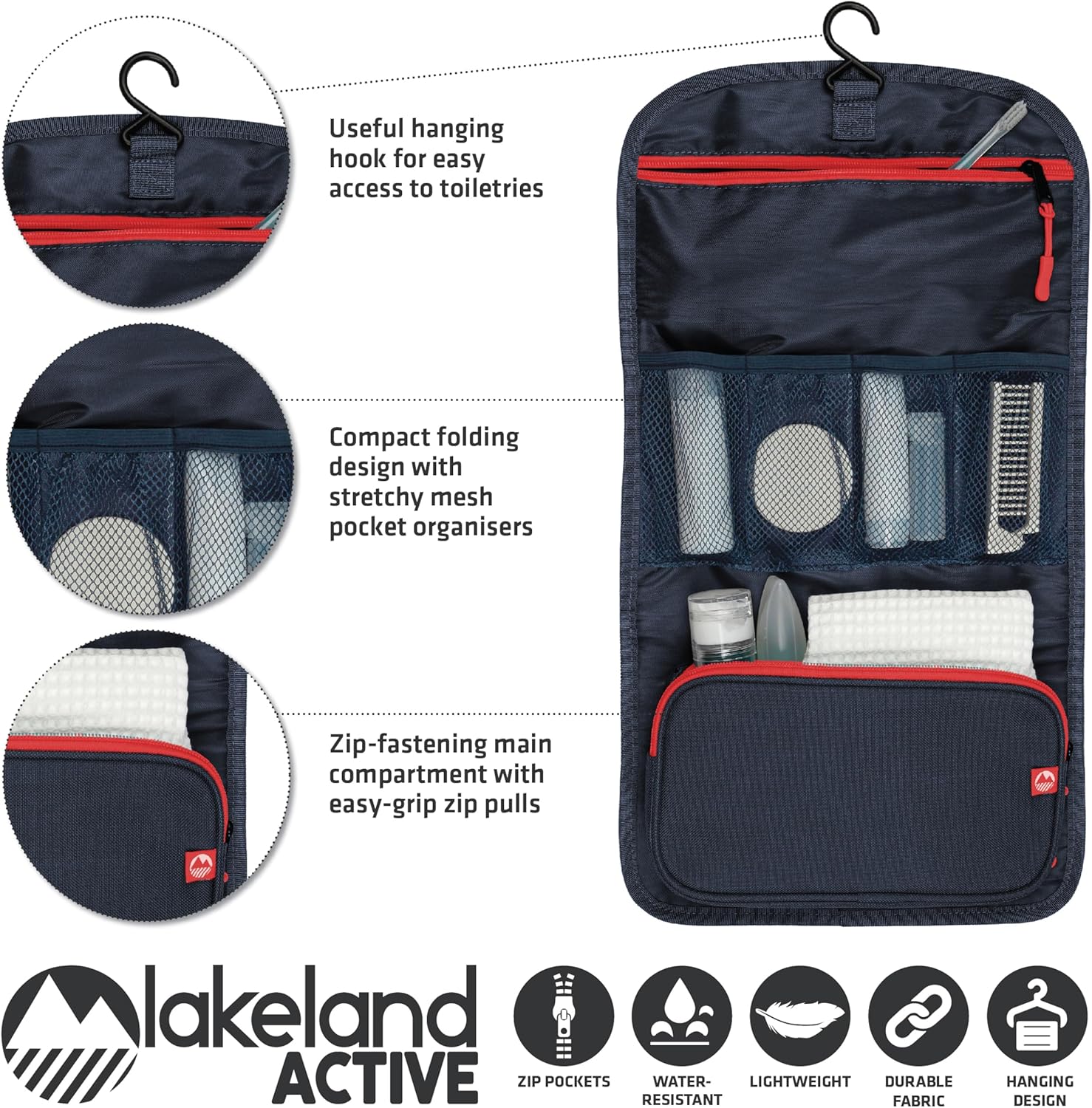
Stoma supply organiser
A stoma supply organiser can help keep bags, wipes, disposal bags, sprays and spare supplies in one place, which makes daily changes feel less stressful and more controlled.
Why it helped: ✔ Kept all my stoma supplies together instead of scattered around the bathroom or bedroom ✔ Made bag changes feel quicker and less chaotic, especially while I was still learning my routine ✔ Helped me feel more prepared and confident knowing I had everything I needed in one place
A bathroom storage basket can make stoma bag changes feel calmer by keeping everyday supplies visible, tidy and easy to reach when you need them.
Why it helped: ✔ Kept regular-use items like wipes, disposal bags, sprays and spare bags organised in the bathroom ✔ Made bag changes feel less rushed because everything was already within reach ✔ Helped turn a new and overwhelming routine into something that felt more normal and manageable
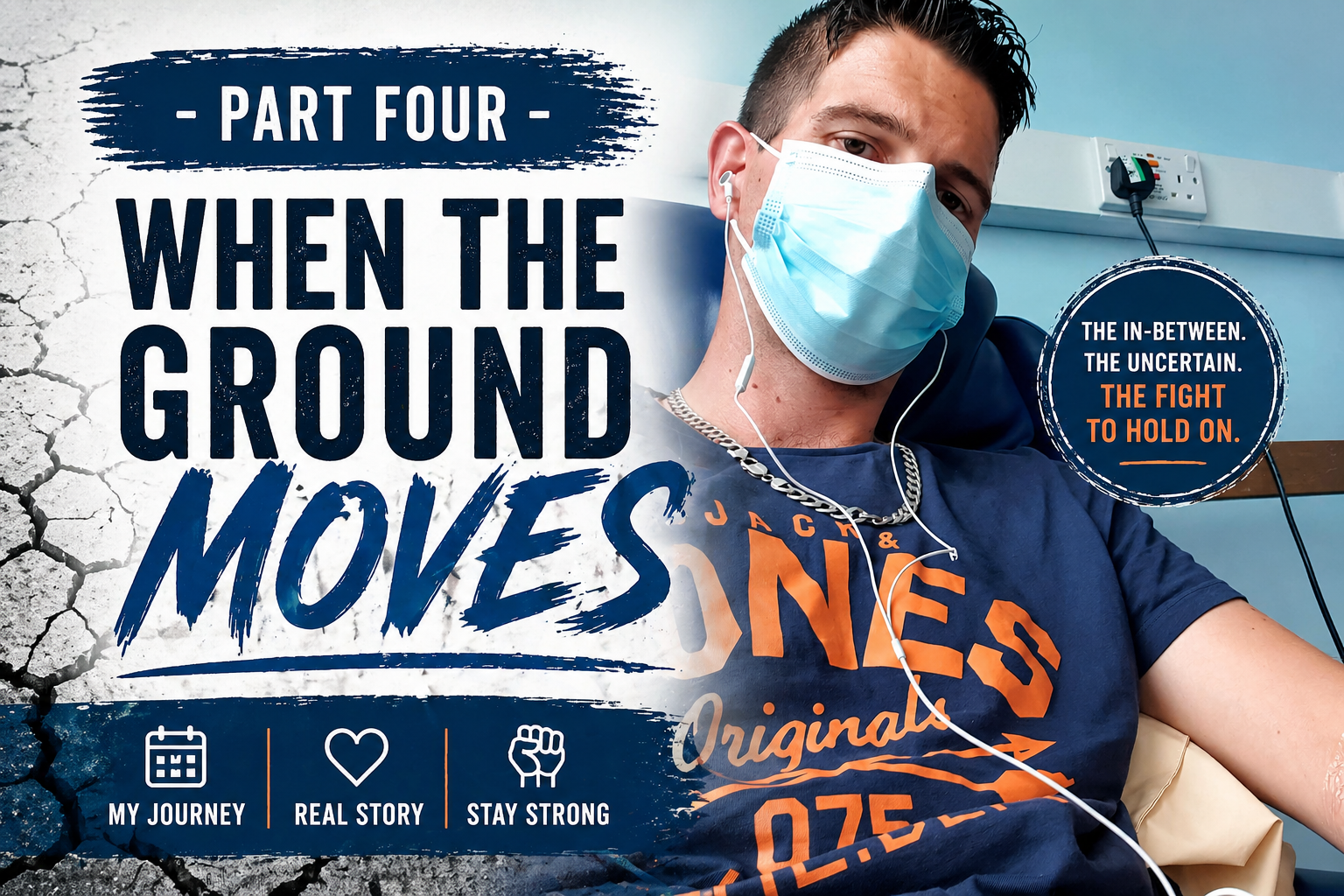
After four years of remission, I thought I had finally built a life that was bigger than ulcerative colitis. I was working, studying, retraining as an accountant, and planning a future that did not revolve around hospital appointments. Then the symptoms slowly started to return. Urgency, blood, fatigue, anxiety, rising inflammation, Covid, job loss, protective underwear, hospital treatment and failed medication all became part of the story. For anyone living with ulcerative colitis, a flare after remission can feel like having the ground pulled from underneath you. One minute you are rebuilding your life, and the next you are back to watching symptoms, planning toilets, questioning medication and wondering how bad things are going to get. This is the part where remission ended — and ulcerative colitis started changing my life again.
This follows on from Part Three, where I shared what life was like living with ulcerative colitis after diagnosis — the flares, medication changes, side effects, treatment escalation, Vedolizumab, and the remission that finally gave me some breathing space.
PART FOUR – WHEN THE GROUND MOVES
Life After Ulcerative Colitis Remission
Chapter 19: Building Something New
For four years, Vedolizumab gave me something I hadn’t had properly since all of this started: breathing space.
Not just breathing space from the physical symptoms, but from the mental load that comes with living around ulcerative colitis. When your body is behaving, you don’t realise how much room that gives your mind. Suddenly, life isn’t only hospital appointments, medication, toilet checks, side effects, blood tests, and waiting for the next thing to go wrong. You can actually start thinking beyond the illness.
During those years, I was still working at Waitrose, mainly as part of the night team. Nights suited me in a strange way. I found it easier to stay awake through the night, sleep in the morning, and fit life around that routine. It worked for where I was at the time, and after everything I had been through, having a routine that worked felt like a win.
But the healthier I became, the more I started to feel like I wanted something else.
It wasn’t that I was ungrateful. Waitrose had been a massive part of my life. It had given me stability when my health hadn’t. But once I started feeling well again, I also started feeling like I was wasting my life in a job that didn’t really have a future for me. I had finally got my health back to a point where I could look beyond just surviving, and once that happened, I couldn’t ignore the feeling that I needed to build something.
So, like most life-changing decisions in the modern world, I turned to the internet.
I searched for careers where you could start at the bottom and work your way up through qualifications. I wanted something structured, something with a clear path, and something where effort could actually lead somewhere. After years of my body being unpredictable, that structure really appealed to me.
Accountancy came up, and for some reason, it clicked.
It felt practical. It felt achievable. There were levels, qualifications, progression, and a clear route forward. I could start at the bottom, study, pass exams, and build a career step by step. That mattered to me because, for so long, ulcerative colitis had made life feel like something I was reacting to rather than choosing.
The only problem was money.
The course wasn’t cheap, and I wasn’t exactly swimming in spare cash, so I contacted Retail Trust. They helped people who had worked in retail for a number of years with grants to better themselves. I applied, hoped for the best, and thankfully they awarded me the grant. That was the start of my AAT Foundation Certificate in Accounting, Level 2.
From that point on, life became a bit ridiculous, but in the best way. I was working nights, studying during the day, and still juggling family life around it all. It was tiring, but it was a different kind of tired to illness tired. This was tired with purpose behind it. I wasn’t exhausted because my body was falling apart. I was exhausted because I was building something.
And somehow, it worked.
I started knocking out distinctions in my exams, and each one gave me a bit more belief that I was on the right path. I wasn’t just the bloke with bowel disease. I wasn’t just someone trying to get through each day. I was building a career.
For the first time in a long time, life felt like it was properly moving forward.
Then Waitrose announced they were selling the shop to Lidl, and the whole store was being made redundant.
Just like that, the ground shifted again.
I had two exams left, bills to pay, a family to support, and this new dream that I was only just starting to believe in. I had to think quickly. I needed a job, but I also needed to keep studying. I didn’t want to stop now, not when I had finally found something that felt right.
That was when I decided an apprenticeship might be the best route. It would give me a steady income and allow me to continue with the qualifications without having to fund everything myself. I went to my first proper interview in years at a manufacturing firm in Exeter, and I was honest about the situation. I needed to continue my redundancy notice, keep studying, and start the new job around all of that.
To my surprise, they accepted it.
I got the job, and that felt massive. I had taken my first step into office work, and Level 3 was on the horizon. For a little while, life felt good. I was studying, working, progressing, and starting to believe that maybe I was finally building the future I wanted.
When Ulcerative Colitis Symptoms Started Returning
Chapter 20: Cracks in the Shield
I don’t know whether it was because the exam was harder than the year before, whether life was getting more stressful, or whether my time with Vedolizumab was simply running out, but around October 2019, things started to change. The old symptoms came back: blood, mucus, and that familiar sinking feeling when you look in the toilet and instantly know something isn’t right.
After four lush symptomless years, I had almost forgotten what it felt like to live with that constant uncertainty. Not completely, because I don’t think you ever truly forget, but enough that I had started trusting my body again. I had built routines. I had started a new career path. I was studying. I was planning. I had begun living as if my body was on my side again.
Then suddenly, the disease reminded me it was still there.
Looking back, this was the point where my wider ulcerative colitis to stoma journey started moving towards surgery, even though I did not fully realise it yet.
My treatment was increased from every eight weeks to every four weeks to see if Vedolizumab could get things back under control. I think everyone wanted it to work. It had already given me so much life back, and I desperately wanted to squeeze more time out of it.
But it wasn’t meant to be.
That was hard to accept. When a drug has changed your life, you almost feel loyal to it. Vedo had pulled me out of one of the darkest places I had ever been. It had given me four years where I could work, study, parent, function, and live without everything revolving around toilets. So when it started failing, it didn’t just feel like a medical change. It felt personal.
Somehow, I kept progressing with my exams through that year, but I wasn’t the same student I had been during Level 2. The distinctions disappeared. A couple of passes only just scraped over the line, with the odd merit here and there.
Before, I had wanted the highest marks I could get. I wanted to prove to myself that I was good at this. But once the symptoms came back, my ambition changed. I didn’t care about being the best anymore. I just wanted to pass. That was it. Pass the exams, get through Level 3, keep moving towards Level 4, and keep the dream alive, even if everything else felt like it was starting to fall apart.
Eventually, Vedolizumab was stopped, and I was put under a new consultant. More scopes followed to see how bad things had become, and the answer was not exactly comforting. The inflammation was getting worse.
And then, just to make everything more complicated, the pandemic began.
Covid, Immunosuppression and a Severe UC Flare
Chapter 21: Covid and Collapse
Covid changed everything for everyone, but when you are already unwell and your immune system is being played around with by medication, it adds another layer of fear and uncertainty.
Luckily, I live in a part of the country where cases were fairly low at the start, but that didn’t stop the worry. Guidance was changing constantly. Nobody seemed to fully know what was safe, what wasn’t, or what people like me were supposed to do. At the same time, my colitis was getting worse, and the timing could not have been worse if it tried.
Because of Covid, the use of stronger steroids was more restricted, so I was put on Budesonide first. It was a less strong steroid, and for me, it did absolutely nothing. They had to be sure, so another scope was booked. By that point, I knew my own body well enough to know I needed the proper steroids. I remember thinking that I wasn’t leaving without them because I knew they were the thing that would at least calm things down.
Eventually, I got Prednisolone again.
Alongside that, I was started on a new treatment called Tofacitinib. This one was different because it came in tablet form rather than an infusion. The plan was to start on a high dose for eight weeks and then reduce it by half. The tricky part was that I was still taking Prednisolone during those first eight weeks, so it was hard to know what was actually working. Was the Tofacitinib helping, or were the steroids just masking everything like they had done before?
I was told to come off the Prednisolone before the Tofacitinib dose reduced, and that was when the truth showed itself. The drug had not worked.
As the steroids came away, the symptoms came charging back.
Then, just to top everything off, I lost my job. The accounts department had budget cuts, presumably due to Covid, and I was let go. There was no big dramatic scene, no shouting, no massive argument. Just another part of my life being pulled out from underneath me at the exact moment I needed stability the most.
So there I was: sick, jobless, trying to finish accountancy exams, trying to manage a disease that was getting worse, and trying not to let the whole thing swallow me up.
Because of Covid, our wedding had to be postponed until 2021 as well, and that was another emotional hit. It wasn’t just one thing going wrong. It was everything stacking up. The symptoms, the job loss, the uncertainty, the wedding being delayed, and the pressure of still trying to become qualified while my body was working against me.
I was sinking, and I don’t think there is a softer way to say it. I was going deeper into depression, and for once it wasn’t only the illness itself. It was everything around it. Every time I tried to build something, colitis seemed to find a way to shake the foundations.
Bowel Urgency, Accidents and Protective Underwear
Chapter 22: Losing Control
This was when control really started disappearing.
I began having accidents left, right, and centre. Driving was one of the worst situations, especially sitting in traffic. When you have bowel urgency, traffic becomes more than annoying. It becomes terrifying. You can’t just pull over anywhere, and you can’t explain to a line of cars that your body is about to betray you. You just sit there gripping the wheel, trying to breathe through the panic, hoping you can hold on long enough.
This was when I discovered protective underwear, and I have worn it ever since.
The first time you have to make that decision, it hits hard. It isn’t about the product itself. Protective underwear is practical. It helps. It gives you a safety net. But emotionally, it felt like crossing a line I never imagined I would reach. It made the illness feel visible to me, even if no one else could see it.
I contacted a counselling service for people with ongoing medical conditions because mentally, I knew I wasn’t in a good place. The problem was that my symptoms were so bad they were overriding even the anxiety. I couldn’t sit and unpack everything emotionally because my body was still screaming the loudest.
My life became route planning. I was constantly thinking about toilets, bushes, quiet places, and anywhere I could secretly go if I had no other choice. That sounds extreme unless you have lived it, but when your bowel gives you seconds rather than minutes, you stop thinking like someone going out for the day and start thinking like someone preparing for an emergency.
I carried what I called a rescue pack. It had protective underwear, spare underwear, wet wipes, dog poo bags, and anything else that might help me clean up, change, and not leave a mess behind if the worst happened. It wasn’t glamorous, but it was necessary, and I wasn’t prepared to be unsanitary or leave anything for someone else to deal with.
That was my reality.
I wasn’t just living with ulcerative colitis at that point. I was planning every movement around it. Every journey had to be thought through. Every outing came with a backup plan. Every traffic queue felt like a threat. Every stomach pain made my heart drop.
My world started getting smaller again, but this time it felt even crueler because I knew what freedom had felt like. I had four years of it. I had built a life during remission. Now I was watching it close in around me.
This was one of the hardest parts of living with ulcerative colitis because it affected every journey, every plan and every bit of confidence I had left.
Starting a New Job While Flaring With Ulcerative Colitis
Chapter 23: The Job I Nearly Didn’t Apply For
Even with everything going on, I still needed to finish my exams. I had two left for Level 3, and somehow, despite the symptoms and everything else happening in the background, I sat one of them and did really well. That gave me a bit of hope, but I still had the final exam hanging over me.
At the same time, I was applying for jobs.
Interviews were happening over Teams because the world had changed, and everything felt more competitive than ever. I kept trying, but I wasn’t getting anywhere. Every rejection chipped away at me a little bit more.
I reached a point where I had almost given up on the dream of becoming an accountant.
That is painful to admit, because accountancy had become more than just a career idea. It was proof that I could build something outside of illness. It was something I had chosen for myself. But when you are sick, unemployed, and constantly being knocked back, even the things you want most can start to feel out of reach.
Then my car had to go in for its MOT, and out of nowhere, my mechanic said, “Why don’t you contact the accountants in town? They’re really nice people.”
I had never even thought about just dropping a CV into a local accountancy practice. The idea scared me a bit, if I’m honest. Working in an actual practice felt like a big leap. I had some experience in manufacturing, but an accountancy practice was different. It felt more serious, more real, and more like the thing I actually wanted, which somehow made it more intimidating.
But at that point, what did I have to lose?
So I sent my CV and a cover letter, and as it turned out, they were looking for someone. They gave me the job.
I was over the moon. After everything, I had landed the kind of role I had been working towards. A proper accountancy job. A chance to keep moving. A chance to prove myself. But, of course, my condition was still there, looming over everything.
I told them about my constant toilet habits because there was no hiding it. At that stage, it would have been impossible to pretend everything was fine. I needed them to know because I needed to know whether they would be understanding.
And they were amazing about it.
That mattered more than I can probably put into words. Starting a new job while flaring is frightening. You don’t want to be seen as unreliable. You don’t want people to think you are making excuses. You don’t want to be the person constantly disappearing to the toilet. But I also couldn’t control what my body was doing.
So I started the dream job with two feelings living side by side: excitement and fear.
I had finally got a foot in the door. I just didn’t know if my body was going to let me stay there.
Back in Hospital With a Severe Ulcerative Colitis Flare
Chapter 24: Back in Hospital
Not long after starting the job, I had to go for another scope. The results showed I had 30cm of inflammation from the bottom up, and another course of Prednisolone was issued. By that point, though, things were becoming unbearable. The pain when passing stool and wind had reached a level I hadn’t experienced before with this disease. It wasn’t just urgency and blood anymore. It was pain that stopped me in my tracks.
For the first time since being diagnosed with ulcerative colitis, I was admitted to hospital.
That felt huge.
Hospitals had always been part of the story, but mostly as appointments, scans, scopes, infusions, and consultations. Being admitted was different. It meant things had crossed another line.
I had been there since the Wednesday, having hydrocortisone steroids pumped into my veins every four hours. Observations were taken every six hours. Nurses came in and out at all times of the day. There were three meals a day, hospital routines, noises in the corridor, and that strange feeling where time seems to move differently once you are on a ward.
I was also given an injection in my leg to avoid blood clots. I didn’t even know the name of the drug, but I definitely knew how it felt. It was painfully stabbed into my leg, and I remember thinking that illness comes with all these little extras nobody warns you about.
It wasn’t just the colitis anymore. It was the treatment, the monitoring, the injections, the waiting, the loss of privacy, and the realisation that I was no longer managing this at home.
I was still trying to be hopeful, but by that stage, hope was getting harder to hold onto. The drugs had kept buying time, but each one seemed to give less than the last. My body was tired, my mind was tired, and my family was tired.
Deep down, I think I knew the conversation was about to change.
When Ulcerative Colitis Surgery Became the Only Way Forward
Chapter 25: When Hope Runs Out
My consultant came to see me in hospital, and by then I think we both knew where things were heading.
There was still another drug that could technically be tried: Infliximab. But the conversation didn’t feel like the old conversations anymore. It didn’t feel like, “Let’s try this and see if we can get you back on track.” It felt like we were talking about whether one more medication would actually change the outcome or just delay the inevitable.
We agreed that trying Infliximab would likely only buy time, and the best way forward was to remove my colon and replace it with a stoma.
There it was.
The thing that had once sounded terrifying. The thing that had once felt like the very last resort. The thing I had once begged for when Methotrexate had stripped me down completely. Now it was no longer an idea in the distance. It was the plan.
The next day, surgical teams and stoma nurses came to see me, and everything started to become very real. These were no longer vague conversations about what might happen one day. This was my actual body, my actual operation, and my actual future.
I was told I could go home to spend the Christmas period with my family, unless I ended up in pain and had to be rushed in for emergency surgery. That is a strange thing to be told. Go home, enjoy Christmas, and spend time with your family, but also come straight back if things go wrong because your bowel is now that bad.
The reality was simple and brutal. The condition had reached a point where no drug could reverse what my own immune system had done to my body.
I don’t remember feeling shocked in the way people might expect. I think I had been heading towards that moment for a long time. There was sadness, of course, and fear too, but there was also a strange calmness.
I was exhausted from fighting. Exhausted from hoping the next medication would be the one. Exhausted from planning toilets, carrying rescue packs, wearing protective underwear, losing jobs, forcing myself through exams, and pretending I could keep everything together while my body was falling apart.
Surgery wasn’t what I had wanted at the start. But by then, it had become the way out.
And once that decision was made, everything changed quietly, completely, and forever.
Contact your GP or medical team
This is my personal experience of living through a severe ulcerative colitis flare after remission. It is not medical advice.
If you notice blood or mucus in your stool, unexplained weight loss, ongoing diarrhoea, bowel urgency, worsening fatigue, signs of dehydration, or symptoms that do not feel normal for you, please speak to your GP, IBD nurse, consultant, or medical team.
Some of the links below are affiliate links. This means I may earn a small commission if you buy through them, at no extra cost to you. I only include things that genuinely connect to my own experience.
Things That Helped Me During a Severe UC Flare
By this stage, I wasn’t dealing with early symptoms anymore. I was dealing with a severe flare, urgency, accidents, hospital appointments, exhaustion and the reality that treatment options were running out.
These are a few practical things that helped me feel slightly more prepared during one of the hardest stages of my UC journey.
🧻 Bamboo Toilet Tissue
Nobody really talks about this, but when you’re using the toilet constantly, softer toilet tissue makes a massive difference.
Why it helped: ✔ Gentler during frequent toilet trips ✔ Reduced irritation ✔ One of those small comforts that matters
This was one of the hardest things for me to accept during severe flares. But when accidents became a real possibility, protective underwear gave me a small sense of security during one of the lowest periods of my illness.
✔ Reduced anxiety when leaving the house ✔ Helped during long journeys and hospital visits ✔ Gave me confidence during severe urgency ✔ Helped me maintain some independence ✔ A practical backup during unpredictable flares
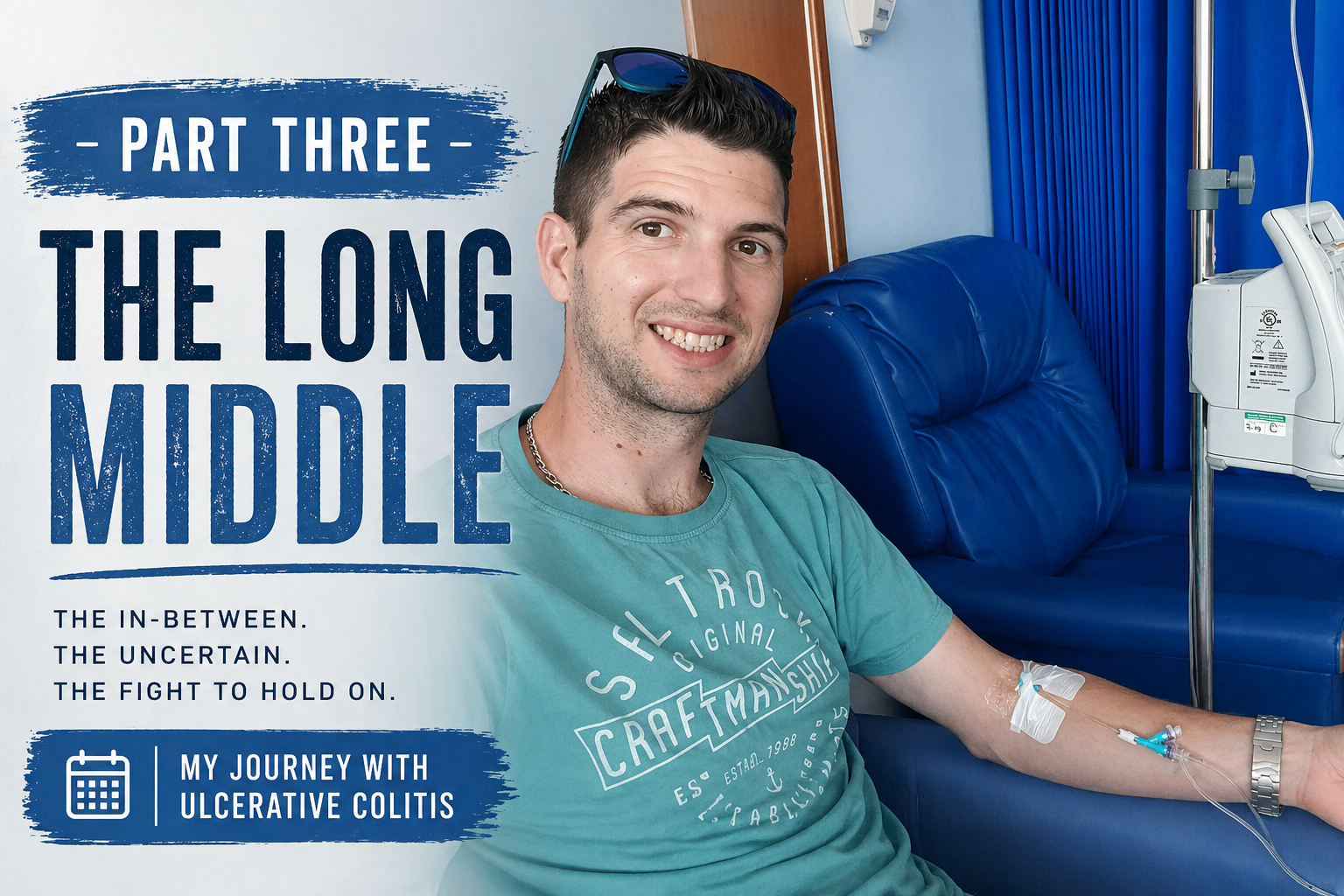
After my ulcerative colitis diagnosis, life did not simply go back to normal. I had a name for what was happening, but now I had to learn how to live with it every day. This part of my story covers the long middle — the flare-ups, fatigue, urgency, medication changes, steroid side effects, Methotrexate, Vedolizumab infusions, and the four years of remission that finally gave me some breathing space.
For me, living with ulcerative colitis after diagnosis became a long process of learning what my body could cope with, what treatments helped, what side effects changed me, and how quickly symptoms could return even after things seemed settled.
This follows on from Part Two, where I shared what happened after my ulcerative colitis diagnosis — the tests, hospital appointments, colonoscopy prep, low iron, and trying to understand what mild UC and proctitis actually meant.
PART THREE – THE LONG MIDDLE
Learning to Live With Ulcerative Colitis Every Day
Chapter 11: Learning to Live With It
After the colonoscopy, I remember walking away with a strange mix of relief and confusion. I had been told I had mild ulcerative colitis, or proctitis to be exact, and that word “mild” made it sound like something fairly small and manageable. At the time, I wanted to believe that. I think I needed to believe it. After all the fear, the weight loss, the scan to rule out cancer, and the worry that had been building for weeks, hearing that it was “mild” felt like a bit of breathing space.
Of course, I didn’t really understand then what living with a lifelong bowel condition actually meant. I didn’t understand that mild doesn’t always stay mild, and I definitely didn’t understand how much trial and error can be involved in finding a treatment that actually works.
I was sent home with Pentasa Mesalazine suppositories to use every night. There is no glamorous way of putting that. My new bedtime routine involved finishing the day by putting medication somewhere medication had never been invited before. It was awkward, embarrassing, uncomfortable at first, and not exactly something you casually bring up in conversation over a cup of tea.
But it helped.
However undignified it felt, the medication started doing its job. The bleeding eased, the mucus settled down, and things started to feel a bit more stable. I wasn’t cured, but I felt like I had been given a small amount of control back. At that stage, that was enough to make me feel hopeful.
I tried to make sense of it in my own way. In my head, I imagined the suppositories like a reverse Gaviscon. Instead of the little firefighter going down to put out stomach acid, this was something going in the other direction to calm my colon down. It might sound ridiculous, but sometimes humour is the only way to make something uncomfortable feel a bit more manageable.
Life carried on. That is one of the strange things about being diagnosed with something chronic. You don’t always get a dramatic pause where the world stops and gives you time to adjust. You still have to go to work. You still have bills to pay. You still have a family to support. You still have a normal life sitting there waiting for you, even when your body has just changed the rules.
So I went back to work at Waitrose and tried to carry on as normally as possible. I still had children to help raise, routines to keep, and responsibilities that didn’t disappear just because I had been given a diagnosis. I wanted life to go back to how it had been before all the symptoms started. I wanted this to be something I could manage quietly in the background.
For a while, it did feel liveable. Not perfect, but liveable. I still had ulcerative colitis, and I still had to manage it every day, but it wasn’t controlling every minute. I could work. I could function. I could almost convince myself this was going to be the version of the disease I had to deal with.
A nightly inconvenience. A few appointments. A bit of embarrassment. Something manageable.
Looking back, I think I was desperate for that to be true.
When Ulcerative Colitis Symptoms Started Coming Back
Chapter 12: The First Cracks
The problem with ulcerative colitis is that it doesn’t always stay where you leave it. Just because something settles for a while doesn’t mean it has gone away, and just because a treatment works at first doesn’t mean it will keep everything under control forever.
For a while, the Pentasa helped enough for me to get on with life, but eventually the familiar signs started creeping back in. It wasn’t dramatic at first, and that is what makes it difficult. You don’t always wake up one morning and suddenly know you are flaring. Sometimes it starts with small changes that you try to explain away.
A bit more urgency. A bit more mucus. A bit more worry when you go to the toilet. Then the blood comes back, and deep down you know you are not imagining it.
That is the part people don’t always understand. Once you have seen blood and mucus coming from your body, you don’t forget it. Every toilet trip becomes a check. Every stomach pain becomes a question. Every bad day makes you wonder whether the disease is waking up again.
Back to the hospital I went.
This time, the conversation moved on to stronger medication. The first drug they wanted to try was Azathioprine, an immunosuppressant designed to calm the immune system down and stop it attacking my bowel.
By that point, the risks didn’t matter to me in the way they probably should have. I just wanted the symptoms to stop. I wanted to stop seeing blood. I wanted to stop worrying about mucus. I wanted to stop thinking about toilets and start feeling normal again, or at least as close to normal as I could get.
So I took Azathioprine alongside the Pentasa and hoped this would be the thing that finally kept the colitis quiet.
Unfortunately, it wasn’t.
That was one of the first proper lessons I learned about this disease. Treatment isn’t always a straight road. It isn’t as simple as being given a tablet, taking it, and getting better. Sometimes a drug works. Sometimes it half works. Sometimes it does absolutely nothing. Every time one option fails, you feel the ground shift a little bit underneath you.
Azathioprine was supposed to be the next step forward. Instead, it became another thing crossed off the list.
Prednisolone and Steroid Side Effects With UC
Chapter 13: Enter the Steroids
When Azathioprine didn’t do the job, I was introduced to Prednisolone.
The demon steroids.
I know that sounds dramatic, but anyone who has been on them will probably understand exactly what I mean. Prednisolone can be incredible and awful at the same time. Physically, it worked fast. Really fast. Within days, the flare settled, the bleeding stopped, and the urgency eased. It was like someone had turned the volume down on the disease.
When you have been living with blood, mucus, panic, and that horrible feeling of not trusting your own body, that kind of relief feels massive. You don’t care too much about the warnings at first because all you can focus on is the fact that you are not running to the toilet constantly or checking for blood every time you go.
But then the side effects arrived.
I couldn’t sleep properly. My mind was racing all the time. I felt wired, restless, and constantly on edge. Worst of all, I felt angry. Not just a bit irritable, but properly full of rage over things that would normally never bother me.
That was probably one of the hardest parts because I am not naturally that person. I have always been fairly placid. I am not someone who kicks off easily or loses it over nothing. So to suddenly feel like this angry version of myself was walking around in my body was horrible.
It is a strange feeling when a drug helps your body but makes your mind feel like it has been hijacked.
At the same time, I couldn’t deny that the symptoms had improved. That is the cruel trade-off with steroids. You know they are not a long-term answer, and you know they come with side effects, but when they work, you cling to the relief. You tell yourself it is worth it because at least the bleeding has stopped. At least the urgency has calmed down. At least you can function.
So I carried on. I told myself it was temporary. I told myself that once the flare settled, things would stay calm. I told myself this was just another rough patch and that I could get through it.
But ulcerative colitis had other ideas.
When a UC Flare Comes Back Harder
Chapter 14: When It Comes Back Harder
For a while, I managed to stay in a sort of remission. I was still using the nightly Pentasa and still living with the knowledge that the disease was there, but life was ticking along. It wasn’t perfect, but it was manageable enough for me to believe things might stay that way.
Then it came back.
Not gently. Not politely. It came back with a vengeance.
This was the worst my symptoms had been up to that point. I was going to the toilet up to fifteen times a day, and it wasn’t just normal toilet trips either. It was blood, mucus, pain, urgency, and that horrible feeling that your body has taken control while you are just trying to keep up with it.
People hear “fifteen times a day” and probably imagine it as an inconvenience. It is so much more than that. It drains you. It interrupts everything. It makes leaving the house feel like a risk assessment. You start thinking about toilets before you think about anything else.
Work, shopping, family days out, car journeys, even simple things suddenly come with questions attached. Can I get there? Is there a toilet nearby? What if I can’t hold it? What if something happens in public? What if I get stuck somewhere with no way out?
That kind of thinking wears you down.
Back to the hospital I went, and this time the next drug on the list was Methotrexate. This one arrived at my house in the form of injections, a bit like EpiPens, which I had to administer myself into my stomach.
I thought the injection part would be the thing I struggled with most, but strangely, it wasn’t as bad as I expected. Don’t get me wrong, injecting yourself in the stomach is never going to become a hobby, but I managed it.
The thing I remember most was the smell of the alcohol cleaning wipes. I don’t know why, but they made me gag. Even now, certain medical smells can throw me straight back into that headspace.
At first, I thought maybe I could handle Methotrexate. I had handled suppositories. I had handled steroids. I had handled scopes, hospital appointments, embarrassment, and all the indignity that comes with bowel disease.
But then the side effects kicked in, and this felt different.
Methotrexate Side Effects and Reaching My Lowest Point
Chapter 15: The Lowest Point
Methotrexate took something out of me that is hard to explain. I have never felt so physically and mentally frail in all my life. It wasn’t just tiredness. It was like my body had been dampened down, and my mind had gone with it.
I felt hollow. Fragile. Like I was still technically getting through each day, but there was nothing left in reserve. The worst part was that I was still getting symptoms. I was taking this strong medication, dealing with the side effects, injecting myself, feeling awful, and yet the colitis was still there in the background causing chaos.
At some point, the balance shifted.
I looked at my partner and said, “I can’t do this.”
And I meant it.
This wasn’t one of those dramatic comments you say in a bad moment and then move on from. I genuinely couldn’t see how this was supposed to be life. I felt like a train wreck. I was exhausted from the symptoms, exhausted from the drugs, exhausted from trying to be okay when I absolutely wasn’t.
That was the first time surgery properly entered my head.
Not as a distant possibility. Not as something doctors might mention one day if things got worse. I actually wanted it gone. If removing part of me meant getting my life back, then so be it. That is how low things had got.
We went to the hospital unannounced because I was desperate. We weren’t there for a routine appointment. We were there to plead with my consultant to take this seriously and ask whether surgery could be the answer.
By chance, we arrived when the consultants were having a meeting. My case was put to the team, including my consultant’s boss, and once they had finished, we were called in.
She talked us through the surgery calmly and clearly. She explained what it would involve and what the process could look like. And instead of terrifying me, it actually made sense. For the first time, surgery didn’t feel like a failure. It felt like a way out.
That thought would come back later, when failed treatments and worsening symptoms eventually pushed me closer to stoma surgery.
Then she said there was one more drug they wanted to try.
One more.
Vedolizumab Infusions as One More Treatment Option
Chapter 16: One More Chance
The drug was called Vedolizumab.
My first thought was that it was a ridiculously long name.
At that stage, I wasn’t full of optimism. I wasn’t walking into it thinking, “This is definitely going to save me.” In my head, it felt more like a final hurdle before surgery. If they needed me to try one more medication before we moved on, then fine. Let’s get the ball rolling.
It was explained to me that Vedolizumab hadn’t been around for colitis for that long, but it had been showing good results, especially with Crohn’s patients. I also had to stay on Methotrexate temporarily while starting it, to keep my immune system suppressed enough that it wouldn’t attack or reject the new treatment.
I didn’t love that part.
Methotrexate had made me feel dreadful, but if staying on it was the price of getting to the next stage, I accepted it. I just wanted something to change.
The first Vedolizumab infusion took place in hospital. I was hooked up through a cannula in my arm and sat there for the hour-long infusion, watching this medication slowly make its way into my body.
I’m not going to lie, the first experience was trippy.
Not trippy as in seeing unicorns dancing around the ward, but trippy because I had stupidly read the side effects beforehand. That was a mistake. Every sensation suddenly felt suspicious. Every slight twinge made me wonder whether something was happening. My brain had basically turned into a side-effect checklist.
The infusion finished, then I had another hour of flush to make sure everything had gone through properly. After that, I was sent on my way.
I felt lightheaded, so I sat in the car for about half an hour before even thinking about driving home. I wasn’t taking any chances. Once I got home, I spent the rest of the day in bed, partly because I felt rough and partly because I didn’t trust my own body enough to do much else.
At that point, I had no idea whether it had worked. I didn’t know if this was going to be another failed treatment, another delay before surgery, or the thing that would finally give me some life back.
I didn’t know that one of the biggest moments in my whole UC journey was only a few days away.
The Moment Vedolizumab Started Working
Chapter 17: Starcross
That weekend, me and the family went away with close friends to Woolacombe Bay.
Looking back, I think we all needed it. Not because it magically fixed anything, but because sometimes you need a break from hospitals, appointments, medication, side effects, and talking about illness. You need to pretend, even for a short while, that life is normal.
It was on the journey home that everything changed.
We were driving down the motorway when that familiar feeling hit me. The urgent one. The one where your body gives you very little warning and expects you to come up with a plan immediately.
I saw the sign for Exeter services and thought, brilliant, I can stop there, go to the toilet, then we can carry on home and unpack.
Somehow, I completely missed the turning.
That is not what you want to do when your bowel is already sending alarm bells through your entire body.
We ended up having to drive through the back roads home, via Starcross and Dawlish. I was trying to stay calm, but inside I was panicking. The need to go was immense. I honestly don’t know how I managed to keep it from coming out.
I remembered there was a Sainsbury’s on the route and thought maybe I could stop there, but then as we approached Starcross, I saw the sign for the train station. A memory popped into my head that there were toilets there.
That was enough.
I threw the car into the car park, parked across about three spaces, and jumped out.
And then I had what can only be described as the most enlightening poo of my life.
For the first time in months, it was solid. Formed. Normal. There was no blood, no mucus, and none of the usual chaos that had been attached to every toilet trip for so long.
I just sat there in disbelief.
It sounds ridiculous to say that a poo changed my life, but anyone who has lived with active ulcerative colitis will understand. When your body has been producing blood and mucus for months, when every toilet trip has been a reminder that you are unwell, seeing something normal again feels unbelievable.
That was the moment I knew the Vedolizumab had worked.
I was in remission.
Four Years of Ulcerative Colitis Remission
Chapter 18: Four Years of Breathing
I stopped taking Methotrexate because it was still making me feel rubbish, but I continued with Vedolizumab infusions every eight weeks. And for four lush, symptomless years, I got my life back.
That still feels amazing to write.
Four years without the constant bleeding. Four years without mucus taking over every toilet trip. Four years without living every day around urgency and fear. After everything that had happened, that kind of normality felt huge.
My consultant still mentions how quickly my body responded to Vedolizumab. He has said more than once that he will never forget it, and how happy they were to see me finally getting my life back together.
And I really did.
I was still working at Waitrose during those years, mostly as part of the night team. In some ways, nights suited me. I found it easier to stay awake through the night and sleep in the morning, and the routine worked for where I was at the time.
But once my health stabilised, something else started to creep in.
For the first time in years, I wasn’t just thinking about surviving. I wasn’t planning my life around hospital appointments, side effects, medication, or whether I could get to a toilet in time. My head had space again. I could actually look forward.
When you have spent years feeling like your body is making all the decisions for you, being able to make a decision for yourself feels powerful.
I started to feel like I was wasting my life in a job that didn’t really have a future for me. That isn’t to disrespect the job, because it had supported me and my family for years, but I knew I wanted more. I wanted a proper career. Something I could start at the bottom of and work my way up through qualifications.
So, like most life-changing decisions in the modern world, I turned to Google.
I searched for jobs where you could start from scratch, study alongside work, and build yourself up by passing exams. Accountancy came up, and something about it clicked.
It felt practical. Structured. Achievable. There was a path. Foundation levels, qualifications, progression, a way forward. For someone who had spent years feeling like life was being dictated by illness, that structure mattered more than I probably realised at the time.
The course was expensive, and money wasn’t exactly flowing freely, so I contacted Retail Trust. They supported people who had worked in retail for several years and offered grants to help them better themselves. Thankfully, they awarded me the grant, and I started my AAT Foundation Certificate in Accounting, Level 2.
From there, I threw myself into it.
I worked nights, studied during the day, and juggled family life around it all. It was tiring, but it felt different from illness tired. This was tired with a purpose. I was exhausted because I was building something, not because my body was falling apart.
And it turned out I was good at it.
I started getting distinctions in my exams, and each one gave me a little bit more belief that this was the direction I was meant to be going in. For the first time in a long time, my future didn’t feel like it belonged to ulcerative colitis.
It felt like it belonged to me.
That is what those four years gave me. Not just remission, but the chance to breathe, rebuild, and start becoming The Stoma Accountant before I even knew that name would one day mean something much bigger.
Its not medical advice, This is my personal experience living with UC, flares, medication, side effects and remission.
If you notice blood or mucus in your stool, unexplained weight loss, ongoing diarrhoea, bowel changes, or symptoms that do not feel normal for you, please speak to your GP or medical team.
Some of the links below are affiliate links. This means I may earn a small commission if you buy through them, at no extra cost to you. I only include things that genuinely connect to my own experience.
Things That Helped Me While Living With Ulcerative Colitis
Living with ulcerative colitis after diagnosis meant learning how to manage symptoms, medication, flares, side effects and the uncertainty of remission. Some days were manageable, while others revolved around fatigue, urgency, pain, hospital appointments and trying to keep life moving.
These are a few practical things that helped me feel more prepared and organised while living with ulcerative colitis, especially during flare-ups, treatment changes and the long middle part of the journey.
🔥 Premium Hot Water Bottle Belt
For me, a wearable hot water bottle belt was a complete upgrade from a normal hot water bottle. Instead of constantly holding it in place or readjusting it every five minutes, the belt wraps around your stomach or lower back so the heat stays exactly where you need it.
Why it helped: ✔ Hands-free comfort during flare days ✔ Stayed in place while resting or walking around ✔ Better support for stomach cramps and lower back pain ✔ Felt more practical during long nights and hospital recovery days
Keeping track of symptoms, food triggers, medications, toilet frequency, and flare patterns helped me explain things properly during appointments — and spot patterns I would’ve otherwise missed.
Why it helped: ✔ Easier GP & hospital conversations ✔ Helped identify trigger foods ✔ Reduced the feeling of losing control
Being diagnosed with ulcerative colitis did not instantly make everything easier. In some ways, it made life more confusing. I had a name for what was happening, but I still had questions, fear, hospital appointments, tests, low iron, weight loss, colonoscopy prep and the strange experience of learning a medical language I never expected to need. This is what happened after my UC diagnosis — when the word “mild” sounded reassuring, but my body still felt anything but normal.
For anyone newly diagnosed with ulcerative colitis, the period after diagnosis can feel overwhelming. You may have a name for what is happening, but that does not mean you instantly understand the tests, medication, symptoms, hospital language, or what life with inflammatory bowel disease might look like.
This follows on from Part One, where I shared the ulcerative colitis symptoms I ignored before diagnosis — the mucus, blood, weight loss, toilet changes, fear, and the moment my symptoms could no longer be brushed off.
PART TWO – LEARNING THE LANGUAGE
What Happens After an Ulcerative Colitis Diagnosis?
Chapter 6: Waiting With a Name
Being told I probably had ulcerative colitis gave me a name for what was happening, but it didn’t exactly give me peace of mind. If anything, it gave me more to think about.
Before that hospital appointment, my fear had been fairly simple. Terrifying, but simple. I was worried it might be cancer. Now I had this new phrase in my head as well: ulcerative colitis. Bowel disease. Inflammatory bowel disease. Autoimmune. These were words I had either never heard before or had only heard in passing, and suddenly they were being used to describe what was happening inside my own body.
I went home with medication and a diagnosis that still needed to be properly confirmed, and like most people do when they are scared and confused, I Googled it. That was probably my next schoolboy error.
Google is not your friend when you are newly diagnosed with something you don’t understand. One minute you are trying to find a simple explanation, and the next you are reading words like chronic, lifelong, flare, surgery, immune system, complications and bowel removal. It is not exactly the kind of light bedtime reading that helps you settle your mind.
The problem was that none of it really told me what my life was going to look like. It told me what could happen, what might happen, and all the worst-case scenarios, but it didn’t tell me how I was supposed to get up, go to work, raise children and act normal while my body was doing things I couldn’t control.
I still had the scan to get through because cancer hadn’t been fully ruled out. That hung over me more than I probably admitted at the time. I had been told there was a likely explanation, but until someone officially said I was clear, my mind kept circling back to the same fear.
The Pentasa suppositories helped settle things slightly. The mucus reduced and the bleeding calmed down, which was a relief, but it didn’t mean I felt well. I was still losing weight, still feeling drained, and still looking like a version of myself I didn’t recognise properly.
People don’t always understand how frightening unexplained weight loss can be. From the outside, weight dropping off can sometimes be treated like a compliment, but when it is happening because your body is not absorbing properly and you feel like you are disappearing in front of yourself, it doesn’t feel like a win. It feels like something is very wrong.
At that stage, I had a name for the condition, but I didn’t have control. I had medication, but I didn’t have certainty. I had a possible answer, but I was still waiting for the one answer I needed most.
I needed to know it wasn’t cancer.
Being Checked for Cancer Before My UC Was Confirmed
Chapter 7: Ruling Out the Worst
The day of the scan came, and I remember feeling like I looked properly ill. Not just tired, not just a bit run down, but ill. I was a mere shadow of my former self, and walking through the hospital corridors made everything feel more real.
We moved around the hospital, passing the chapel and the morgue, which really didn’t help the atmosphere. If you are already worried about cancer, walking past those signs is not exactly what you need to calm your mind. It made the whole thing feel heavier than it already was.
Before the scan, I had to drink a special liquid that was meant to illuminate my insides. There was a lot of it, and I had to get it down in what felt like no time at all. It wasn’t pleasant, and almost immediately my body decided it had opinions.
I needed the toilet, and I needed a wee, which is not ideal when you are about to be put inside a scanner and told to keep still.
I was taken into the scanning room and lay down on what felt like a slab. Another plate was placed over me, and I was moved into the machine with only one real thought going through my head: if this doesn’t hurry up, I am either going to wet myself or I am going to press that emergency button.
A voice came through the speaker telling me that if I needed to come out, I could press the button. That should probably have been reassuring, but it wasn’t. It just made me even more aware that I was trapped in there until it was done.
The machine started making all these beeps, grinding noises and clunks. Even with the earplugs in, it was horrible. You are lying there trying not to move, trying not to panic, trying not to think about why you are there, and also trying very hard not to think about your bladder screaming at you.
It felt like forever.
When it was finally over, I think I visited every toilet on the way out of the hospital. My body had clearly been waiting for permission to empty itself, and once it got that permission, it made full use of the facilities.
Then came the waiting again.
Three days later, the phone call came. I was told I was all clear.
Thank God.
I don’t think I realised how tightly I had been holding onto that fear until I heard those words. Cancer was ruled out. It wasn’t that everything was suddenly fine, because it clearly wasn’t, but that particular nightmare had finally been taken off the table.
At that moment, I took it as a win. I still looked like a zombie. I was still underweight. I still had bowel disease. I still didn’t fully understand what life with ulcerative colitis was going to mean.
But it wasn’t cancer.
And after weeks of carrying that fear around, that mattered more than anything.
Iron Deficiency, Weight Loss and Running on Empty
Chapter 8: Running on Empty
Once cancer had been ruled out, the next focus was trying to get me back to some kind of strength. My body had clearly been struggling, and I needed help to stop losing weight and start absorbing something again.
I phoned the hospital, and they called me in to sort out meal replacement drinks. If you have ever had those high-calorie nutritional drinks before, you will know exactly what I mean when I say they are rancid. They are thick, overly sweet, artificial-tasting little bottles of necessity. They are not something you drink because you fancy one. You drink them because your body needs help and because you don’t really have another option.
So I drank them.
To be fair, they did the job. Slowly, my body started to absorb again. I wasn’t magically back to normal, but I stopped feeling like I was disappearing quite so quickly. At that point, any improvement felt worth holding onto.
My blood tests also showed that I was lacking iron, which explained a lot. No wonder I felt like I had nothing in the tank. I wasn’t just tired in the normal sense. My body was running on fumes.
So I was called in for an iron infusion.
That meant being plugged into a machine through a cannula while iron was pumped directly into my veins. It sounds dramatic, but the actual experience was more strange than scary. You sit there watching a bag of something your body badly needs slowly go into you, and it hits you that your body has reached a point where it can’t quite sort itself out on its own anymore.
That is a weird feeling.
But it worked.
Over the next few days, I started to feel alive again. Not fixed, not cured, and definitely not suddenly full of energy, but there was a shift. A bit of colour came back. A bit of strength. A bit of mental clarity. The fog lifted just enough for me to realise how low I had actually dropped.
That was another thing I learned during this stage. When you have been unwell for a while, your version of normal starts to change. You get used to feeling awful because it happens gradually. Then something improves, even slightly, and you suddenly realise how bad things had become.
The drinks helped. The iron helped. The scan had ruled out the worst fear.
But the bigger questions were still there.
How much damage had the disease done? How far had it spread? What treatment would come next? Was this something I could actually live with, or was it going to keep taking more from me?
That is when I met the consultant who would become a major part of my life with this disease.
My First Colonoscopy and Bowel Prep Experience
Chapter 9: The First Scope
Not long after the scan and iron infusion, I met my new consultant. He would become my guide through ulcerative colitis, my Mr Miyagi, my Master Splinter of the IBD world.
He explained that they needed to see how far the disease had spread, and the way they would do that was with a colonoscopy. A camera would be fed through the rectum and up around the colon, all the way to the appendix.
Again, my heart dropped.
I had already had one medical instrument go the wrong way during the examination on Level 8, and now I was being told that a camera needed to go on a full guided tour. I know these procedures are normal to the medical team, but when you are the person on the receiving end, it feels anything but normal.
Then he handed me the bowel prep.
Picolax.
Even now, that word makes me shudder.
Try to imagine the worst drink you have ever tasted, then times it by a thousand. That is Picolax. It is seriously disgusting. It isn’t just the taste either; it is the smell, the texture, the whole experience. I can still gag just thinking about it.
And the worst part is, it does exactly what it is supposed to do.
It emptied me like a broken hosepipe.
There is no polite way to describe bowel prep. Once it starts, you are committed. You don’t make plans, you don’t wander too far from the toilet, and you don’t trust your body for even a second. You just accept that you are about to be cleared out completely and repeatedly until there is absolutely nothing left to give.
The next day, I was starving because I wasn’t allowed to eat properly. From memory, jelly babies were allowed, but not the red ones, which felt like an unnecessary personal attack when you are already miserable and hungry.
By the time I got to hospital, I was anxious, empty, hungry and very aware of what was about to happen.
Before the procedure, I had a quick chat with the doctor, who explained the risks, including the very small risk of bowel perforation. I know they have to tell you these things, but hearing it right before someone is about to put a camera through your bowel is not exactly relaxing.
Then I was guided into the room where the magic happens.
And by magic, I mean the least magical magic show ever.
There were screens everywhere. I was lying there in a gown, facing the equipment, with my dignity somewhere outside the room. The sedation went into the cannula, and that strange super-drunk feeling started to come over me. The room blurred, my thoughts slowed down, and then came the procedure.
Even with sedation, I remember enough to know it wasn’t pleasant. The feeling of it going up and around was horrific at points. I kept telling myself it would be over soon. That became the only thought I could properly hold onto.
It will be over soon.
Eventually, it was.
I was wheeled into recovery to come round from the sedation, waiting for the holy grail of hospital recovery: tea and toast. But more importantly, I was waiting for answers.
Being Told I Had Mild Ulcerative Colitis and Proctitis
Chapter 10: Mild
After the colonoscopy, I was given the summary of what they had found.
At that moment, I was told I had mild ulcerative colitis called proctitis.
The word mild stuck with me.
When you hear the word mild, you naturally want to feel reassured. Mild sounds manageable. Mild sounds like the lower end of the scale. Mild sounds like something that shouldn’t completely take over your life.
And in that moment, I did feel a bit reassured.
The disease was confined to the rectum. It hadn’t spread through my whole colon. It had a name, a location and a plan. Compared with all the fears I had been carrying, especially the fear of cancer, that sounded like good news.
The consultant explained the science behind it as simply as possible. Ulcerative colitis is an autoimmune disease, where your body sees part of itself as a threat and attacks it. In my case, my immune system was attacking my bowel.
That is a difficult thing to get your head around.
Your own body, the thing that is meant to protect you, has basically got confused and started fighting the wrong enemy. It isn’t something you caused, and it isn’t something you can just think your way out of. It is your immune system behaving as if part of you is the problem.
He explained that there wasn’t a cure in the simple sense, but there were treatments. The next step would be to try different medications and find what worked for me. There were options. There was a plan.
But every drug came with risks.
At that point, I heard the word risks, but I didn’t really take it in properly. I was too focused on wanting my life back. I wanted the blood gone. I wanted the mucus gone. I wanted my weight back. I wanted to stop feeling frightened every time I went to the toilet. I wanted to stop thinking about my bowel every hour of the day.
So when they talked about medication, side effects and future treatment pathways, I nodded along and focused on the part that mattered most to me.
This could be managed.
That was the word I held onto. Manageable.
I left believing that the worst might be behind me. I had been scared it was cancer, and it wasn’t. I had been told it was mild. I had medication. I had a consultant. I had a plan.
At the time, that felt like enough.
What I didn’t understand then was that mild doesn’t always stay mild, and ulcerative colitis was only just beginning to teach me its language.
This is my personal experience of what happened after my ulcerative colitis diagnosis. It is not medical advice.
If you notice blood or mucus in your stool, unexplained weight loss, ongoing diarrhoea, bowel changes, or symptoms that do not feel normal for you, please speak to your GP or medical team.
Some of the links below are affiliate links. This means I may earn a small commission if you buy through them, at no extra cost to you. I only include things that genuinely connect to my own experience.
Things That Helped Me After My Ulcerative Colitis Diagnosis
After my ulcerative colitis diagnosis, I was trying to understand hospital appointments, tests, medication, bowel prep, low iron, weight loss and what this new condition actually meant for my life.
These are a few practical things that helped me feel more prepared during the diagnosis stage, especially when appointments, medication and uncertainty started becoming part of everyday life.
These are not cures or medical recommendations — just small things that helped me feel slightly more prepared during tests, diagnosis, medication, hospital appointments and learning what UC meant.
⚡ Electrolyte rehydration sachets
I didn’t realise how dehydrated I constantly was until I started replacing electrolytes properly — not just drinking water.
Why it helped: ✔ Helped with fatigue and dizziness ✔ Better hydration during flares ✔ Easy to carry when out the house
For me, a wearable hot water bottle belt was a complete upgrade from a normal hot water bottle. Instead of constantly holding it in place or readjusting it every five minutes, the belt wraps around your stomach or lower back so the heat stays exactly where you need it.
Why it helped: ✔ Hands-free comfort during flare days ✔ Stayed in place while resting or walking around ✔ Better support for stomach cramps and lower back pain ✔ Felt more practical during long nights and hospital recovery days
Before I was diagnosed with ulcerative colitis, I ignored symptoms I should have taken seriously. Mucus, blood, weight loss, toilet changes, fatigue and fear slowly became part of everyday life. At first, I convinced myself it was probably piles, stress, food, or something that would go away on its own. This is the beginning of my UC diagnosis story — and the part where I wish I had listened to my body sooner.
This was only the start of my wider ulcerative colitis journey, before the hospital appointments, tests, medication and everything that came after.
PART ONE – BEFORE I LISTENED
Early Ulcerative Colitis Symptoms I Ignored
Chapter 1: It Wasn’t Haemorrhoids
My story didn’t start with a dramatic collapse, a blue-light ambulance, or some big obvious medical emergency where everyone around me suddenly knew something was wrong. It started with something much more ordinary, much more awkward, and probably the exact reason I ignored it for longer than I should have.
It started with going to the toilet.
I don’t know why talking about poo is still so taboo, but it is. We all do it. Every single one of us. It is one of the most normal things in the world, yet the second something changes, people would rather pretend it isn’t happening than talk about it properly. I was exactly the same. Instead of seeing it as my body trying to warn me, I saw it as something embarrassing that I didn’t really want to deal with.
In 2013, I was 26 years old and started noticing strange symptoms when I went to the toilet. At first, it was constipation. Then I noticed white streaks on the stool afterwards. I didn’t know what that was at the time, but I now know it was mucus.
Mucus is one of those things you don’t really think about until you see it somewhere you don’t expect to see it. Your colon naturally produces mucus, and it helps protect the lining of the bowel, but when you start seeing it regularly on your stool, it can be a sign that something is irritated or inflamed.
Of course, I didn’t know any of that then.
I was a 26-year-old bloke in 2013, and my expert medical approach was basically to ignore it and hope it went away. That was my first major schoolboy error.
Looking back now, I wish I had taken it seriously sooner. I wish I had gone to the doctor straight away. I wish I had understood that your body doesn’t usually send warning signs just for the fun of it. But at the time, it was easier to bury my head in the sand and carry on.
I wasn’t thinking about bowel disease. I wasn’t thinking about ulcerative colitis. I wasn’t even really thinking about being ill. I just thought something strange had happened and, if I ignored it long enough, normal would eventually come back.
So that is exactly what I did.
Life carried on around it. I had a beautiful girlfriend, and between us we were raising four children full-time. We had also just had a daughter together, which brought us to five children in total. Life was busy. Properly busy. There were school runs, work, family routines, food shops, bills, noise, chaos, and everything else that comes with a big family.
I had also started working at Waitrose, which had replaced the big Co-op in town. On the surface, things were going okay. I was working, helping raise a family, and trying to build a life like anyone else.
But quietly, in the background, my body was starting to tell a very different story.
At that point, I didn’t listen. I just carried on, hoping the problem would disappear on its own.
When Blood and Mucus Became Impossible to Ignore
Chapter 2: Hoping It Would Go Away
The problem with ignoring symptoms is that they don’t always politely disappear just because you are embarrassed by them. Mine didn’t go away. They got worse.
The mucus was no longer just appearing on the stool. It started coming out with blood as well. That should have been the moment I stopped messing about and got help properly, but even then, I tried to explain it away.
I blamed food. More specifically, I blamed a spicy meat feast pizza.
I had eaten one the night before and had diarrhoea afterwards, so in my mind that became the easiest answer. It was much easier to blame a pizza than admit that something serious might be happening inside my body. A dodgy takeaway or spicy meal felt like something temporary, something normal, something I didn’t have to be frightened of.
Deep down, though, I knew.
You know when something just doesn’t feel right. Even if you don’t say it out loud. Even if you keep joking it off or telling yourself it is probably nothing. There is a part of you that knows your body has crossed a line.
My girlfriend could see it too. She knew it wasn’t normal, and eventually she convinced me to go to the doctor. I didn’t want to go, not because I didn’t want help, but because I knew what I was going to have to talk about.
There is nothing enjoyable about sitting in front of a doctor and explaining that blood and mucus are coming out of your bum. Even writing that now feels blunt, but that is the reality of it. At the time, I was mortified. It felt embarrassing, awkward, and far too personal to say out loud to someone I barely knew.
But I went anyway.
The appointment was fairly quick, and after explaining what was happening, I was told it sounded like piles. Haemorrhoids.
Part of me was relieved because piles sounded normal. Embarrassing, yes, but normal. They were something people joked about. Something you could buy cream for. Something that didn’t sound life-changing or frightening.
So I accepted it.
Off I went to the supermarket and bought Anusol. Then came the joy of starting a course of squirting ointment up there and hoping that would be the end of it. It wasn’t exactly one of life’s finer moments, but if it fixed the problem, I was willing to get on with it.
A week passed and nothing improved.
If anything, I started questioning whether I was doing it wrong. Was I using enough? Was it strong enough? Was I being impatient? I wanted the answer to still be simple, because simple felt safe. I wanted it to be piles because piles could be treated, laughed off, and forgotten about.
But the symptoms were still there. The blood was still there. The mucus was still there. The worry was still there.
By then, the doubt had started creeping in properly.
Maybe it wasn’t piles. Maybe it never had been.
Looking back, this was one of the first moments I realised how easily ulcerative colitis symptoms can be mistaken for something less serious.
Waiting for a Gastroenterology Referral
Chapter 3: When Something Felt Wrong
After the Anusol did absolutely nothing, I went back to the doctors. This time, I wanted more than a quick answer. I needed someone to tell me what was actually going on, because by then I knew this wasn’t just an embarrassing little problem that could be sorted with a tube of cream.
I was referred to the gastro team at the hospital, but that meant waiting. And while I waited, things continued to get worse.
I reached the point where I couldn’t even pass wind without mucus being released as well. That is a strange and horrible thing to experience, because something your body has done automatically your whole life suddenly becomes risky. You start second-guessing everything. Even the smallest sensation makes you tense up because you don’t know what is going to happen.
I was also losing weight rapidly.
This wasn’t healthy weight loss. It wasn’t the sort of weight loss people congratulate you for. This was the kind where you look in the mirror and don’t quite recognise yourself. My clothes didn’t sit right. My face looked different. My body was shrinking, and I had no control over it.
That is when my mind went to the place I had been trying to avoid.
The big C.
Cancer.
Once that thought enters your head, it is very hard to get it back out again. Every symptom suddenly feels more sinister. Every toilet trip becomes evidence. Every day waiting for an appointment feels longer than it should. You try to distract yourself, but the thought sits in the background, waiting for a quiet moment to come back again.
I was naïve about a lot of things back then, but I knew enough to be scared.
The worst part was trying to carry on as if everything was normal. I still had work. I still had family life. I still had responsibilities. The world doesn’t pause just because your head is spinning with worst-case scenarios.
So I kept going.
I went to work. I tried to act normal. I tried to be present at home. But underneath it all, I was frightened. I was frightened that I had ignored it for too long. I was frightened that the first diagnosis had been wrong. I was frightened that by the time someone looked properly, it would be too late.
Looking back, this was the point where the embarrassment started to disappear and fear took its place. Suddenly, talking about poo didn’t feel like the worst thing in the world. Not knowing what was happening felt much worse.
Being Checked for Cancer and IBD
Chapter 4: Level 8
Eventually, the hospital appointment came through.
Me and my girlfriend went to the hospital and made our way all the way up to Level 8. I say made our way up, but we took the stairs because she hates lifts. At the time, that was just one of those little details. Nothing important. Just something that happened. Funny how certain details stick with you when everything else feels like a blur.
We signed in and sat waiting.
I remember feeling nervous, but also desperate for answers. By that point, I had gone past the stage of hoping it would magically disappear. I needed someone to look properly and tell me what was going on.
Eventually, we were called into a small room by a nurse, and I explained my symptoms. This time, I didn’t try to make it sound better than it was. I told her about the blood, the mucus, the weight loss, and the fact I couldn’t even pass wind normally anymore. There was no point being vague. My dignity had already taken enough of a battering by then.
Then she said the sentence I wasn’t prepared for.
She told me they had to make sure it wasn’t cancer, because they couldn’t rule that out yet.
My stomach dropped.
I looked at my girlfriend, and I think my face probably said everything I couldn’t. I had been scared of that word for weeks, but hearing someone medical say it out loud made it real in a completely different way. Until then, cancer had been a fear in my own head. Now it had entered the room.
But that still wasn’t the most uncomfortable part of the appointment.
The nurse then said she needed to examine me.
Now, when someone says they need to examine you in that context, you already know your day is about to get significantly worse. She asked me to go behind the curtain, and all I could think was, “So I’ve got to get my bum out for this lady now?”
I was mortified.
Then she pulled out this long metal instrument that looked like some sort of transformer device from a nightmare, and it suddenly became very clear how this examination was going to happen.
There was no graceful way through it. I took a deep breath and got on with it.
That was the first time anything had gone upwards instead of following the natural downward flow it was designed for, and I can safely say it was not an experience I was keen to repeat.
The examination only lasted a few minutes, but it felt much longer. It was uncomfortable, embarrassing, and one of those moments where you realise that when you need answers badly enough, dignity becomes a luxury.
When it was over, she told me she couldn’t see any haemorrhoids. No piles. So the original diagnosis had been wrong.
Then she told me she knew what she thought it was.
Ulcerative colitis.
A form of bowel disease.
I finally had a name for what was happening, but I had no idea what that name actually meant.
Hearing the Words Ulcerative Colitis
Chapter 5: A Name, Not a Solution
When the nurse said ulcerative colitis, my head started spinning.
Part of me was relieved that there was an explanation. Another part of me was still stuck on the fact they needed to send me for a scan to rule out cancer. So even though I had been given a likely diagnosis, it didn’t feel like an answer that let me breathe properly.
It felt like being handed one piece of a much bigger, scarier puzzle.
I asked what bowel disease actually meant. She explained that there are different types of inflammatory bowel disease, including Crohn’s disease and ulcerative colitis. Crohn’s was a name I had heard before, mainly because I remembered watching Dynamo the magician and finding out he had it. But ulcerative colitis was new to me.
I didn’t know how I had got it. I didn’t know if it could be cured. I didn’t know what it meant for my future. I didn’t know whether my life was about to change a little or a lot.
That uncertainty carried on after diagnosis, and learning what ulcerative colitis actually meant became a whole new part of the story.
And hanging over all of that was still the question I couldn’t get away from.
What if it was cancer?
At least one thing was clear. I didn’t need to keep using the Anusol. There were no haemorrhoids to treat because haemorrhoids had never been the problem.
Instead, I was given Pentasa Mesalazine suppositories to use every night to help soothe the inflammation and calm the symptoms. Again, there is no glamorous way to describe that. A suppository is exactly what you think it is, and when you are still getting used to the idea that your bowels are now a medical subject, it feels like a lot.
But I tried to make sense of it in my own way.
In my head, I imagined it a bit like a reverse Gaviscon. Instead of the little firefighter going down to put out stomach acid, this medication was going in the opposite direction to calm everything down in my colon. It might sound ridiculous, but sometimes humour is the only way to process something that feels too big.
And to be fair, it did help.
The mucus settled down. The bleeding eased. For the first time in a while, something seemed to be working. That gave me a little bit of hope, even if I still didn’t fully understand what I was dealing with.
But I still wasn’t putting weight back on. I still didn’t look right. I still didn’t feel like myself. And I still had the scan hanging over me.
So yes, I had a name.
Ulcerative colitis.
But at that stage, it didn’t feel like a solution. It felt like the beginning of a very long lesson I never asked to learn.
This is my personal experience of ulcerative colitis and delayed diagnosis. It is not medical advice.
If you notice blood or mucus in your stool, unexplained weight loss, ongoing diarrhoea, bowel changes, or symptoms that do not feel normal for you, please speak to your GP or medical team.
You can also read NHS guidance on inflammatory bowel disease symptoms.
Continue the story: After the first symptoms came the waiting, the tests, the fear, and learning what ulcerative colitis actually meant. Read what happened after my ulcerative colitis diagnosis.
Some of the links below are affiliate links. This means I may earn a small commission if you buy through them, at no extra cost to you. I only include things that genuinely connect to my own experience.
Things That Helped Me During The Early Symptoms
When everything first started, I felt completely unprepared. I didn’t understand what was happening to my body, and most days became a mix of exhaustion, anxiety, hospital appointments, and endless toilet trips.
These are a few small things that genuinely made life easier during that period.
These are not cures or medical recommendations — just small things that helped me feel slightly more prepared during the early symptom stage.
📝 Symptom Journal
Keeping track of symptoms, food triggers, medications, toilet frequency, and flare patterns helped me explain things properly during appointments — and spot patterns I would’ve otherwise missed.
Why it helped: ✔ Easier GP & hospital conversations ✔ Helped identify trigger foods ✔ Reduced the feeling of losing control
For me, a wearable hot water bottle belt was a complete upgrade from a normal hot water bottle. Instead of constantly holding it in place or readjusting it every five minutes, the belt wraps around your stomach or lower back so the heat stays exactly where you need it.
Why it helped: ✔ Hands-free comfort during flare days ✔ Stayed in place while resting or walking around ✔ Better support for stomach cramps and lower back pain ✔ Felt more practical during long nights and hospital recovery days
Sometimes the simplest things help the most. A standard hot water bottle was one of the few things that consistently brought comfort during cramps, flare pain, and sleepless nights.
Why it helped: ✔ Simple and affordable ✔ Easy relief during stomach cramps ✔ Perfect backup for flare days ✔ One of those small comforts that genuinely mattered
Hospital waiting rooms, emergency toilet trips, and long appointments meant my phone battery was always dying at the worst times.
Why it helped: ✔ Kept my phone charged during long appointments and hospital waits ✔ Helped me stay connected when I was anxious or away from home ✔ Useful when toilet trips, fatigue and appointments made days unpredictable