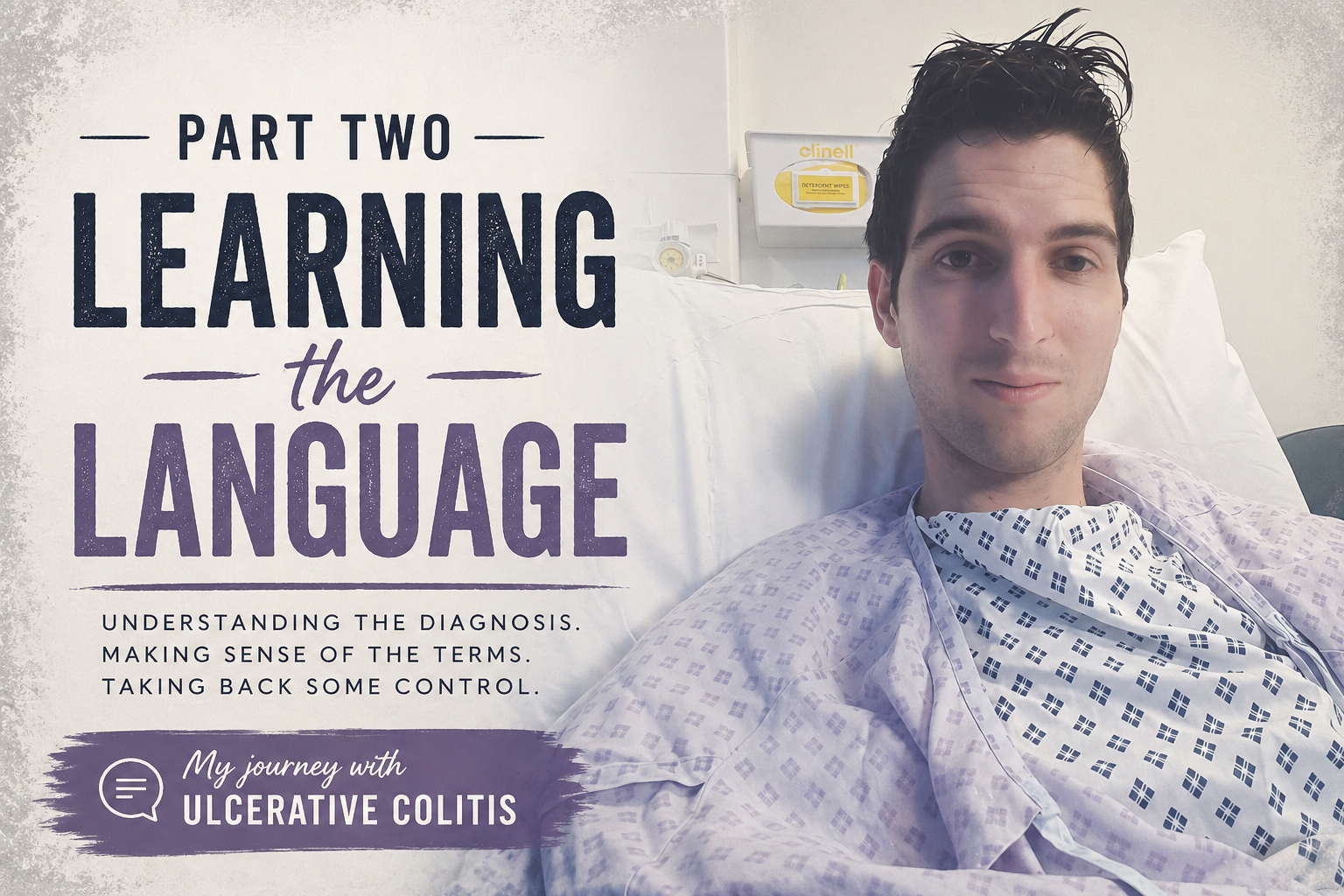
Being diagnosed with ulcerative colitis did not instantly make everything easier. In some ways, it made life more confusing. I had a name for what was happening, but I still had questions, fear, hospital appointments, tests, low iron, weight loss, colonoscopy prep and the strange experience of learning a medical language I never expected to need. This is what happened after my UC diagnosis — when the word “mild” sounded reassuring, but my body still felt anything but normal.
For anyone newly diagnosed with ulcerative colitis, the period after diagnosis can feel overwhelming. You may have a name for what is happening, but that does not mean you instantly understand the tests, medication, symptoms, hospital language, or what life with inflammatory bowel disease might look like.
This follows on from Part One, where I shared the ulcerative colitis symptoms I ignored before diagnosis — the mucus, blood, weight loss, toilet changes, fear, and the moment my symptoms could no longer be brushed off.
PART TWO – LEARNING THE LANGUAGE
What Happens After an Ulcerative Colitis Diagnosis?
Chapter 6: Waiting With a Name
Being told I probably had ulcerative colitis gave me a name for what was happening, but it didn’t exactly give me peace of mind. If anything, it gave me more to think about.
Before that hospital appointment, my fear had been fairly simple. Terrifying, but simple. I was worried it might be cancer. Now I had this new phrase in my head as well: ulcerative colitis. Bowel disease. Inflammatory bowel disease. Autoimmune. These were words I had either never heard before or had only heard in passing, and suddenly they were being used to describe what was happening inside my own body.
I went home with medication and a diagnosis that still needed to be properly confirmed, and like most people do when they are scared and confused, I Googled it. That was probably my next schoolboy error.
Google is not your friend when you are newly diagnosed with something you don’t understand. One minute you are trying to find a simple explanation, and the next you are reading words like chronic, lifelong, flare, surgery, immune system, complications and bowel removal. It is not exactly the kind of light bedtime reading that helps you settle your mind.
The problem was that none of it really told me what my life was going to look like. It told me what could happen, what might happen, and all the worst-case scenarios, but it didn’t tell me how I was supposed to get up, go to work, raise children and act normal while my body was doing things I couldn’t control.
That fear did not disappear after diagnosis; it became part of learning how to live with ulcerative colitis day by day.
So I tried not to think too far ahead.
I still had the scan to get through because cancer hadn’t been fully ruled out. That hung over me more than I probably admitted at the time. I had been told there was a likely explanation, but until someone officially said I was clear, my mind kept circling back to the same fear.
The Pentasa suppositories helped settle things slightly. The mucus reduced and the bleeding calmed down, which was a relief, but it didn’t mean I felt well. I was still losing weight, still feeling drained, and still looking like a version of myself I didn’t recognise properly.
People don’t always understand how frightening unexplained weight loss can be. From the outside, weight dropping off can sometimes be treated like a compliment, but when it is happening because your body is not absorbing properly and you feel like you are disappearing in front of yourself, it doesn’t feel like a win. It feels like something is very wrong.
At that stage, I had a name for the condition, but I didn’t have control. I had medication, but I didn’t have certainty. I had a possible answer, but I was still waiting for the one answer I needed most.
I needed to know it wasn’t cancer.
Being Checked for Cancer Before My UC Was Confirmed
Chapter 7: Ruling Out the Worst
The day of the scan came, and I remember feeling like I looked properly ill. Not just tired, not just a bit run down, but ill. I was a mere shadow of my former self, and walking through the hospital corridors made everything feel more real.
We moved around the hospital, passing the chapel and the morgue, which really didn’t help the atmosphere. If you are already worried about cancer, walking past those signs is not exactly what you need to calm your mind. It made the whole thing feel heavier than it already was.
Before the scan, I had to drink a special liquid that was meant to illuminate my insides. There was a lot of it, and I had to get it down in what felt like no time at all. It wasn’t pleasant, and almost immediately my body decided it had opinions.
I needed the toilet, and I needed a wee, which is not ideal when you are about to be put inside a scanner and told to keep still.
I was taken into the scanning room and lay down on what felt like a slab. Another plate was placed over me, and I was moved into the machine with only one real thought going through my head: if this doesn’t hurry up, I am either going to wet myself or I am going to press that emergency button.
A voice came through the speaker telling me that if I needed to come out, I could press the button. That should probably have been reassuring, but it wasn’t. It just made me even more aware that I was trapped in there until it was done.
The machine started making all these beeps, grinding noises and clunks. Even with the earplugs in, it was horrible. You are lying there trying not to move, trying not to panic, trying not to think about why you are there, and also trying very hard not to think about your bladder screaming at you.
It felt like forever.
When it was finally over, I think I visited every toilet on the way out of the hospital. My body had clearly been waiting for permission to empty itself, and once it got that permission, it made full use of the facilities.
Then came the waiting again.
Three days later, the phone call came. I was told I was all clear.
Thank God.
I don’t think I realised how tightly I had been holding onto that fear until I heard those words. Cancer was ruled out. It wasn’t that everything was suddenly fine, because it clearly wasn’t, but that particular nightmare had finally been taken off the table.
At that moment, I took it as a win. I still looked like a zombie. I was still underweight. I still had bowel disease. I still didn’t fully understand what life with ulcerative colitis was going to mean.
But it wasn’t cancer.
And after weeks of carrying that fear around, that mattered more than anything.
Iron Deficiency, Weight Loss and Running on Empty
Chapter 8: Running on Empty
Once cancer had been ruled out, the next focus was trying to get me back to some kind of strength. My body had clearly been struggling, and I needed help to stop losing weight and start absorbing something again.
I phoned the hospital, and they called me in to sort out meal replacement drinks. If you have ever had those high-calorie nutritional drinks before, you will know exactly what I mean when I say they are rancid. They are thick, overly sweet, artificial-tasting little bottles of necessity. They are not something you drink because you fancy one. You drink them because your body needs help and because you don’t really have another option.
So I drank them.
To be fair, they did the job. Slowly, my body started to absorb again. I wasn’t magically back to normal, but I stopped feeling like I was disappearing quite so quickly. At that point, any improvement felt worth holding onto.
My blood tests also showed that I was lacking iron, which explained a lot. No wonder I felt like I had nothing in the tank. I wasn’t just tired in the normal sense. My body was running on fumes.
So I was called in for an iron infusion.
That meant being plugged into a machine through a cannula while iron was pumped directly into my veins. It sounds dramatic, but the actual experience was more strange than scary. You sit there watching a bag of something your body badly needs slowly go into you, and it hits you that your body has reached a point where it can’t quite sort itself out on its own anymore.
That is a weird feeling.
But it worked.
Over the next few days, I started to feel alive again. Not fixed, not cured, and definitely not suddenly full of energy, but there was a shift. A bit of colour came back. A bit of strength. A bit of mental clarity. The fog lifted just enough for me to realise how low I had actually dropped.
That was another thing I learned during this stage. When you have been unwell for a while, your version of normal starts to change. You get used to feeling awful because it happens gradually. Then something improves, even slightly, and you suddenly realise how bad things had become.
The drinks helped. The iron helped. The scan had ruled out the worst fear.
But the bigger questions were still there.
How much damage had the disease done? How far had it spread? What treatment would come next? Was this something I could actually live with, or was it going to keep taking more from me?
That is when I met the consultant who would become a major part of my life with this disease.
My First Colonoscopy and Bowel Prep Experience
Chapter 9: The First Scope
Not long after the scan and iron infusion, I met my new consultant. He would become my guide through ulcerative colitis, my Mr Miyagi, my Master Splinter of the IBD world.
He explained that they needed to see how far the disease had spread, and the way they would do that was with a colonoscopy. A camera would be fed through the rectum and up around the colon, all the way to the appendix.
Again, my heart dropped.
I had already had one medical instrument go the wrong way during the examination on Level 8, and now I was being told that a camera needed to go on a full guided tour. I know these procedures are normal to the medical team, but when you are the person on the receiving end, it feels anything but normal.
Then he handed me the bowel prep.
Picolax.
Even now, that word makes me shudder.
Try to imagine the worst drink you have ever tasted, then times it by a thousand. That is Picolax. It is seriously disgusting. It isn’t just the taste either; it is the smell, the texture, the whole experience. I can still gag just thinking about it.
And the worst part is, it does exactly what it is supposed to do.
It emptied me like a broken hosepipe.
There is no polite way to describe bowel prep. Once it starts, you are committed. You don’t make plans, you don’t wander too far from the toilet, and you don’t trust your body for even a second. You just accept that you are about to be cleared out completely and repeatedly until there is absolutely nothing left to give.
The next day, I was starving because I wasn’t allowed to eat properly. From memory, jelly babies were allowed, but not the red ones, which felt like an unnecessary personal attack when you are already miserable and hungry.
By the time I got to hospital, I was anxious, empty, hungry and very aware of what was about to happen.
Before the procedure, I had a quick chat with the doctor, who explained the risks, including the very small risk of bowel perforation. I know they have to tell you these things, but hearing it right before someone is about to put a camera through your bowel is not exactly relaxing.
Then I was guided into the room where the magic happens.
And by magic, I mean the least magical magic show ever.
There were screens everywhere. I was lying there in a gown, facing the equipment, with my dignity somewhere outside the room. The sedation went into the cannula, and that strange super-drunk feeling started to come over me. The room blurred, my thoughts slowed down, and then came the procedure.
Even with sedation, I remember enough to know it wasn’t pleasant. The feeling of it going up and around was horrific at points. I kept telling myself it would be over soon. That became the only thought I could properly hold onto.
It will be over soon.
Eventually, it was.
I was wheeled into recovery to come round from the sedation, waiting for the holy grail of hospital recovery: tea and toast. But more importantly, I was waiting for answers.
Being Told I Had Mild Ulcerative Colitis and Proctitis
Chapter 10: Mild
After the colonoscopy, I was given the summary of what they had found.
At that moment, I was told I had mild ulcerative colitis called proctitis.
The word mild stuck with me.
When you hear the word mild, you naturally want to feel reassured. Mild sounds manageable. Mild sounds like the lower end of the scale. Mild sounds like something that shouldn’t completely take over your life.
And in that moment, I did feel a bit reassured.
The disease was confined to the rectum. It hadn’t spread through my whole colon. It had a name, a location and a plan. Compared with all the fears I had been carrying, especially the fear of cancer, that sounded like good news.
The consultant explained the science behind it as simply as possible. Ulcerative colitis is an autoimmune disease, where your body sees part of itself as a threat and attacks it. In my case, my immune system was attacking my bowel.
That is a difficult thing to get your head around.
Your own body, the thing that is meant to protect you, has basically got confused and started fighting the wrong enemy. It isn’t something you caused, and it isn’t something you can just think your way out of. It is your immune system behaving as if part of you is the problem.
He explained that there wasn’t a cure in the simple sense, but there were treatments. The next step would be to try different medications and find what worked for me. There were options. There was a plan.
But every drug came with risks.
At that point, I heard the word risks, but I didn’t really take it in properly. I was too focused on wanting my life back. I wanted the blood gone. I wanted the mucus gone. I wanted my weight back. I wanted to stop feeling frightened every time I went to the toilet. I wanted to stop thinking about my bowel every hour of the day.
So when they talked about medication, side effects and future treatment pathways, I nodded along and focused on the part that mattered most to me.
This could be managed.
That was the word I held onto. Manageable.
I left believing that the worst might be behind me. I had been scared it was cancer, and it wasn’t. I had been told it was mild. I had medication. I had a consultant. I had a plan.
At the time, that felt like enough.
What I didn’t understand then was that mild doesn’t always stay mild, and ulcerative colitis was only just beginning to teach me its language.
Over time, that lesson continued as symptoms returned, treatments changed, and I had to learn what living with ulcerative colitis really meant.
Contact your GP or medical team
This is my personal experience of what happened after my ulcerative colitis diagnosis. It is not medical advice.
If you notice blood or mucus in your stool, unexplained weight loss, ongoing diarrhoea, bowel changes, or symptoms that do not feel normal for you, please speak to your GP or medical team.
You can also read Crohn’s & Colitis UK guidance on getting a diagnosis.
You can also read NHS guidance on inflammatory bowel disease symptoms.
Continue the story:
After diagnosis came the longer reality of learning to live with ulcerative colitis every day. Read Part Three – The Long Middle: learning to live with UC after diagnosis
Some of the links below are affiliate links. This means I may earn a small commission if you buy through them, at no extra cost to you. I only include things that genuinely connect to my own experience.
Things That Helped Me After My Ulcerative Colitis Diagnosis
After my ulcerative colitis diagnosis, I was trying to understand hospital appointments, tests, medication, bowel prep, low iron, weight loss and what this new condition actually meant for my life.
These are a few practical things that helped me feel more prepared during the diagnosis stage, especially when appointments, medication and uncertainty started becoming part of everyday life.
These are not cures or medical recommendations — just small things that helped me feel slightly more prepared during tests, diagnosis, medication, hospital appointments and learning what UC meant.
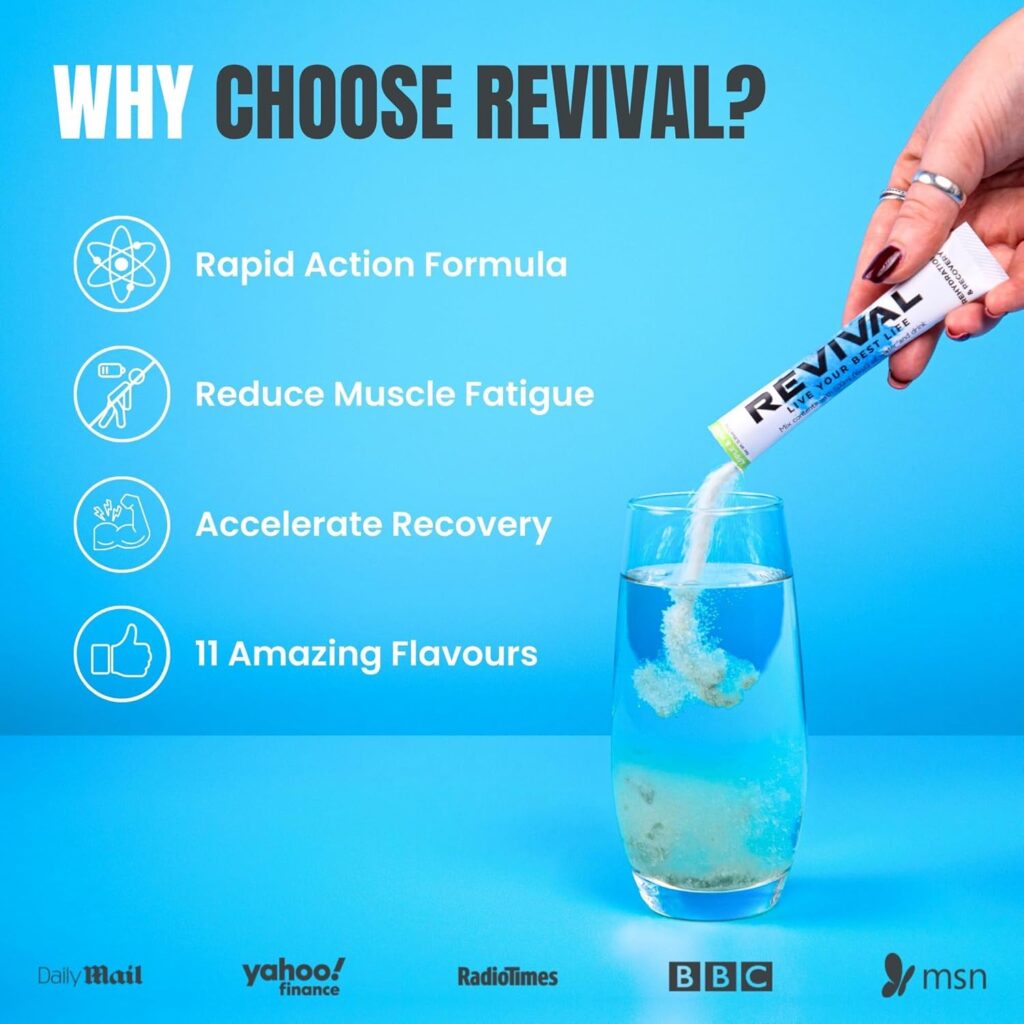
⚡ Electrolyte rehydration sachets
I didn’t realise how dehydrated I constantly was until I started replacing electrolytes properly — not just drinking water.
Why it helped:
✔ Helped with fatigue and dizziness
✔ Better hydration during flares
✔ Easy to carry when out the house
👉 Browse Electrolyte rehydration sachets
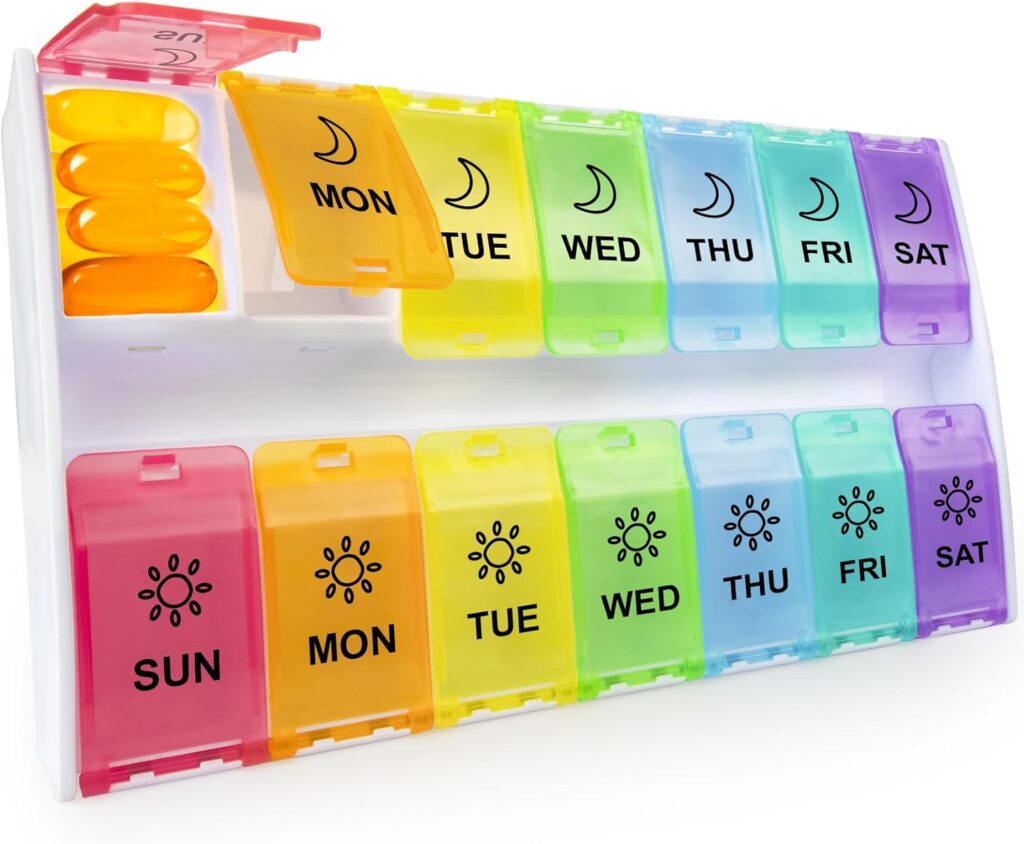
💊 Pill Organiser
Once medications became part of daily life, keeping track of everything became surprisingly stressful — especially with fatigue and brain fog.
Why it helped:
✔ Helped me stay consistent with medication
✔ Reduced stress and missed doses
✔ Simple but genuinely useful
👉 Shop Pill Organisers on Amazon
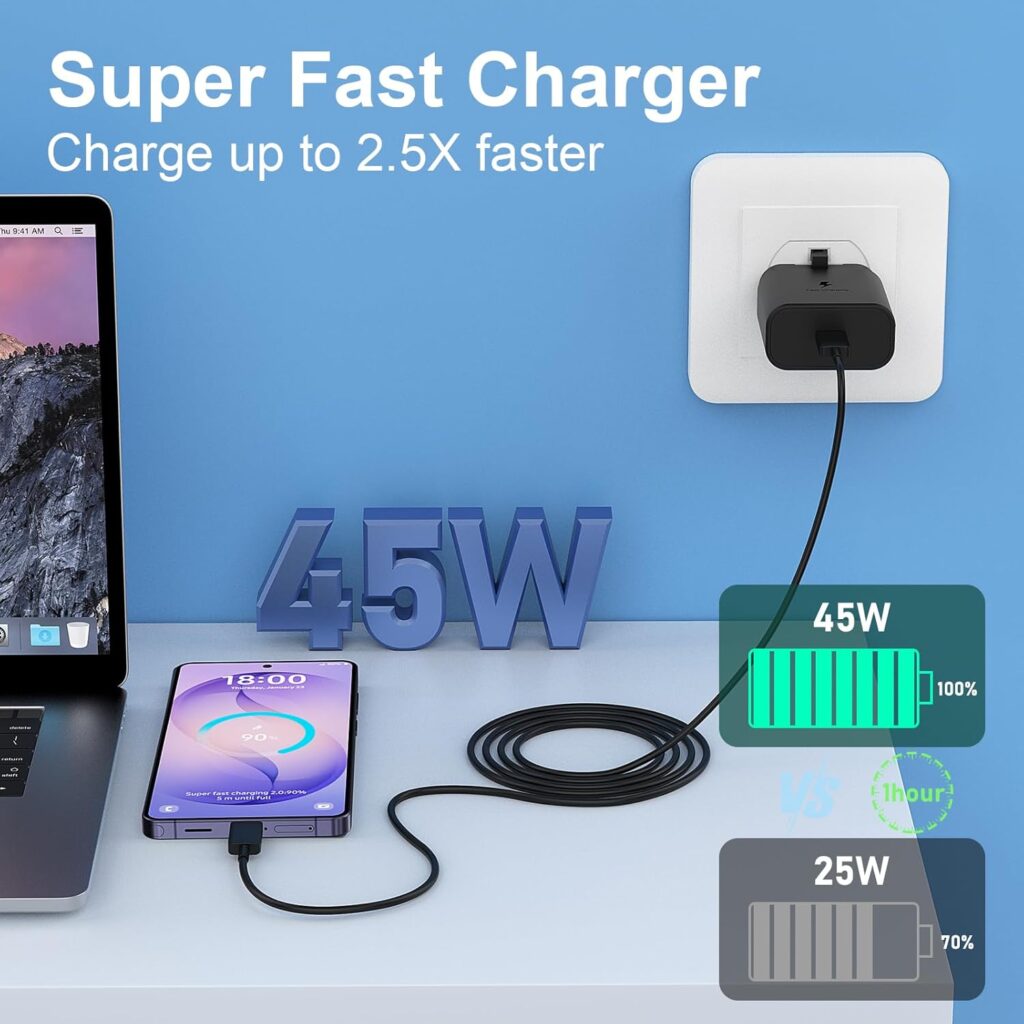
🔋 Portable Charger
Hospital waiting rooms, emergency toilet trips, and long appointments meant my phone battery was always dying at the worst times.
Why it helped:
✔ 3m Cable + 45w Super fast charger
✔ Useful during long flare days out
✔ Something I quickly stopped leaving home without
👉 Find Portable Chargers on Amazon
🔥 Premium Hot Water Bottle Belt
For me, a wearable hot water bottle belt was a complete upgrade from a normal hot water bottle. Instead of constantly holding it in place or readjusting it every five minutes, the belt wraps around your stomach or lower back so the heat stays exactly where you need it.
Why it helped:
✔ Hands-free comfort during flare days
✔ Stayed in place while resting or walking around
✔ Better support for stomach cramps and lower back pain
✔ Felt more practical during long nights and hospital recovery days

👉View Premium Hot Water Belt on Amazon