After my ulcerative colitis diagnosis, life did not simply go back to normal. I had a name for what was happening, but now I had to learn how to live with it every day. This part of my story covers the long middle — the flare-ups, fatigue, urgency, medication changes, steroid side effects, Methotrexate, Vedolizumab infusions, and the four years of remission that finally gave me some breathing space.
For me, living with ulcerative colitis after diagnosis became a long process of learning what my body could cope with, what treatments helped, what side effects changed me, and how quickly symptoms could return even after things seemed settled.
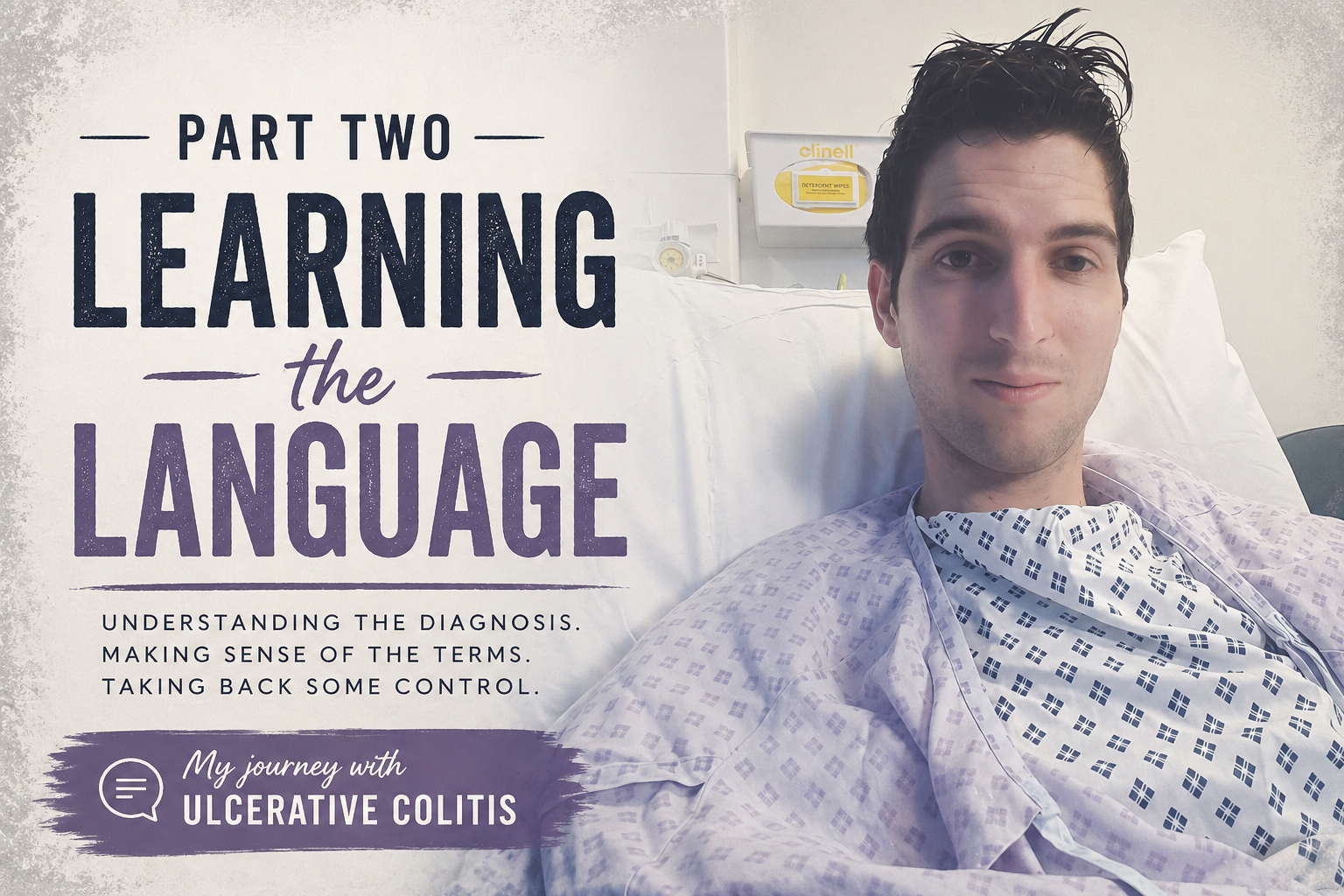
This follows on from Part Two, where I shared what happened after my ulcerative colitis diagnosis — the tests, hospital appointments, colonoscopy prep, low iron, and trying to understand what mild UC and proctitis actually meant.
PART THREE – THE LONG MIDDLE
Learning to Live With Ulcerative Colitis Every Day
Chapter 11: Learning to Live With It
After the colonoscopy, I remember walking away with a strange mix of relief and confusion. I had been told I had mild ulcerative colitis, or proctitis to be exact, and that word “mild” made it sound like something fairly small and manageable. At the time, I wanted to believe that. I think I needed to believe it. After all the fear, the weight loss, the scan to rule out cancer, and the worry that had been building for weeks, hearing that it was “mild” felt like a bit of breathing space.
Of course, I didn’t really understand then what living with a lifelong bowel condition actually meant. I didn’t understand that mild doesn’t always stay mild, and I definitely didn’t understand how much trial and error can be involved in finding a treatment that actually works.
I was sent home with Pentasa Mesalazine suppositories to use every night. There is no glamorous way of putting that. My new bedtime routine involved finishing the day by putting medication somewhere medication had never been invited before. It was awkward, embarrassing, uncomfortable at first, and not exactly something you casually bring up in conversation over a cup of tea.
But it helped.
However undignified it felt, the medication started doing its job. The bleeding eased, the mucus settled down, and things started to feel a bit more stable. I wasn’t cured, but I felt like I had been given a small amount of control back. At that stage, that was enough to make me feel hopeful.
I tried to make sense of it in my own way. In my head, I imagined the suppositories like a reverse Gaviscon. Instead of the little firefighter going down to put out stomach acid, this was something going in the other direction to calm my colon down. It might sound ridiculous, but sometimes humour is the only way to make something uncomfortable feel a bit more manageable.
Life carried on. That is one of the strange things about being diagnosed with something chronic. You don’t always get a dramatic pause where the world stops and gives you time to adjust. You still have to go to work. You still have bills to pay. You still have a family to support. You still have a normal life sitting there waiting for you, even when your body has just changed the rules.
So I went back to work at Waitrose and tried to carry on as normally as possible. I still had children to help raise, routines to keep, and responsibilities that didn’t disappear just because I had been given a diagnosis. I wanted life to go back to how it had been before all the symptoms started. I wanted this to be something I could manage quietly in the background.
For a while, it did feel liveable. Not perfect, but liveable. I still had ulcerative colitis, and I still had to manage it every day, but it wasn’t controlling every minute. I could work. I could function. I could almost convince myself this was going to be the version of the disease I had to deal with.
A nightly inconvenience. A few appointments. A bit of embarrassment. Something manageable.
Looking back, I think I was desperate for that to be true.
At the time, I did not realise this was only one stage of my wider ulcerative colitis to stoma journey.
When Ulcerative Colitis Symptoms Started Coming Back
Chapter 12: The First Cracks
The problem with ulcerative colitis is that it doesn’t always stay where you leave it. Just because something settles for a while doesn’t mean it has gone away, and just because a treatment works at first doesn’t mean it will keep everything under control forever.
For a while, the Pentasa helped enough for me to get on with life, but eventually the familiar signs started creeping back in. It wasn’t dramatic at first, and that is what makes it difficult. You don’t always wake up one morning and suddenly know you are flaring. Sometimes it starts with small changes that you try to explain away.
A bit more urgency. A bit more mucus. A bit more worry when you go to the toilet. Then the blood comes back, and deep down you know you are not imagining it.
That is the part people don’t always understand. Once you have seen blood and mucus coming from your body, you don’t forget it. Every toilet trip becomes a check. Every stomach pain becomes a question. Every bad day makes you wonder whether the disease is waking up again.
Back to the hospital I went.
This time, the conversation moved on to stronger medication. The first drug they wanted to try was Azathioprine, an immunosuppressant designed to calm the immune system down and stop it attacking my bowel.
By that point, the risks didn’t matter to me in the way they probably should have. I just wanted the symptoms to stop. I wanted to stop seeing blood. I wanted to stop worrying about mucus. I wanted to stop thinking about toilets and start feeling normal again, or at least as close to normal as I could get.
So I took Azathioprine alongside the Pentasa and hoped this would be the thing that finally kept the colitis quiet.
Unfortunately, it wasn’t.
That was one of the first proper lessons I learned about this disease. Treatment isn’t always a straight road. It isn’t as simple as being given a tablet, taking it, and getting better. Sometimes a drug works. Sometimes it half works. Sometimes it does absolutely nothing. Every time one option fails, you feel the ground shift a little bit underneath you.
Azathioprine was supposed to be the next step forward. Instead, it became another thing crossed off the list.
Prednisolone and Steroid Side Effects With UC
Chapter 13: Enter the Steroids
When Azathioprine didn’t do the job, I was introduced to Prednisolone.
The demon steroids.
I know that sounds dramatic, but anyone who has been on them will probably understand exactly what I mean. Prednisolone can be incredible and awful at the same time. Physically, it worked fast. Really fast. Within days, the flare settled, the bleeding stopped, and the urgency eased. It was like someone had turned the volume down on the disease.
When you have been living with blood, mucus, panic, and that horrible feeling of not trusting your own body, that kind of relief feels massive. You don’t care too much about the warnings at first because all you can focus on is the fact that you are not running to the toilet constantly or checking for blood every time you go.
But then the side effects arrived.
I couldn’t sleep properly. My mind was racing all the time. I felt wired, restless, and constantly on edge. Worst of all, I felt angry. Not just a bit irritable, but properly full of rage over things that would normally never bother me.
That was probably one of the hardest parts because I am not naturally that person. I have always been fairly placid. I am not someone who kicks off easily or loses it over nothing. So to suddenly feel like this angry version of myself was walking around in my body was horrible.
It is a strange feeling when a drug helps your body but makes your mind feel like it has been hijacked.
At the same time, I couldn’t deny that the symptoms had improved. That is the cruel trade-off with steroids. You know they are not a long-term answer, and you know they come with side effects, but when they work, you cling to the relief. You tell yourself it is worth it because at least the bleeding has stopped. At least the urgency has calmed down. At least you can function.
So I carried on. I told myself it was temporary. I told myself that once the flare settled, things would stay calm. I told myself this was just another rough patch and that I could get through it.
But ulcerative colitis had other ideas.
When a UC Flare Comes Back Harder
Chapter 14: When It Comes Back Harder
For a while, I managed to stay in a sort of remission. I was still using the nightly Pentasa and still living with the knowledge that the disease was there, but life was ticking along. It wasn’t perfect, but it was manageable enough for me to believe things might stay that way.
Then it came back.
Not gently. Not politely. It came back with a vengeance.
This was the worst my symptoms had been up to that point. I was going to the toilet up to fifteen times a day, and it wasn’t just normal toilet trips either. It was blood, mucus, pain, urgency, and that horrible feeling that your body has taken control while you are just trying to keep up with it.
People hear “fifteen times a day” and probably imagine it as an inconvenience. It is so much more than that. It drains you. It interrupts everything. It makes leaving the house feel like a risk assessment. You start thinking about toilets before you think about anything else.
Work, shopping, family days out, car journeys, even simple things suddenly come with questions attached. Can I get there? Is there a toilet nearby? What if I can’t hold it? What if something happens in public? What if I get stuck somewhere with no way out?
That kind of thinking wears you down.
Back to the hospital I went, and this time the next drug on the list was Methotrexate. This one arrived at my house in the form of injections, a bit like EpiPens, which I had to administer myself into my stomach.
I thought the injection part would be the thing I struggled with most, but strangely, it wasn’t as bad as I expected. Don’t get me wrong, injecting yourself in the stomach is never going to become a hobby, but I managed it.
The thing I remember most was the smell of the alcohol cleaning wipes. I don’t know why, but they made me gag. Even now, certain medical smells can throw me straight back into that headspace.
At first, I thought maybe I could handle Methotrexate. I had handled suppositories. I had handled steroids. I had handled scopes, hospital appointments, embarrassment, and all the indignity that comes with bowel disease.
But then the side effects kicked in, and this felt different.
Methotrexate Side Effects and Reaching My Lowest Point
Chapter 15: The Lowest Point
Methotrexate took something out of me that is hard to explain. I have never felt so physically and mentally frail in all my life. It wasn’t just tiredness. It was like my body had been dampened down, and my mind had gone with it.
I felt hollow. Fragile. Like I was still technically getting through each day, but there was nothing left in reserve. The worst part was that I was still getting symptoms. I was taking this strong medication, dealing with the side effects, injecting myself, feeling awful, and yet the colitis was still there in the background causing chaos.
At some point, the balance shifted.
I looked at my partner and said, “I can’t do this.”
And I meant it.
This wasn’t one of those dramatic comments you say in a bad moment and then move on from. I genuinely couldn’t see how this was supposed to be life. I felt like a train wreck. I was exhausted from the symptoms, exhausted from the drugs, exhausted from trying to be okay when I absolutely wasn’t.
That was the first time surgery properly entered my head.
Not as a distant possibility. Not as something doctors might mention one day if things got worse. I actually wanted it gone. If removing part of me meant getting my life back, then so be it. That is how low things had got.
We went to the hospital unannounced because I was desperate. We weren’t there for a routine appointment. We were there to plead with my consultant to take this seriously and ask whether surgery could be the answer.
By chance, we arrived when the consultants were having a meeting. My case was put to the team, including my consultant’s boss, and once they had finished, we were called in.
She talked us through the surgery calmly and clearly. She explained what it would involve and what the process could look like. And instead of terrifying me, it actually made sense. For the first time, surgery didn’t feel like a failure. It felt like a way out.
That thought would come back later, when failed treatments and worsening symptoms eventually pushed me closer to stoma surgery.
Then she said there was one more drug they wanted to try.
One more.
Vedolizumab Infusions as One More Treatment Option
Chapter 16: One More Chance
The drug was called Vedolizumab.
My first thought was that it was a ridiculously long name.
At that stage, I wasn’t full of optimism. I wasn’t walking into it thinking, “This is definitely going to save me.” In my head, it felt more like a final hurdle before surgery. If they needed me to try one more medication before we moved on, then fine. Let’s get the ball rolling.
It was explained to me that Vedolizumab hadn’t been around for colitis for that long, but it had been showing good results, especially with Crohn’s patients. I also had to stay on Methotrexate temporarily while starting it, to keep my immune system suppressed enough that it wouldn’t attack or reject the new treatment.
I didn’t love that part.
Methotrexate had made me feel dreadful, but if staying on it was the price of getting to the next stage, I accepted it. I just wanted something to change.
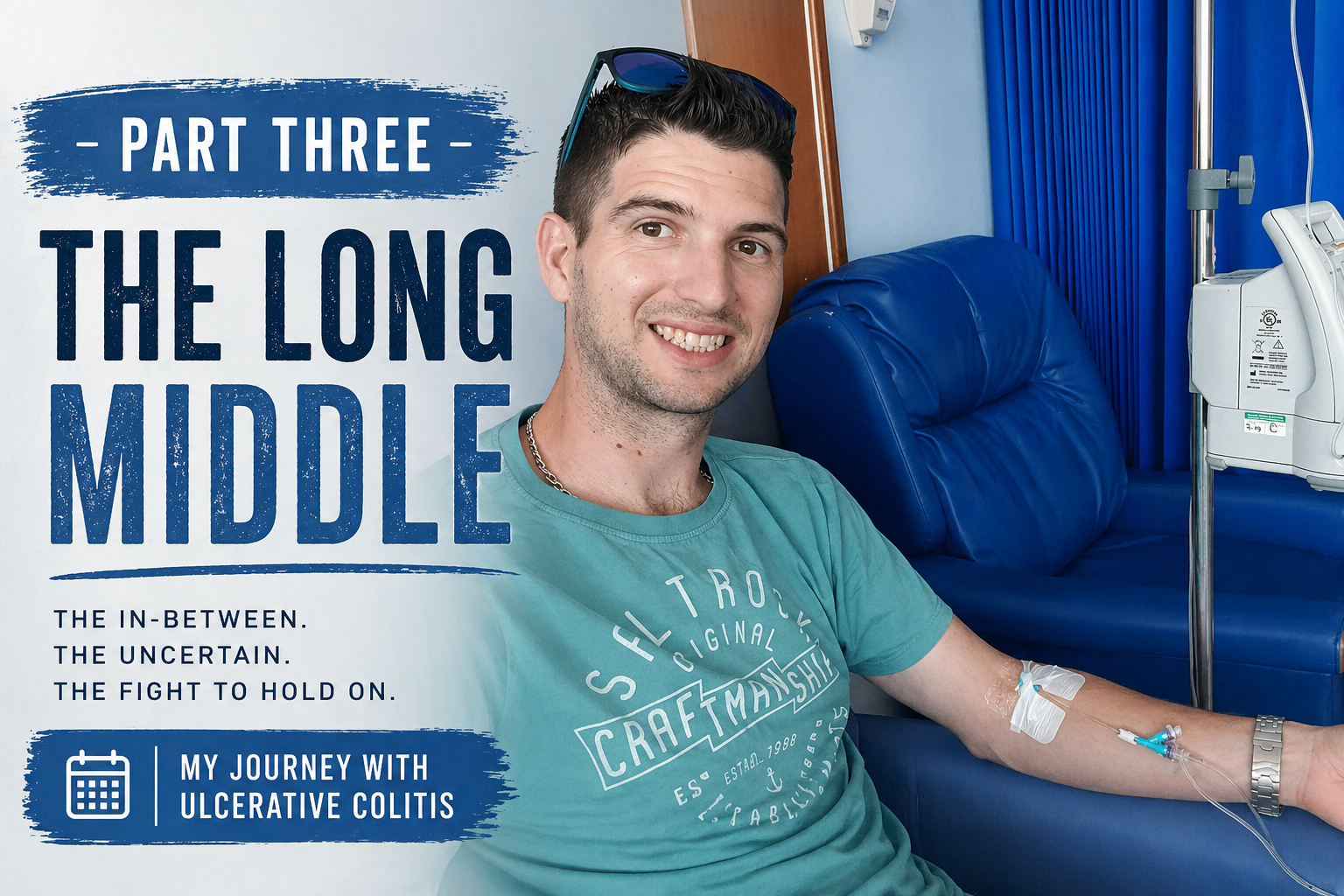
The first Vedolizumab infusion took place in hospital. I was hooked up through a cannula in my arm and sat there for the hour-long infusion, watching this medication slowly make its way into my body.
I’m not going to lie, the first experience was trippy.
Not trippy as in seeing unicorns dancing around the ward, but trippy because I had stupidly read the side effects beforehand. That was a mistake. Every sensation suddenly felt suspicious. Every slight twinge made me wonder whether something was happening. My brain had basically turned into a side-effect checklist.
The infusion finished, then I had another hour of flush to make sure everything had gone through properly. After that, I was sent on my way.
I felt lightheaded, so I sat in the car for about half an hour before even thinking about driving home. I wasn’t taking any chances. Once I got home, I spent the rest of the day in bed, partly because I felt rough and partly because I didn’t trust my own body enough to do much else.
At that point, I had no idea whether it had worked. I didn’t know if this was going to be another failed treatment, another delay before surgery, or the thing that would finally give me some life back.
I didn’t know that one of the biggest moments in my whole UC journey was only a few days away.
The Moment Vedolizumab Started Working
Chapter 17: Starcross
That weekend, me and the family went away with close friends to Woolacombe Bay.
Looking back, I think we all needed it. Not because it magically fixed anything, but because sometimes you need a break from hospitals, appointments, medication, side effects, and talking about illness. You need to pretend, even for a short while, that life is normal.
It was on the journey home that everything changed.
We were driving down the motorway when that familiar feeling hit me. The urgent one. The one where your body gives you very little warning and expects you to come up with a plan immediately.
I saw the sign for Exeter services and thought, brilliant, I can stop there, go to the toilet, then we can carry on home and unpack.
Somehow, I completely missed the turning.
That is not what you want to do when your bowel is already sending alarm bells through your entire body.
We ended up having to drive through the back roads home, via Starcross and Dawlish. I was trying to stay calm, but inside I was panicking. The need to go was immense. I honestly don’t know how I managed to keep it from coming out.
I remembered there was a Sainsbury’s on the route and thought maybe I could stop there, but then as we approached Starcross, I saw the sign for the train station. A memory popped into my head that there were toilets there.
That was enough.
I threw the car into the car park, parked across about three spaces, and jumped out.
And then I had what can only be described as the most enlightening poo of my life.
For the first time in months, it was solid. Formed. Normal. There was no blood, no mucus, and none of the usual chaos that had been attached to every toilet trip for so long.
I just sat there in disbelief.
It sounds ridiculous to say that a poo changed my life, but anyone who has lived with active ulcerative colitis will understand. When your body has been producing blood and mucus for months, when every toilet trip has been a reminder that you are unwell, seeing something normal again feels unbelievable.
That was the moment I knew the Vedolizumab had worked.
I was in remission.
Four Years of Ulcerative Colitis Remission
Chapter 18: Four Years of Breathing
I stopped taking Methotrexate because it was still making me feel rubbish, but I continued with Vedolizumab infusions every eight weeks. And for four lush, symptomless years, I got my life back.
That still feels amazing to write.
Four years without the constant bleeding. Four years without mucus taking over every toilet trip. Four years without living every day around urgency and fear. After everything that had happened, that kind of normality felt huge.
My consultant still mentions how quickly my body responded to Vedolizumab. He has said more than once that he will never forget it, and how happy they were to see me finally getting my life back together.
And I really did.
I was still working at Waitrose during those years, mostly as part of the night team. In some ways, nights suited me. I found it easier to stay awake through the night and sleep in the morning, and the routine worked for where I was at the time.
But once my health stabilised, something else started to creep in.
For the first time in years, I wasn’t just thinking about surviving. I wasn’t planning my life around hospital appointments, side effects, medication, or whether I could get to a toilet in time. My head had space again. I could actually look forward.
When you have spent years feeling like your body is making all the decisions for you, being able to make a decision for yourself feels powerful.
I started to feel like I was wasting my life in a job that didn’t really have a future for me. That isn’t to disrespect the job, because it had supported me and my family for years, but I knew I wanted more. I wanted a proper career. Something I could start at the bottom of and work my way up through qualifications.
So, like most life-changing decisions in the modern world, I turned to Google.
I searched for jobs where you could start from scratch, study alongside work, and build yourself up by passing exams. Accountancy came up, and something about it clicked.
It felt practical. Structured. Achievable. There was a path. Foundation levels, qualifications, progression, a way forward. For someone who had spent years feeling like life was being dictated by illness, that structure mattered more than I probably realised at the time.
The course was expensive, and money wasn’t exactly flowing freely, so I contacted Retail Trust. They supported people who had worked in retail for several years and offered grants to help them better themselves. Thankfully, they awarded me the grant, and I started my AAT Foundation Certificate in Accounting, Level 2.
From there, I threw myself into it.
I worked nights, studied during the day, and juggled family life around it all. It was tiring, but it felt different from illness tired. This was tired with a purpose. I was exhausted because I was building something, not because my body was falling apart.
And it turned out I was good at it.
I started getting distinctions in my exams, and each one gave me a little bit more belief that this was the direction I was meant to be going in. For the first time in a long time, my future didn’t feel like it belonged to ulcerative colitis.
It felt like it belonged to me.
That is what those four years gave me. Not just remission, but the chance to breathe, rebuild, and start becoming The Stoma Accountant before I even knew that name would one day mean something much bigger.
But remission was not the end of the story, and eventually ulcerative colitis started changing my life again.
Contact your GP or medical team
Its not medical advice, This is my personal experience living with UC, flares, medication, side effects and remission.
If you notice blood or mucus in your stool, unexplained weight loss, ongoing diarrhoea, bowel changes, or symptoms that do not feel normal for you, please speak to your GP or medical team.
You can also read Crohn’s & Colitis UK guidance on getting a diagnosis.
You can also read NHS guidance on inflammatory bowel disease symptoms.
Continue the story:
After four years of remission, life started to shift again — work, study, confidence, relapse and the point where my world began to move underneath me. Read Part Four – When the Ground Moves: when ulcerative colitis started changing my life again.
Some of the links below are affiliate links. This means I may earn a small commission if you buy through them, at no extra cost to you. I only include things that genuinely connect to my own experience.
Things That Helped Me While Living With Ulcerative Colitis
Living with ulcerative colitis after diagnosis meant learning how to manage symptoms, medication, flares, side effects and the uncertainty of remission. Some days were manageable, while others revolved around fatigue, urgency, pain, hospital appointments and trying to keep life moving.
These are a few practical things that helped me feel more prepared and organised while living with ulcerative colitis, especially during flare-ups, treatment changes and the long middle part of the journey.
🔥 Premium Hot Water Bottle Belt
For me, a wearable hot water bottle belt was a complete upgrade from a normal hot water bottle. Instead of constantly holding it in place or readjusting it every five minutes, the belt wraps around your stomach or lower back so the heat stays exactly where you need it.
Why it helped:
✔ Hands-free comfort during flare days
✔ Stayed in place while resting or walking around
✔ Better support for stomach cramps and lower back pain
✔ Felt more practical during long nights and hospital recovery days

👉View Premium Hot Water Belt on Amazon
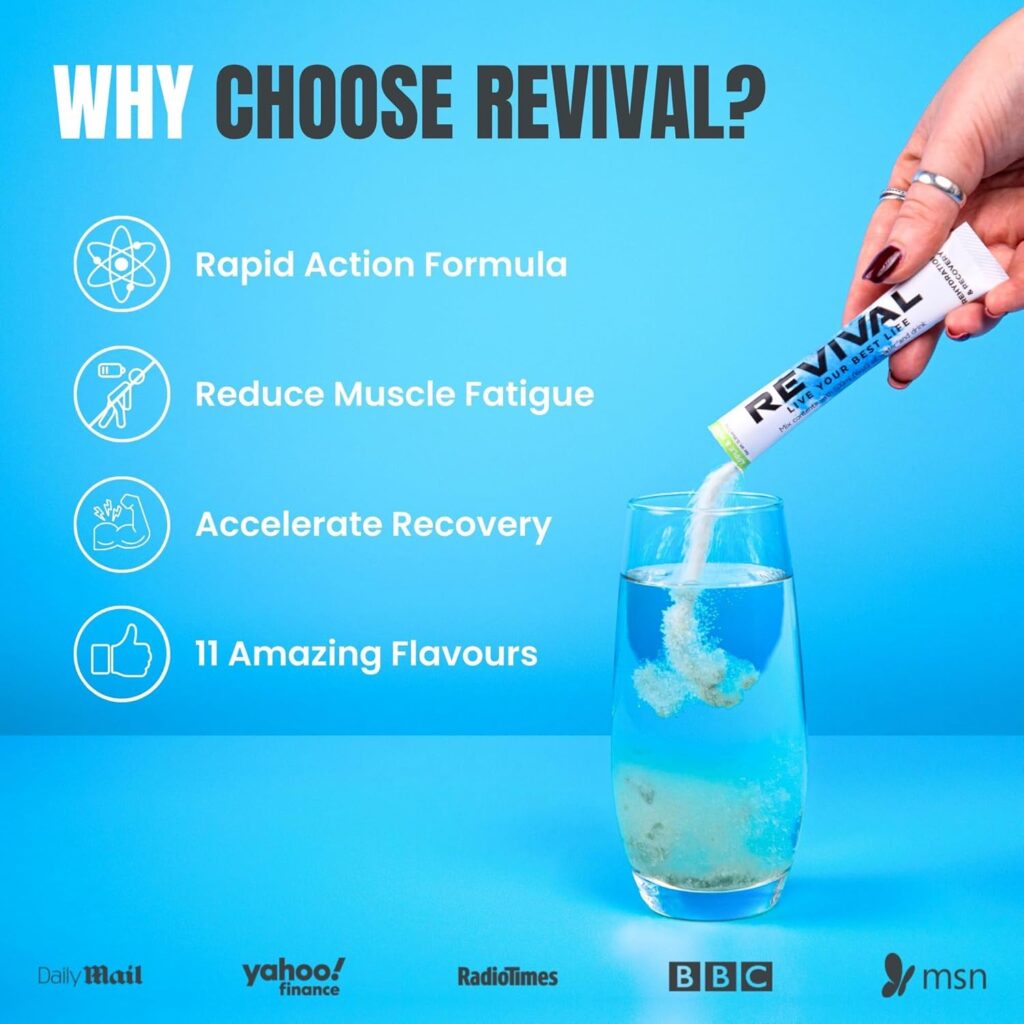
⚡ Electrolyte rehydration sachets
I didn’t realise how dehydrated I constantly was until I started replacing electrolytes properly — not just drinking water.
Why it helped:
✔ Helped with fatigue and dizziness
✔ Better hydration during flares
✔ Easy to carry when out the house
👉 Browse Electrolyte rehydration sachets
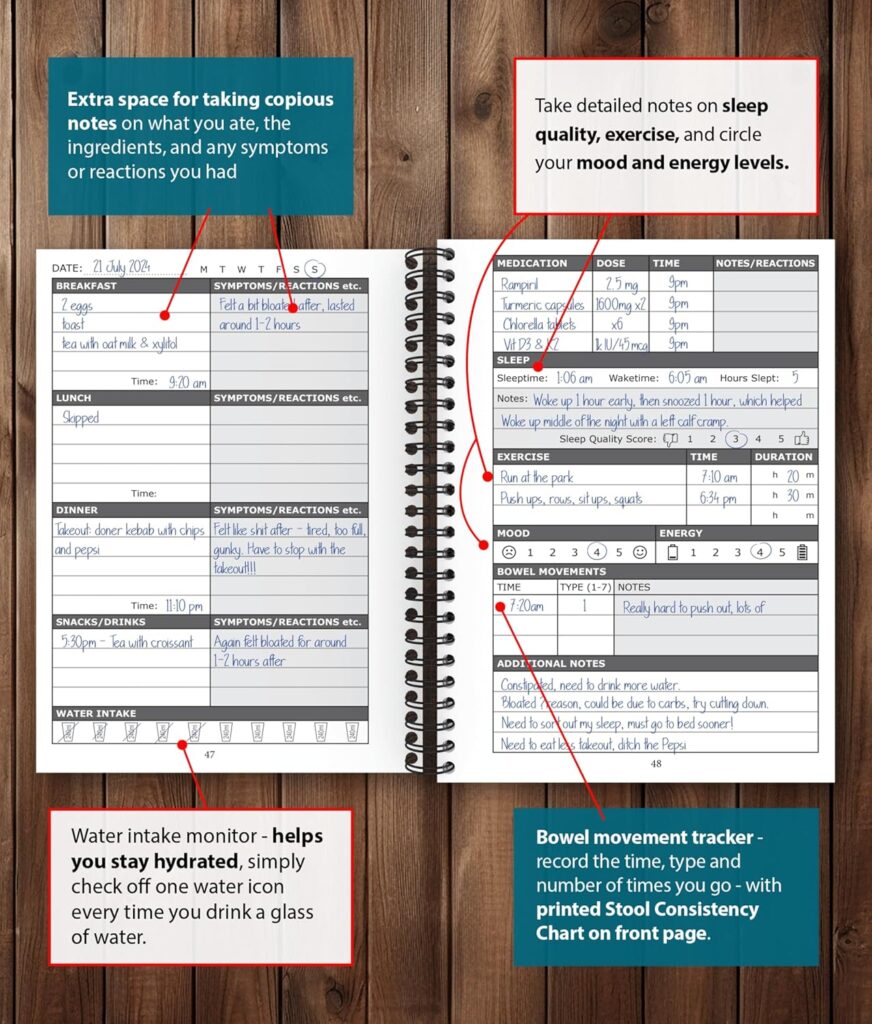
📝 Symptom Journal
Keeping track of symptoms, food triggers, medications, toilet frequency, and flare patterns helped me explain things properly during appointments — and spot patterns I would’ve otherwise missed.
Why it helped:
✔ Easier GP & hospital conversations
✔ Helped identify trigger foods
✔ Reduced the feeling of losing control
👉 Check Symptom Journals on Amazon
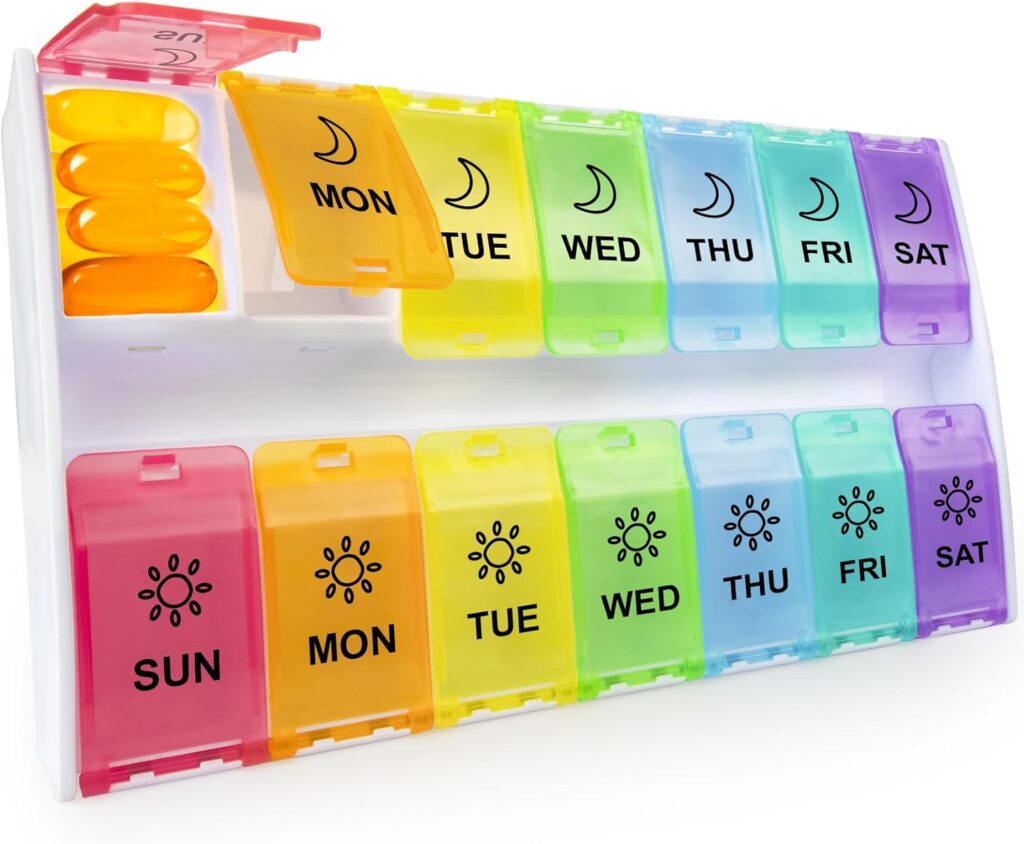
💊 Pill Organiser
Once medications became part of daily life, keeping track of everything became surprisingly stressful — especially with fatigue and brain fog.
Why it helped:
✔ Helped me stay consistent with medication
✔ Reduced stress and missed doses
✔ Simple but genuinely useful