Adjusting to Life With a Stoma After Surgery

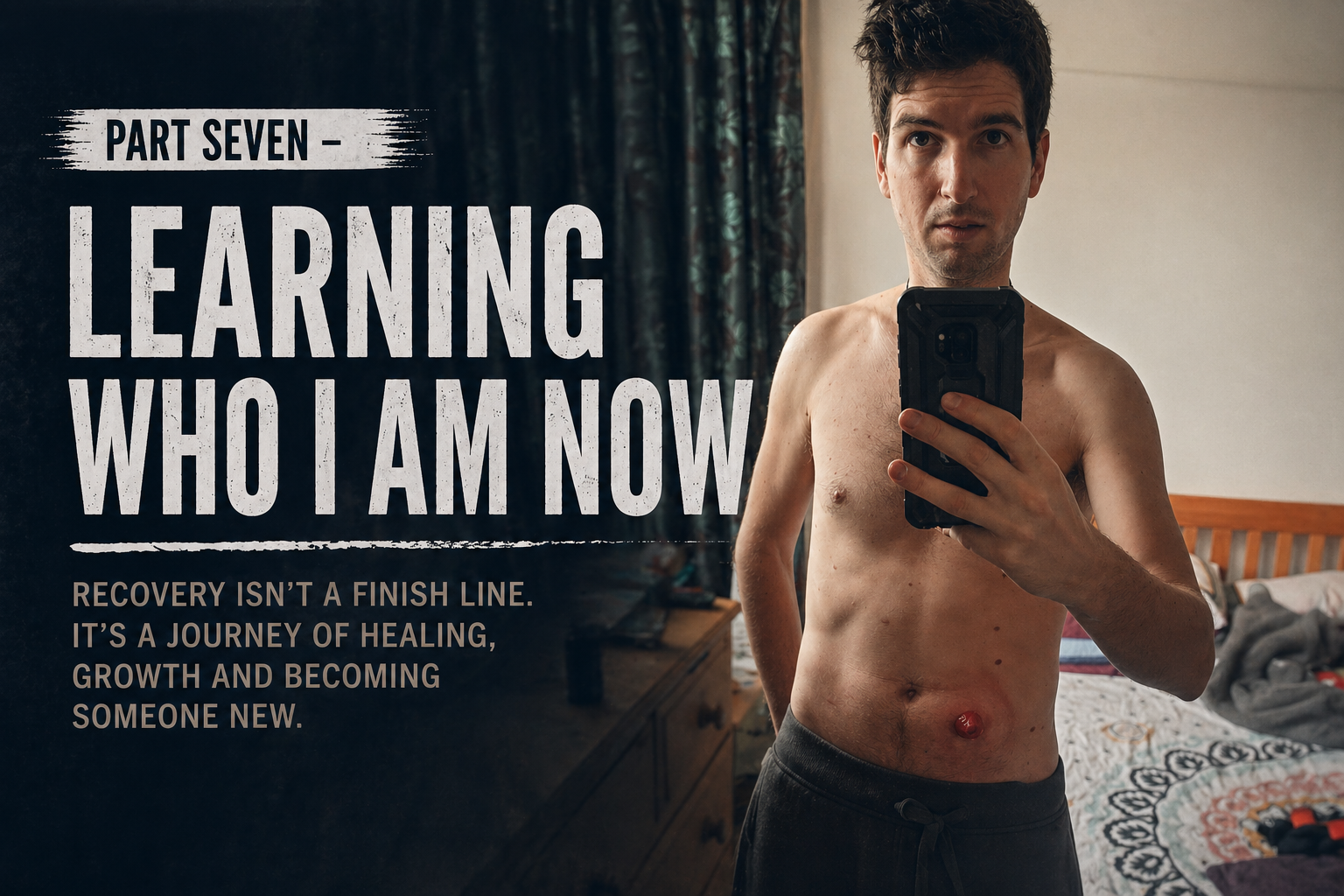
Coming home after stoma surgery was when the real adjustment began. In hospital, recovery had structure, nurses, routines and support. At home, I had to learn how to live with a changed body, surgical wounds, weak stomach muscles, a stoma bag, leaks, bag changes, body confidence, mental health wobbles, and the strange feeling of not quite recognising myself. This part of my story is about adjusting to life with a stoma after surgery — not perfectly, not instantly, but slowly, honestly, and one small milestone at a time.


This follows on from Part Six, where I shared what it was like recovering after stoma surgery for ulcerative colitis — waking up in pain, learning to walk again, meeting my stoma, emptying my bag, and finally going home.

Read Part Six here:
Stoma Surgery Recovery After Ulcerative Colitis


PART SEVEN – LEARNING WHO I AM NOW

Coming Home After Stoma Surgery

Chapter 42: Recovery Isn’t a Finish Line

Leaving hospital didn’t feel like the end of the story. In some ways, it felt like the start of a completely different one.

When you are in hospital, everything is structured for you. Medication comes at certain times. Nurses check on you. Doctors appear. Meals arrive. Someone is there if something goes wrong. Even when it is hard, and even when you are desperate to go home, there is a safety net around you.

Then you leave.

Suddenly, you are back in your own house with this changed body, a stoma bag, surgical wounds, weak stomach muscles, and a list of things you are not allowed to do. You are expected to rest, recover, learn, heal, and somehow return to normal, except normal doesn’t really exist in the same way anymore.

The first week back at home was tough. Not necessarily dramatic every second, but difficult in the small, practical ways that wear you down. Things I had always taken for granted were suddenly hard. Sitting up was difficult because my stomach muscles were so weak. I couldn’t just move how I wanted to move. I had to think about everything before I did it.

Sleeping was awkward too. I couldn’t sleep on my side, which was a massive annoyance because I’ve always found it hard sleeping on my back. Something as simple as turning over in bed suddenly became something my body wasn’t ready for.

I also couldn’t fully sit up unaided without either pulling myself up or needing someone to help push me. That is a strange thing to deal with mentally. One minute you are an adult who can do everything for yourself, and the next you need help with the most basic movements.

I couldn’t lift anything heavier than the kettle either. That was frustrating enough on its own, but because I suffer with OCD, not being able to clean the house properly drove me mad. With seven of us in the house, it doesn’t stay clean for long, and having to sit there looking at things I couldn’t sort out was really hard.

I also couldn’t bend down to pick anything up from the floor, and you don’t realise how often you do something like that until you can’t do it anymore. Dropped something? Normally, you just pick it up. After surgery, it becomes a whole situation.

But my biggest triumph in those early days was the stairs.

At first, getting up and down the stairs was a slow process of one foot in front of the other, pitta-patting my way up and down while either holding onto my beloved’s arm or clutching the bannister like my life depended on it. Generally, I tried to avoid the stairs unless it was really important.

Then little by little, I improved.

Eventually, I could walk up and down holding on only with my fingertips, one foot on each step. That might sound like nothing to someone who hasn’t been through major surgery, but to me it felt massive. It gave me such a sense of pride because it proved I was on the mend.

Recovery wasn’t dramatic. It was slow, uneven, and full of tiny milestones that wouldn’t have meant anything before. But each one mattered.

And regardless of everything I still couldn’t do, one thing was already clear.

I could now live a life without colitis pain.


Body Confidence After Stoma Surgery

Chapter 43: The Body I Didn’t Recognise

Living with a stoma is one of those things you don’t truly understand until it is part of your own body.

Before surgery, I had an idea in my head of how it would work. I thought the bag would fill up, then you would take it off and put a new one on. Simple enough. That was my impression before having the ileostomy.

It turns out that isn’t really the case.

If I changed the bag every single time it had output in it, my skin would be destroyed from constantly sticking and unsticking the adhesive. Instead, I had to learn that the bag is emptied regularly, and then changed separately when needed. That might sound obvious to someone who already lives with a stoma, but before you have one, the whole thing is completely new.

At first, I was just trying to get my head around the practical side. Emptying the bag. Cleaning the skin. Changing the bag. Preparing everything properly. Making sure I had the right supplies nearby. It is amazing how quickly your bathroom routine becomes a full setup.

I needed a new stoma bag, a waste sack, dry wipes, adhesive remover spray, and warm water. The process itself was simple enough once I got used to it, but at the start it felt like a lot. You spray the adhesive remover, gently peel the bag away, clean the stoma and surrounding skin, make sure everything is dry, then position the new bag over the stoma and stick it down properly.

There is a strange moment when the bag comes off and you are faced with your stoma properly. In hospital, everything still felt medical. At home, it felt more personal. This was no longer nurses helping me through it. This was my body, my bathroom, my routine, and my responsibility.

I didn’t hate my body, but I didn’t fully recognise it either.

There were scars. There was a stoma. There was a bag attached to my stomach. There was a body that had clearly been through something massive because it had. I was grateful that the colitis pain had gone, but gratitude doesn’t automatically mean instant confidence.

Getting dressed took more thought. Clothes that once felt normal suddenly felt different. I became aware of where waistbands sat, whether the bag would show, whether it would rustle, whether it would fill, and whether other people could notice it. Most of the time, they probably couldn’t. But I could.

Confidence didn’t return overnight.

It had to be rebuilt slowly, one bag change, one outfit, one mirror glance, and one normal day at a time.


Learning to Trust My Body With a Stoma

Chapter 44: Learning Trust Again

Trusting my body again was probably harder than learning the practical side of the bag.

For years, my body had betrayed me. It had ignored warning signs, failed without notice, and put me in situations where I felt humiliated and completely out of control. So even after surgery, even after the diseased colon had gone, my mind didn’t instantly catch up.

I still waited for something to go wrong.

A leak. A blowout. Pain. A strange feeling. A noise. A smell. Any tiny thing could make my mind jump straight to panic because that was what ulcerative colitis had trained me to do. For years, a stomach sensation could mean danger, so it took time to learn that every unfamiliar feeling didn’t mean disaster.

Emptying the bag at home was one of the first big learning curves.

In hospital, I had emptied it into a sick bowl with a healthcare assistant, and then they took it away. Simple. At home, I tried to replicate that, but it turned out to be more trouble than it was worth. I grabbed an old Tupperware box, emptied the contents of my bag into it, then emptied that down the toilet.

The problem was then I had to clean and bleach the box, which meant putting faeces near the sink, and to be honest, it didn’t feel hygienic at all.

So the next day I tried a different approach. I got down on my knees in front of the toilet, almost like the being-sick position, and emptied the bag straight into the bowl. At first, I thought I had cracked it.

Eureka.

Or so I thought.

Then came one serious schoolboy mistake.

I got into position, undid the bottom of the bag, aimed it straight into the water, and whoosh. The contents were like liquid and gushed into the bowl, hit the back, and fired straight back up at me.

I was literally covered in shit.

There was shit on my jumper, shit on my face, and shit on the walls. The worst thing was I couldn’t even open my mouth properly to shout for help. I sounded like a gagged hostage trying to call out, “Babe, help, help, there’s shit everywhere!”

Luckily, we have an amazing sense of humour in our house. When my partner came to my rescue, we were able to see the funny side of it, even while she helped clean me up and chuckled at the absolute state of me.

That moment taught me two things. First, stoma life involves trial and error. Second, you need humour. You really do. Without humour, some of these moments would feel unbearable. With humour, they become part of the learning process.

From then on, I became much more cautious about how quickly I released the contents of the bag. I tried emptying it while sitting on the toilet, but that didn’t really feel like the method for me either because things could get in the way. Eventually, I found my own way of doing it, and that is what stoma life becomes in the beginning: finding what works for you.

Slowly, trust began to return. Not because everything was perfect, but because I kept dealing with each thing that happened. Every small problem I solved became proof that I could cope.


Mental Health After Stoma Surgery

Chapter 45: Mental Health in the Aftermath

Physically, I was improving, but mentally I was still trying to catch up.

That is something I don’t think people always understand about surgery. Everyone can see the physical part. They can see the scars, the weight loss, the slow walking, the bag, and the obvious recovery. But the mental side is quieter. It sits underneath everything.

I had lost an organ. That is not a small thing to process. Even though the surgery had given me freedom from ulcerative colitis, it still meant part of me had been removed. My body was different forever, and my brain needed time to understand that.

There was grief in that. Not just grief for my colon, because let’s be honest, it had caused me enough trouble by the end, but grief for the years that had been swallowed up by illness. The years of symptoms, medication, appointments, accidents, pain, missed opportunities, and plans that had been put on hold.

There was anger too. Anger at the disease, anger at my body, and anger at how much it had taken before surgery finally gave me a way out. Then there was guilt, because surgery had technically worked. I was pain-free from colitis. I wasn’t bleeding. I wasn’t having accidents. So part of me felt like I should just be grateful and get on with it.

But recovery doesn’t work like that.

You can be grateful and still feel low. You can know surgery was the right decision and still need time to process what happened. You can be relieved the disease has gone and still feel emotional about the body you now have to learn.

Over the next week, I tried to get my mental health in check. I decided to do some drawing and painting, partly for myself and partly to help educate other people. I wanted to get my own head around losing an organ, but I also wanted to show people what had happened in a way that might answer questions they were too shy to ask.

I drew a normal digestive system and then what my digestive system looked like after the ileostomy, with the colon removed and replaced with a stoma. It helped me make sense of it. It turned something frightening and hidden into something visible and understandable.

That was important.

Because the more I understood my new body, the less alien it felt.


Stoma Leaks, Bag Changes and Small Recovery Milestones

Chapter 46: Small Milestones Matter

After surgery, milestones look completely different.

Before, a good day might have meant getting loads done, going to work, studying, cleaning the house, or just living normally without thinking too much about it. After surgery, a good day could be something much smaller on paper, but much bigger in reality.

Walking a little further. Managing the stairs. Emptying the bag without panicking. Changing the bag with everything prepared properly. Getting through a day without a leak. Sleeping a bit better. Leaving the house and realising I wasn’t planning toilet routes anymore.

Those things mattered.

One of the big parts of early stoma life was learning that issues could usually be fixed. At one of my stoma team appointments, I was having problems with my bag leaking on the right-hand side. The faeces kept working its way out in the same place every time, and I thought it might just be something I had to deal with.

I found out the hard way that it could get worse and that no, it couldn’t always wait until morning. Let’s just say it involved showers all round and changed bedding.

At the appointment, the stoma nurse explained that I had a natural crease in my belly, and that was causing the problem. She introduced me to a ring that fitted snugly around my stoma before the bag went on. It also had medicine in it to help treat the slight rash around the stoma.

After a couple of days using them, the side leaks stopped.

That was a massive relief.

It showed me that I didn’t just have to put up with problems. There were products, adjustments, nurses, advice, and solutions. If something wasn’t working, it didn’t mean I was failing. It meant we needed to find the right setup for my body.

The stoma nurse also showed me that there were different types of bags I could try, so I took some samples away. That appointment felt really productive, especially because the nurse I saw also had a stoma herself. I thought that was awesome because she could relate through her own experience, not just from a textbook or training.

Those appointments helped me feel less alone and more in control. Every practical improvement gave me a little bit more confidence. Every solved problem made life feel wider again.

My world had spent years shrinking around illness.

Now, slowly, it was opening back up.


Talking About Life With a Stoma

Chapter 47: Talking About It

At first, talking about the stoma was strange.

I had spent years being embarrassed about bowel symptoms, toilet urgency, blood, mucus, accidents, and everything else that comes with ulcerative colitis. Then suddenly I had this visible thing attached to my body that was both deeply personal and completely life-changing.

It is hard to know how much to say.

You don’t want to make people uncomfortable. You don’t want to overshare. You don’t want every conversation to become about your body. But at the same time, pretending nothing had happened didn’t feel right either.

That was one of the reasons the blog became important.

I had hoped that documenting my experience might help one or two people through what I think is a traumatic experience, but also a metamorphic process. It felt like a second chance at life after living so long with a horrible disease.

What surprised me was the response.

Words cannot describe how proud people made me feel. The support I received in such a short period of time was incredible. I had thought maybe a few people would read it, maybe someone in a similar position might find it useful, but it became more than that.

People listened.

Some people asked questions. Some shared their own stories. Some admitted they had been struggling with things quietly. Others simply showed support in ways that meant more than they probably realised.

I also need to say something about friends and family, because they were incredible. They constantly checked on me, checked on Bex, asked if we needed shopping, asked if the kids were okay, and brought cards, gifts, and even cake. That kind of support is worth its weight in gold.

It made me realise that sharing honestly doesn’t have to mean shocking people or oversharing for the sake of it. Sometimes it just means being real enough that someone else feels less alone, or understands something they didn’t understand before.

That became a big lesson for me.

Talking about it didn’t make me weaker.

It gave the whole experience a purpose.


Finding Purpose After Stoma Surgery

Chapter 48: Finding Purpose in the Mess

The idea of going back to normal started to make less and less sense.

Normal had changed.

I wasn’t going back to the body I had before surgery. I wasn’t going back to the life I had before ulcerative colitis. I wasn’t going back to being someone who could ignore bowel disease or pretend it was something that happened to other people.

But that didn’t mean life was over. It meant I had to build something new.

That is where the purpose started to come in. I didn’t have all the answers, and I definitely wasn’t some finished version of myself who had everything figured out. I was still recovering, still learning the bag, still dealing with awkward moments, still working out what confidence looked like in this changed body.

But I had lived something that other people were frightened of.

I knew what it felt like to wait for surgery. I knew what it felt like to wake up with a stoma. I knew what it felt like to come home and realise you had to learn your body all over again. I knew what it felt like to have embarrassing accidents, practical problems, mental wobbles, and still keep going.

That mattered.

I kept studying. I kept moving forward. I kept trying to build the accountancy career I had started before everything collapsed again. But alongside that, I slowly started sharing more openly.

Not because I wanted attention.

Not because I thought I had all the answers.

But because I knew how lonely it could feel when you are the person searching online for reassurance, wondering what life might look like after surgery, or trying to understand whether you will ever feel like yourself again.

If my story could make someone feel less alone, then the mess had meaning.


The Stoma Isn’t the End of the Story

Chapter 49: The Stoma Isn’t the Story

The stoma changed my body, but it didn’t end my life.

That sounds obvious now, but before surgery, I don’t think I fully understood it. When you are unwell and surgery is looming, the stoma can feel like the whole story. It becomes the thing you are afraid of, the thing you imagine, the thing you practise with, the thing you wonder about when you look in the mirror.

But once you are living with it, you start to realise it is not the whole story.

It is part of you, yes. It changes routines, clothing choices, toilet habits, confidence, and how you understand your own body. But it doesn’t erase who you are. It doesn’t take away your future. It doesn’t stop you from being a partner, parent, friend, worker, student, or anything else you were before.

In my current thoughts at the time, I remember saying that after living life as an ostomate, it was honestly a walk in the park compared with how I thought it was going to be. That doesn’t mean it was easy every day, and it doesn’t mean there weren’t things I missed.

Because yes, there were things I missed.

I missed the simple relief of needing to fart and just letting it out like, “Ahhh, thank God that’s gone.” That might sound funny, but it is one of those tiny human things you don’t think about until it changes.

But compared with ulcerative colitis, accidents, pain, bleeding, steroids, emergency planning, and living in fear of my own bowel, the stoma gave me something back.

Freedom.

It took time to realise that fully, and it took time to feel comfortable saying it. But the stoma wasn’t the enemy. The disease was. The stoma was the thing that helped me live again.

I am not brave because I have a stoma. I am not inspirational just for existing with one. I am simply someone who reached a point where life had become unbearable and kept going when stopping would have been easier.

The stoma isn’t the whole story.

It is the reason the story got to continue.


Still Becoming After Ulcerative Colitis and Stoma Surgery

Chapter 50: Still Becoming

This isn’t a neat ending.

I think that is important to say because people often want recovery stories to have a clean finish. Illness, surgery, recovery, lesson learned, happy ending. But real life isn’t that tidy.

I was still learning. Still adjusting. Still becoming.

There were hard days, good days, awkward days, funny days, emotional days, and ordinary days. The ordinary days became the ones I valued most because for so long, ordinary had felt out of reach.

An ordinary day without bleeding.

An ordinary day without planning toilet routes.

An ordinary day where I could leave the house without the same fear sitting in my stomach.

An ordinary day where my body wasn’t controlling every decision.

That is what I had wanted for years.

My story didn’t end with surgery. It didn’t end when I left hospital, learned to empty the bag, climbed the stairs, or went to a stoma appointment. Those were all parts of the process, but they weren’t the ending.

Surgery gave my life room to continue.

And I was still working out who I was in that new space.

I wasn’t the same person I had been before ulcerative colitis. I wasn’t the same person I had been before surgery. But maybe that wasn’t a bad thing. Maybe the point wasn’t to go back to who I was before all of this happened.

Maybe the point was to become someone who had survived it, learned from it, and found a way to use it.

The Stoma Accountant didn’t come from a perfect story.

It came from pain, illness, embarrassment, surgery, humour, recovery, and the decision to keep talking anyway.

And even now, I’m still becoming.


Continue the story:
After learning to live with a stoma, I wanted to turn the experience into something useful for other people. Read A Call to Hope: what my stoma journey taught me.


Contact your GP or medical team

This is my personal experience of adjusting to life with a stoma after surgery, including home recovery, bag changes, leaks, body confidence, mental health and learning new routines. It is not medical advice. Stoma recovery and care are different for everyone, so always speak to your stoma nurse, surgeon, consultant or IBD team about your own recovery, supplies, skin care and mental wellbeing.

You can also read Crohn’s & Colitis UK guidance on life with a stoma.


Stoma supply organiser

A stoma supply organiser can help keep bags, wipes, disposal bags, sprays and spare supplies in one place, which makes daily changes feel less stressful and more controlled.

Why it helped:
✔ Kept all my stoma supplies together instead of scattered around the bathroom or bedroom
✔ Made bag changes feel quicker and less chaotic, especially while I was still learning my routine
✔ Helped me feel more prepared and confident knowing I had everything I needed in one place
👉 View Stoma Supply Organisers on Amazon


Bathroom Storage Basket

A bathroom storage basket can make stoma bag changes feel calmer by keeping everyday supplies visible, tidy and easy to reach when you need them.

Why it helped:
✔ Kept regular-use items like wipes, disposal bags, sprays and spare bags organised in the bathroom
✔ Made bag changes feel less rushed because everything was already within reach
✔ Helped turn a new and overwhelming routine into something that felt more normal and manageable

👉 View Bathroom Storage Baskets on Amazon

Stoma Surgery Recovery After Ulcerative Colitis

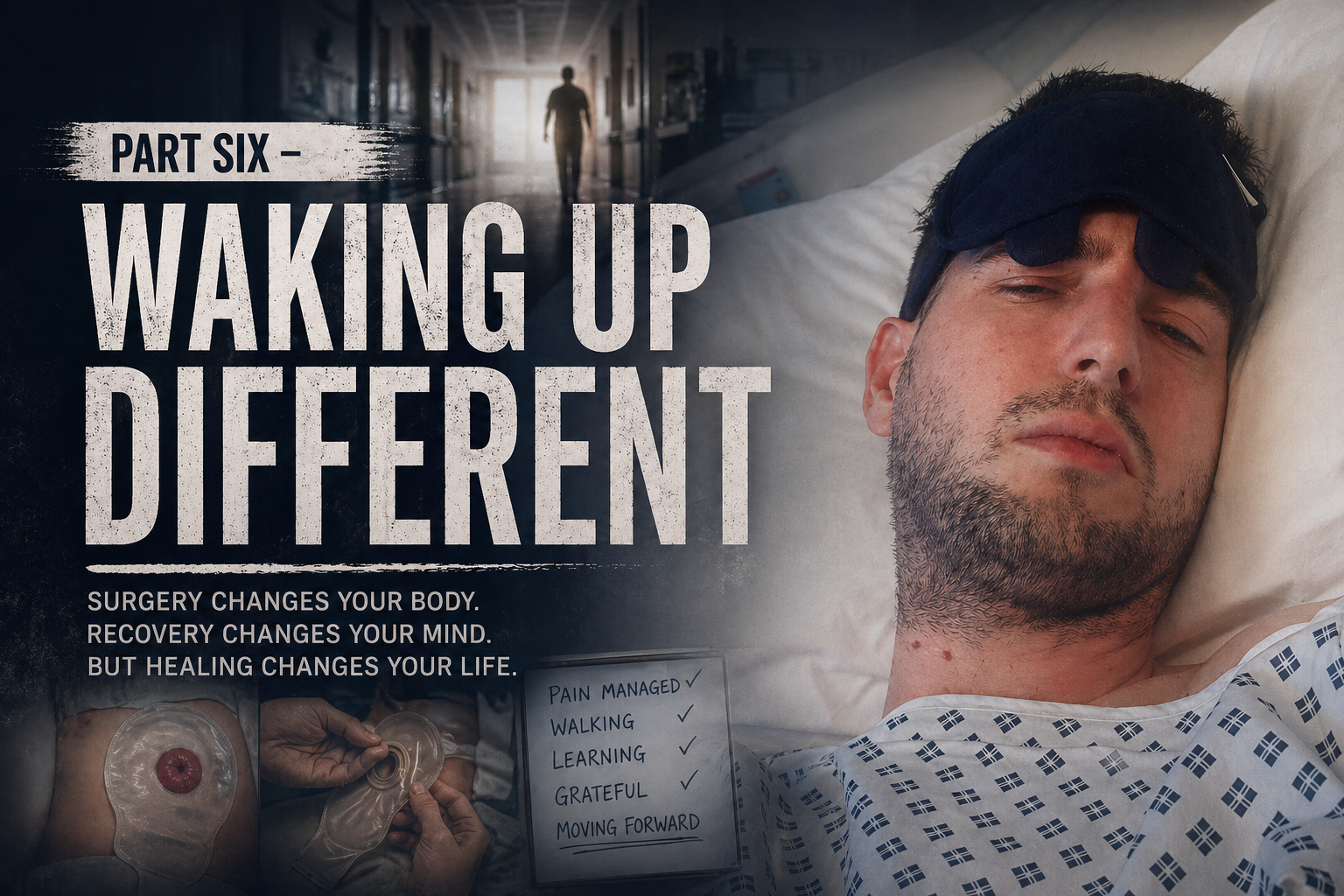
Waking up after stoma surgery was not the inspirational moment people might imagine. It was pain, morphine, confusion, trapped wind, hospital noise, surgical wounds and the shock of realising my body had changed forever. After years of ulcerative colitis, my colon was gone and I had an ileostomy. This part of my story covers the first days of stoma surgery recovery — learning to walk again, meeting my stoma, emptying my bag, getting stronger, going home, and slowly realising that I was no longer trapped by the disease.


This follows on from Part Five, where I shared what it was like preparing for stoma surgery with ulcerative colitis — the pre-assessment, Covid rules, steroid tapering, family emotions, accidents, and the night before colon removal.


PART SIX – WAKING UP DIFFERENT

Waking Up After Stoma Surgery

Chapter 32: Pain First

I woke up and everything was a daze.

I woke up in the recovery room and the first thing I remember seeing was the pale peach colour around me. Everything was blurred, heavy and strange, like I was there but not fully connected to what was happening yet. My brain was trying to come round, but my body seemed to get there first.

The pain was immediate. It wasn’t the kind of pain that slowly builds or gives you time to understand it. It was just there, deep across my body, reminding me before anything else could that I had just been through major surgery. My colon was gone. I had an ileostomy. My body had been opened, changed and stitched back together, and even through the fog of anaesthetic, I knew something massive had happened.

There wasn’t a big emotional moment at first. I didn’t wake up thinking deeply about my future or processing the fact I now had a stoma. I was too drugged, too sore and too disorientated for that. All I wanted was pain relief. That was the only clear thought I had.

I asked for something to help, and I was given a morphine button. At that point, that button felt like the most important thing in the world. It gave me a tiny bit of control in a situation where I had none. I couldn’t move properly. I couldn’t fully think straight. I didn’t even know exactly what state my body was in yet. But I could press that button when the pain came forward, and for a while that was enough.

I closed my eyes again and drifted in and out, letting the medication do what it needed to do. Recovery didn’t begin with bravery or inspiration. It began with pain, confusion, morphine, and the simple fact that I had made it through the operation alive.


The First Night in Hospital After Colon Removal

Chapter 33: The First Night

When I woke again, it was dark and I had been moved onto a ward. I was still completely out of it from the morphine, and the whole room felt slightly unreal. I could hear noises around me, but everything seemed to reach me through a haze. I kept pressing the pain button whenever I could because the way the morphine washed over me made the pain easier to cope with, even if it also made my head feel like it wasn’t properly attached to my body.

Then the night became something I can only describe as a nightmare. There was an older man near me who became incontinent, and the smell was overwhelming. I know that might sound harsh, but when you are lying there after major surgery, unable to move properly, drugged up, exhausted and in pain, everything feels amplified. Smells, sounds, lights, movement — it all becomes too much very quickly.

Then a younger man in front of me woke up. I don’t know what condition he had, so I can only describe what it was like from where I was lying. He didn’t really speak as much as scream the same things over and over again, without much of a break. It went on for hours, and I was so tired and off my head on morphine that I couldn’t work out whether I was awake, half-asleep or trapped in some horrible dream.

I remember thinking, “What is going on? Am I in hell?” That sounds dramatic now, but at the time it genuinely felt like that. I had just had my colon removed, I was trying to understand what had happened to my body, and I couldn’t get away from any of it. I couldn’t just stand up, walk out, or reset myself. I was stuck there, trying to cope with the pain and the noise and the smell and the shock of it all.

Eventually, a nurse came over and asked if I wanted a change of scenery. I remember saying yes straight away, as long as it was quieter. At that point, I didn’t need much. I wasn’t asking for luxury or comfort. I just needed somewhere that gave me half a chance of resting, because that first night had completely overwhelmed me.


Managing Pain, Nausea and Trapped Wind After Surgery

Chapter 34: Finding My Head

When I woke up in the new room, it still felt busy, but it was somehow calmer. There were other older gentlemen around me, and because I had been wheeled in tired and not in my right mind, my memory of the room felt slightly distorted. I remember thinking there seemed to be more spaces than there probably were, like my brain was trying to piece the scene together through medication and exhaustion.

The pain around my torso was there, but it was bearable compared with the pain in my chest. That chest pain was immense. It felt like pressure, trapped wind and discomfort all rolled into one, and because it didn’t feel like the surgical pain I had expected, it worried me. Every time I tried to drink, even just a sip of water, it felt like it turned into trapped wind and pushed pressure up into my chest.

That was when I realised I needed to get my head clear before I could properly start recovering. I couldn’t focus on walking, eating, learning the bag or anything else while my mind was spinning and my body felt like it was working against me. My first goal became simply being able to see straight and understand what was going on around me.

I kept asking for pain relief and anti-sickness because the nausea and motion feeling seemed endless. Some medication came through tablets, some through the cannula, and I was still using the morphine button as well. The problem was that although the morphine helped the pain, it seemed to be making the sickness worse. The stoma team came to see me and said they had heard I’d had a bad night. Usually, they would have wanted me up and starting to learn things, but because I was in such a rough way, they decided to leave it until the next day.

They also noticed I was on morphine and suggested that could be causing the sickness. Eventually, my button was changed to another drug that included anti-sickness. It wasn’t quite as strong as the morphine, but it helped with the surgical pain without making me feel so constantly sick, which felt like progress in itself.

The physiotherapist also came to see me, but once I explained how rough I felt, he agreed to come back the next day. Then the surgical team came to check what was now called my stump, because my bowel was no longer connected in the way it had been before. That meant another uncomfortable examination and another one of those moments where dignity had to step aside because this was now just part of the recovery process.

By the end of that first full day, I still couldn’t eat or drink properly. Every sip of water seemed to create more pain and pressure in my chest, and I kept wondering what it was. Was this normal? Was something wrong? Was this pain connected to the surgery, or was it something else entirely? I had gone into surgery expecting recovery to hurt, but I hadn’t expected this strange chest and trapped wind feeling to become such a barrier.


Taking My First Walk After Stoma Surgery

Chapter 35: The First Walk

After sleeping through so much of the previous day and night, I woke up feeling the tiniest bit better. Not well, not comfortable, and definitely not ready to leap out of bed, but slightly more present than I had been. When you are recovering from major surgery, even feeling a tiny bit better can feel like a victory.

I remember thinking that this might be the day I started to properly recover. Breakfast came, and I tried to take things slowly. I had toast and managed about half a slice with butter. At the time, that felt sensible. Better than nothing. A small step towards eating again.

Unfortunately, my body didn’t seem to agree. The pain that followed was horrible, and it made me question everything again. I was hungry and wanted to get stronger, but every time I tried to take something in, my body seemed to punish me for it.

The physiotherapist arrived shortly afterwards and explained that moving might help with the trapped wind pains. In theory, that made sense. In reality, when you have barely moved since surgery and even sitting up feels like a massive task, the idea of walking feels almost ridiculous.

Getting to the side of the bed was the first battle. I was weak, sore and nervous, and as soon as I sat up, the room started spinning. The physiotherapist told me to take a moment, but my determination kicked in. I grabbed his arm, pulled myself up, and somehow got to my feet.

Then came the first steps. They weren’t proper confident steps. They were tiny, careful, pitter-patter steps while I held onto my magic button machine and tried to convince my body that moving was safe. We walked out of the room, and not only did we make it out, we completed a full lap of the ward.

That was huge.

Before surgery, a lap of a hospital ward would have meant nothing. After surgery, it felt like climbing a mountain. The pain was intense, and even though I burped at one point, hoping it would release some of the pressure, it didn’t really bring the relief I wanted. But I had done it. I had got up, moved, walked and made it back.

Afterwards, I was placed in a chair while they changed my bed. Even sitting upright made me feel dizzy and frail, but there was something important about not being flat on my back. It felt like a small shift from being completely helpless towards being part of my own recovery.

That was when the ward laps started to become a goal. I called them victory laps, because that is what they felt like. Each one was proof that my body, however battered, was still capable of moving forward.


Meeting My Stoma for the First Time

Chapter 36: Meeting My Stoma

Later that day, the stoma nurse came to see me. The nurses had already left a pack by my bed with everything I would need while I was in hospital: stoma bags, wipes, bin bags, adhesive remover spray and all the other bits that were suddenly part of my new normal.

The stoma nurse started going through everything with me and explaining how it all worked. Then he noticed that my bag was full, so before we could go too far into the lesson, it needed emptying. I was still feeling dizzy and rough, and all I could think was that I really hoped I didn’t pass out while this was happening.

There is something incredibly humbling about that moment. You are sitting there weak after surgery while someone teaches you how your body now works. It isn’t just medical. It is personal. This was my body, my stoma, my bag, my life from that point onwards, and I had to learn how to manage it.

He used the adhesive remover spray and slowly peeled the bag away from my skin. That was the first time I properly came face to face with my stoma. I don’t know exactly what I expected to feel. I had practised with a fake one before surgery, and I had imagined this moment plenty of times, but imagining it and seeing the real thing are completely different.

Surprisingly, my first thought wasn’t panic. It wasn’t disgust or horror either. It was more like, “It’s not actually that bad. I can live with this.”

That doesn’t mean it was easy, and it doesn’t mean I instantly accepted everything. But I didn’t fall apart, and that mattered. This thing I had feared and prepared for was now actually there. It was swollen, red, strange and new, but it was also doing the job my diseased colon could no longer do.

That first proper look stayed with me. It was the moment the stoma stopped being an idea and became something real. It was part of me now, and whether I was ready or not, I had to start learning how to live with it.


Early Recovery With a New Ileostomy

Chapter 37: New Year, New Me

Recovery Day 3 was New Year’s Day, which felt strange in itself. Most people start a new year with plans, resolutions, hangovers or leftover Christmas food. I started mine in a hospital bed with a new stoma, a body full of pain and a head full of questions.

That day, I started taking Nystan. I was hoping it would help with the horrible pain that seemed to be stopping me from eating and recovering properly. I wanted so badly to eat, build strength and move forward, but every time I tried, something in my body seemed to fight back. I had a couple of doses during the day, and although part of me was convinced it wasn’t going to work, I kept taking it because I needed something to change.

My consultant, Dr Walker, came to check on me, and I explained that the pain I was struggling with didn’t feel like normal surgical pain. It felt separate, like something else was going on alongside the operation recovery. Then the ward doctor came and told me my inflammation markers were still up, which was exactly the kind of thing I didn’t want to hear after having my colon removed.

My immediate thought was, “Great, I’ve just gone through all of this and the colitis is still there.” I know now that inflammation markers after surgery can be complicated, and it doesn’t always mean what your frightened brain thinks it means. But at the time, I needed to believe the disease had gone. I had gone through the surgery because colitis had destroyed my quality of life, so hearing that my markers were still raised hit me hard.

Then came the catheter removal. The healthcare assistant assured me it wouldn’t be painful, which turned out to be a lie. I took a deep breath in, then out, and when it was removed, it stung like hell.

After that, I had to manage three wees in twelve hours, otherwise I would need a bladder scan and potentially risk having the catheter put back in. That was not happening. I didn’t care how weak I felt or how much effort it took to get up and down; I was determined my body was going to work because I absolutely did not want that catheter back.

From that point, I started going to the toilet on my own. It sounds like a basic thing, but in recovery it was another milestone. Every little bit of independence mattered, and on New Year’s Day, in the strangest way possible, it really did feel like new year, new me.


Learning to Empty My Stoma Bag

Chapter 38: Small Victories

Recovery Day 4 was the day I decided I was going to empty my bag on my own, with supervision. That might sound like a small thing from the outside, but it didn’t feel small at all.

Until you have a stoma, you don’t realise how much confidence comes from learning the practical side of it. Accepting that you have a bag is one thing. Knowing you can actually manage it yourself is another. Emptying it for the first time was a huge step towards believing I could cope outside the hospital.

I emptied the contents into a sick bowl, wiped the bottom of the bag, closed it back up and realised it wasn’t as hard as I had built it up to be in my head. That doesn’t mean it wasn’t strange, because it absolutely was, but it was manageable. In that new world I had been thrown into, “manageable” was a very powerful word.

I had started to feel a little better, so I went for two victory laps of the ward. Two laps felt amazing at the time, although I quickly learned that recovery always made you pay for effort. After pushing myself, I slept a lot of the afternoon away because my body clearly needed to recover from recovering.

The surgical team came round and said I was looking fit, healthy and really well. It was strange hearing that while still feeling so weak and battered, but I took it. In hospital, any positive comment becomes something you hold onto. It makes you feel like maybe you are doing better than you think.

That night, my stoma area started itching where I couldn’t scratch, which was a very specific kind of frustration. I could feel it, but I couldn’t properly do anything about it. I ended up watching Netflix until it settled down, and that became another reminder that recovery wasn’t just about pain going away. It was about learning all these new sensations and working out what was normal for this changed body.


Showering, Family Visits and Hospital Recovery Milestones

Chapter 39: The Best Day

Recovery Day 5 was the first day I had enough energy to take a shower. That might sound gross, but after days in a hospital bed, sweating, being checked, taking medication, being attached to things and feeling completely unlike yourself, a shower feels like a proper milestone.

It wasn’t relaxing in the way a normal shower is. It was tiring, awkward and took effort, but it made me feel more human. Hospitals have a way of reducing you down to being a patient, and something as simple as washing yourself gives a little piece of your identity back.

Afterwards, I rested in the chair and managed to finish reading the Justice League comic my daughter had got me for Christmas. That little bit of normality meant a lot. I wasn’t just the man in the hospital bed with the new stoma. I was still Dad. Still Chris. Still someone who could sit and read a comic from his daughter and feel connected to life outside the ward.

That day, I emptied my bag twice on my own, with a healthcare assistant holding the bowl. My shoulder pain had started to die down, and the cannula was removed, which felt like another little piece of freedom. Every tube or line that came out made me feel slightly less like I belonged to the hospital and slightly more like I might be heading home.

The best part of the day was seeing my fiancée and my two youngest kids. Because of Covid, they weren’t allowed onto the ward, but I was able to meet them outside for ten minutes. Ten minutes doesn’t sound like much, but after major surgery, no visitors and days of hospital walls, those ten minutes meant everything.

Seeing them gave me even more determination to get well again. It reminded me why I had gone through the surgery and why I needed to keep pushing through the difficult bits. I managed five victory laps in total that day, which felt amazing. My strength was definitely starting to return, and for the first time, going home didn’t feel like a distant idea. It felt possible.

I got to sleep at around ten, although I woke again after observations and the itchy stoma site returned. Even on a good day, recovery still liked to remind me it was in charge. But compared with where I had been a few days earlier, this really did feel like the best day so far.


Going Home After Stoma Surgery

Chapter 40: Going Home

Recovery Day 6 started with a feeling that it was going to be a good day. I woke up, went to the toilet, managed two victory laps before eight in the morning and had breakfast. After everything that had happened, that felt like a strong start.

Then the registrar came to see me and asked, “Do you want to go home?” I don’t think there are many sentences that sound better than that when you have been in hospital recovering from major surgery.

She said Dr Mitchell would come and see me, but she was happy for me to go home that day. She also explained that my inflammation markers were back down, which gave me a massive sigh of relief. After worrying that the colitis was somehow still there, hearing that things were settling finally allowed me to breathe a bit easier.

Dr Mitchell came round next, checked me over and explained that the glue would go after about two weeks. He said I was recovering really well. The final step was getting the all-clear from the stoma team.

That meant changing the bag by myself while they watched. It wasn’t just a practical test; it felt like a confidence test. Could I manage this without someone stepping in? Could I go home and look after this new part of my body? Could I trust myself enough to leave the safety of the ward?

I changed the bag completely unaided, and I did it properly. The stoma nurse was happy to send me home, and that moment felt massive. It wasn’t just about getting a medical sign-off. It was proof that I could do the thing I had been so scared of. I could manage the bag. I could learn this new routine. I could start taking care of myself again.

After that, I waited for my medication to take home, and then I was sent on my merry way. I had woken up thinking it was going to be a good day, and for once, I was right. I was going home.


The First Week at Home With a Stoma

Chapter 41: The Quiet Realisation

Leaving hospital felt strange because I wasn’t leaving as the same person who had gone in. I had walked into that building with a diseased colon that had controlled years of my life. I was leaving without it, with a stoma, a bag, surgical wounds, weakness, pain and a body I now had to relearn.

Going home wasn’t the end of recovery. It was the beginning of a new kind of recovery, one without nurses nearby, without buzzers, without regular observations, and without someone there to step in if I panicked. Hospital had been hard, but it had also been a safety net. Home meant I had to start trusting myself.

The first week back was tough. There were so many basic things I had taken for granted that I suddenly couldn’t do properly. Sitting up was difficult because my stomach muscles were so weak. Sleeping on my side wasn’t happening, which was frustrating because I have always found it hard to sleep on my back. I couldn’t lift anything heavier than the kettle, and because I suffer with OCD, not being able to clean the house properly drove me mad. With seven of us in the house, it doesn’t stay tidy for long, and having to just sit there looking at things I couldn’t sort out was difficult.

Even bending down to pick things up from the floor became impossible, and you don’t realise how often you do something that simple until it is taken away from you. The stairs became one of my biggest challenges and eventually one of my biggest triumphs. At first, getting up and down them was a slow pitter-patter process, one foot at a time, either holding onto my fiancée or clutching the bannister like my life depended on it. I avoided them unless I absolutely had to use them.

Then, little by little, I improved. I went from barely managing the stairs to walking up and down with one foot on each step, only holding on with my fingertips. That kind of progress gives you pride in a way you don’t expect. Before surgery, stairs were just stairs. After surgery, they became proof that I was getting stronger.

There were still frustrations, awkward moments and plenty of learning to do, but underneath all of that, one truth started to settle in. The disease had gone. For the first time in years, my bowel wasn’t controlling every decision. I wasn’t planning toilet routes, having accidents, bleeding, living on steroids or carrying the same fear everywhere I went.

I wasn’t fully healed, and I wasn’t suddenly confident with everything. I still had to learn how to live with the bag properly, how to trust my body again and how to rebuild strength. But I wasn’t trapped anymore.

And after years of ulcerative colitis taking more and more from me, that was the first real glimpse of freedom.


Contact your GP or medical team

This is my personal experience of recovering after stoma surgery for ulcerative colitis, including hospital recovery, pain relief, learning to walk, meeting my stoma, emptying my bag and going home. It is not medical advice. Recovery is different for everyone, so always speak to your surgeon, stoma nurse, consultant or IBD team about your own recovery and care.

You can also read NHS guidance on recovering after an ileostomy.

Crohn’s & Colitis UK specifically covers surgery options for UC, including subtotal colectomy with ileostomy and pouch surgery.


Continue the story:
After hospital came the harder emotional work of building confidence, learning routines, and working out who I was now. Read Part Seven – Learning Who I Am Now: adjusting to life with a stoma.


Some of the links below are affiliate links. This means I may earn a small commission if you buy through them, at no extra cost to you. I only include things that genuinely connect to my own experience.

Things That Helped Me During Stoma Surgery Recovery

By this stage, I wasn’t dealing with early symptoms anymore. I was dealing with a severe flare, urgency, accidents, hospital appointments, exhaustion and the reality that treatment options were running out.

These are a few practical things that helped me feel slightly more prepared during one of the hardest stages of my UC journey.


Comfortable Loungewear or Pyjamas

Comfortable clothing matters when your body already feels uncomfortable and you are preparing for hospital, surgery or recovery.

Why it helped:
✔ Softer and easier to wear when bloated, sore or tired
✔ More comfortable for resting, hospital packing or recovery days
✔ Helped me feel a little more human during a difficult stage

👉 View Comfortable Loungewear on Amazon


🔋 Portable Charger

Hospital waiting rooms, emergency toilet trips, and long appointments meant my phone battery was always dying at the worst times.

Why it helped:
✔ Kept my phone charged for messages, calls and updates with family
✔ Useful during long waits, appointments and hospital stays
✔ Helped me feel less cut off when I was away from home

👉 Find Portable Chargers on Amazon


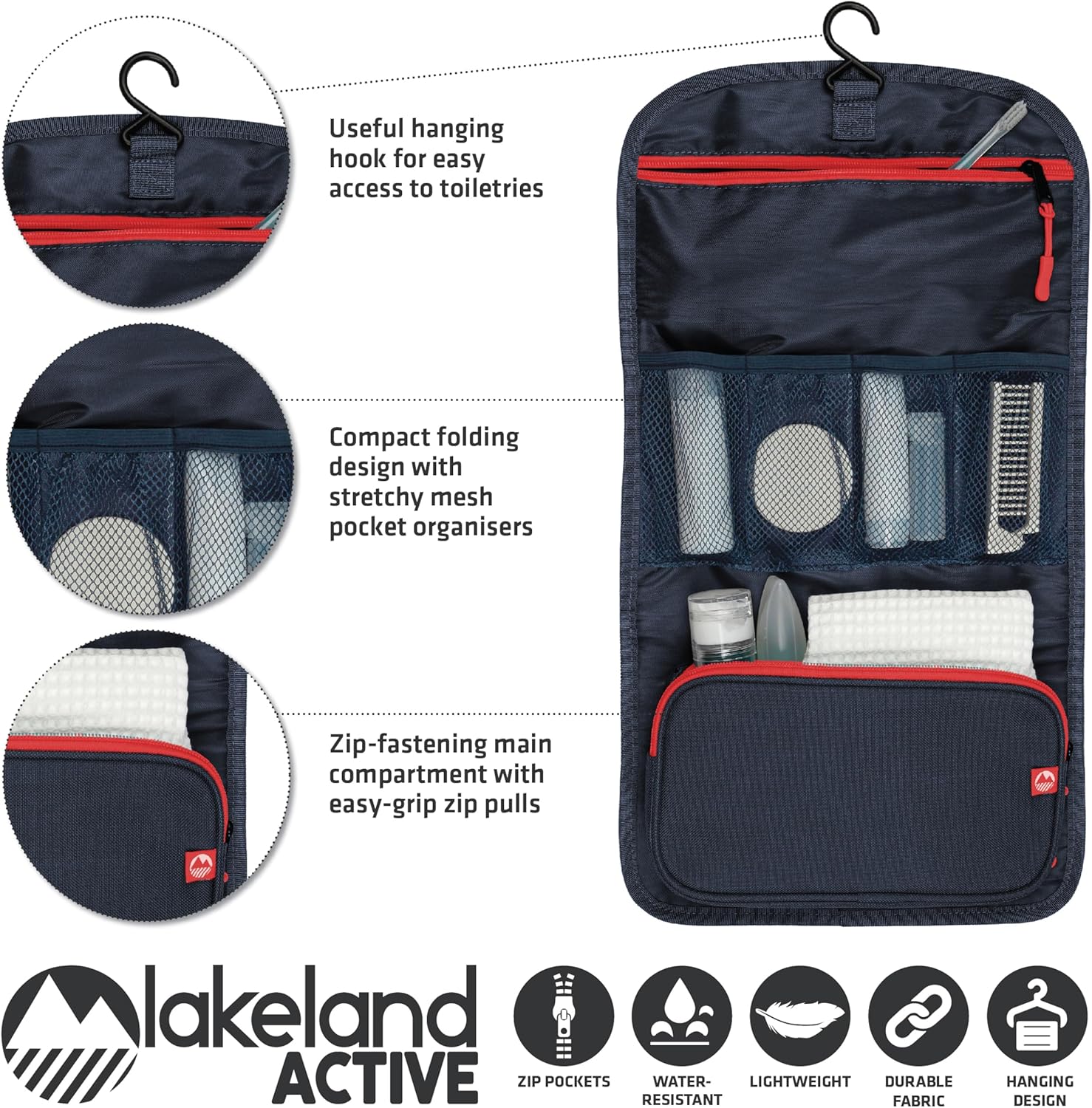
Toiletry Bag for Hospital

A toiletry bag sounds basic, but when you are going into hospital, having your personal items together can make a big difference.

Why it helped:
✔ Kept essentials like toothbrush, deodorant and shower items organised
✔ Made hospital packing quicker and less stressful
✔ Helped me keep a small sense of normal routine while away from home

👉 View Toiletry Bags on Amazon


Hospital Bag Organiser

When surgery is booked, having your hospital things organised in one place can make the whole process feel slightly less overwhelming.

Why it helped:
✔ Kept important items together instead of scattered everywhere
✔ Made packing for hospital feel more manageable
✔ Helped me feel a bit more prepared when everything else felt uncertain

👉 View Hospital Bag Organisers on Amazon


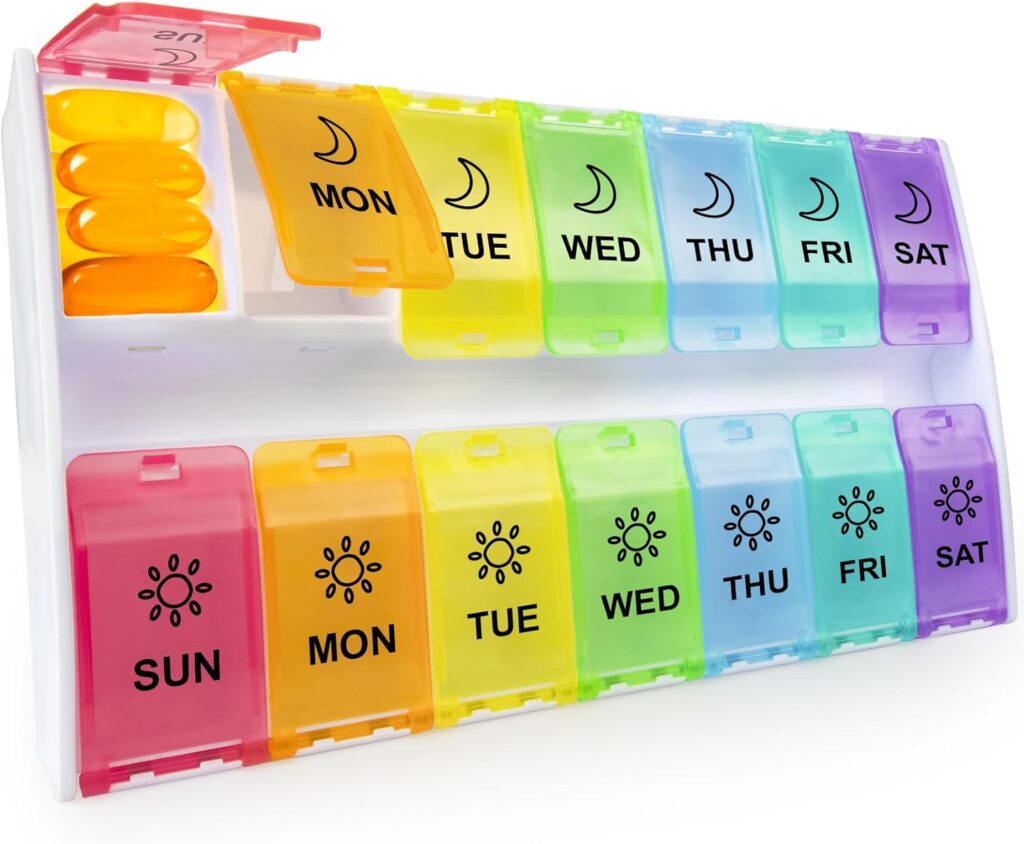
💊 Pill Organiser

Once medications became part of daily life, keeping track of everything became surprisingly stressful — especially with fatigue and brain fog.

Why it helped:
✔ Helped me stay consistent with medication
✔ Reduced stress and missed doses
✔ Simple but genuinely useful

👉 Shop Pill Organisers on Amazon